
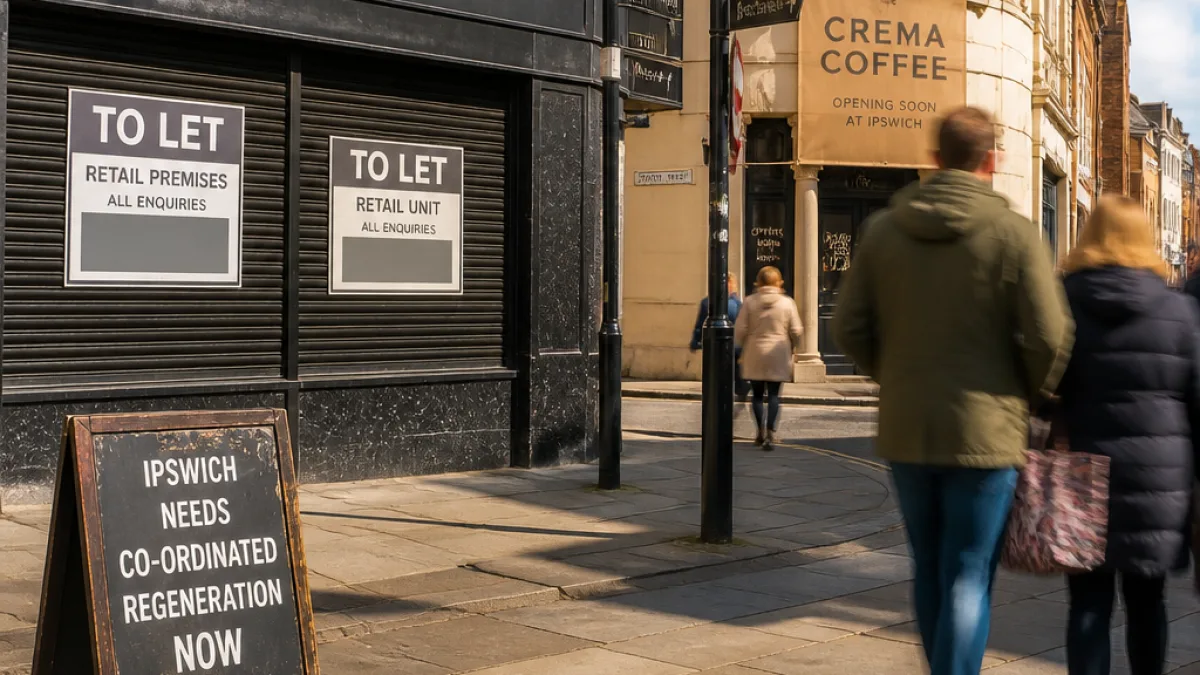
High‑street departures and local concern
Two recognised retail names are leaving Ipswich town centre within a fortnight of each other, highlighting the continuing challenge of keeping multiple long‑standing traders in the town’s retail core.
Hotel Chocolat closed its Tavern Street store on 20 August, while fashion retailer FatFace has announced its Butter Market branch will shut on 5 September. Both businesses have traded in Ipswich for a number of years, the departures renewing debate about the health and future of the town centre.
Local councillor urges a focused response
David Plowman, Green Ipswich Borough Councillor for Alexandra ward, said the twin closures were “very disappointing” and set out several factors he believes are contributing to the towns’ retail decline.
“It is very disappointing that more recognisable high street names are disappearing from our high street… The causes are many: landlords not willing to lower rents and therefore the value of their property lowers, poor, but wrong, perception of the town, declining support services for people, neglect and poor decision‑making in the past, etc.”
He also pointed to community energy and ideas that could be harnessed, calling for a “laser‑focused approach from all councils and other groups to regenerate the town centre”, and warning that recovery will require time and effort.
New occupiers and vacant shop recycling
Amid the closures, there are examples of vacant properties being brought back into use. Crema Coffee has opened in the long‑vacant former Monsoon premises in Westgate Street, while both Lloyds Bank and Barclays are moving into other vacant shop units in the town centre.
- Hotel Chocolat: closed Tavern Street on 20 August.
- FatFace: Butter Market store to close on 5 September.
- Crema Coffee: opened in former Monsoon, Westgate Street.
- Lloyds Bank and Barclays: relocating into vacant shops.
What the changes mean for Ipswich
Retail vacancies and turnover can affect footfall, perceptions of the town centre and the balance of independent and national traders. Councillor Plowman referenced a mixture of structural and perceptual problems: unresolved landlord demands on rent, past planning or management decisions, and weakening support services for vulnerable people in the town. He did not quantify the impact but framed the issue as multifaceted and long‑term.
| Retailer | Location | Status / Date |
|---|---|---|
| Hotel Chocolat | Tavern Street | Closed 20 August |
| FatFace | Butter Market | Closing 5 September |
| Crema Coffee | Former Monsoon, Westgate Street | Opened (recent) |
| Lloyds Bank; Barclays | Vacant shop units (various) | Moving into town centre |
While some empty units are being reoccupied, the loss of two established names within days underlines the fragility of a retail environment that still depends heavily on national brands. The councillor suggested that regeneration would require coordinated action across local government and community bodies, and that local business creativity should be supported rather than stymied.
There are no detailed public figures in the available information on rental levels, employment numbers affected by the closures or the specific units Barclays and Lloyds are taking. Council officers, landlords and the retailers themselves will be the key parties able to provide further data and outline plans for the vacated locations.
For Ipswich residents, the immediate effects will be familiar: fewer national options in the town centre, a continuing need to ensure vacant units are promptly relet, and fresh debate about what combination of policy and private‑sector action can sustain the vitality of the high street.