
Council expands low-carbon social housing and retrofit works
Southend-on-Sea City Council is pressing ahead with a package of new-build and refurbishment schemes intended to increase affordable housing locally while cutting residents' energy costs. A mix of developments — from modest new estates to the city's first Passivhaus-certified homes — will add and improve dozens of council properties over the coming months and years.
The council says construction will start shortly on the next phase at Eagle Way, which is expected to deliver 16 affordable homes. Work is already under way at Lundy Close, where nine new homes are due for completion by Autumn 2027. Both sites have been designed to surpass existing building regulations and will incorporate low-carbon technologies such as air source heat pumps and solar panels.
- New builds: Eagle Way (16 homes) and Lundy Close (9 homes).
- Passivhaus: first certified schemes at Bradford Bury and Denton Avenue.
- Acquisitions and lettings: around 20 former council homes to return to ownership, plus a strategic purchase of eight newly built family homes for affordable rent.
- Retrofit: 207 homes on the Balmoral Estate scheduled to receive ground source heat pump upgrades; 61 houses set to get solar panels and air source heat pumps.
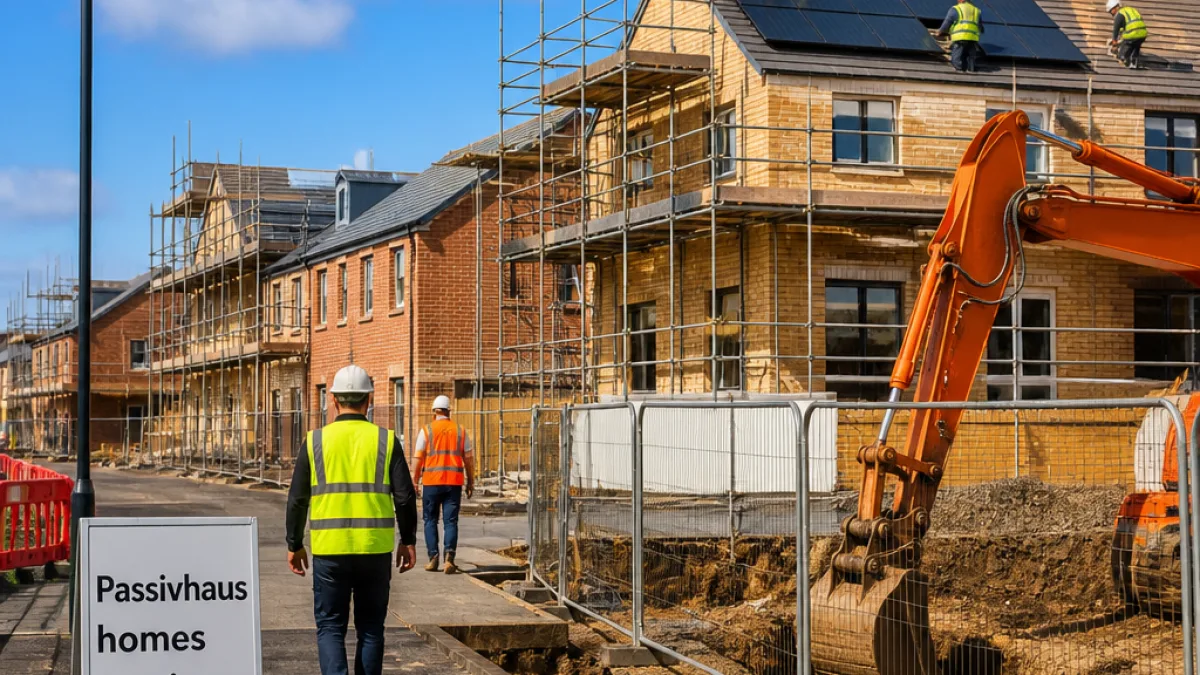
In addition to the conventional new-build programme, the authority is delivering its first certified Passivhaus homes at Bradford Bury in Leigh-on-Sea and Denton Avenue in Westcliff-on-Sea. Passivhaus standards are intended to cut energy consumption markedly, which the council says will help lower household bills and contribute to its wider net-zero aims.
Alongside building activity, the council continues an acquisitions programme to return former council properties to public stock. It anticipates roughly 20 homes will be regained under that programme in the current financial year. Separately, the authority is progressing a planned strategic purchase of eight newly built family houses that will be let at affordable rents to households on the Housing Register.
Work is also advancing on improving the energy efficiency of existing council-owned housing. The council describes the Balmoral Estate project — involving 207 homes receiving heating upgrades — as the largest ongoing ground source heat pump scheme in the country. A further 61 houses across the city will get a combination of solar panels and air source heat pumps over the next year.
| Scheme | Planned homes / upgrades |
|---|---|
| Eagle Way (next phase) | 16 affordable homes |
| Lundy Close | 9 new homes (due Autumn 2027) |
| Bradford Bury & Denton Avenue | Passivhaus-certified homes (first in city) |
| Acquisitions | ~20 former council homes returning to stock |
| Strategic purchase | 8 newly built family homes for affordable rent |
| Balmoral Estate | 207 homes to receive ground source heat pumps |
| Other retrofit | 61 houses to get solar panels and air source heat pumps |
For residents the programme presents several immediate effects. New affordable lettings will directly benefit households on the Housing Register, while the energy-saving measures should reduce ongoing fuel costs for many council tenants. For the council, the combination of construction, acquisition and retrofit work represents a substantial commitment of resources towards meeting local housing need and the authority’s own carbon reduction targets.
There are, however, practical challenges ahead. Delivering Passivhaus standards and widespread heat pump installation requires specialist skills, careful on-site management and ongoing maintenance plans; timing for some schemes stretches into 2027. The scale of retrofit works — particularly the large ground source heat pump project on the Balmoral Estate, which the council characterises as the largest of its type ongoing in the country — will demand sustained oversight if the promised benefits are to be realised.
As these projects proceed, residents and local stakeholders will be watching for clarity on delivery timelines, the allocation of the newly available homes, and the support arrangements for households transitioning to new heating systems. The council’s mix of new-build, Passivhaus and retrofit activity nonetheless marks a notable expansion of its direct role in supplying low-carbon, affordable housing in Southend-on-Sea.