
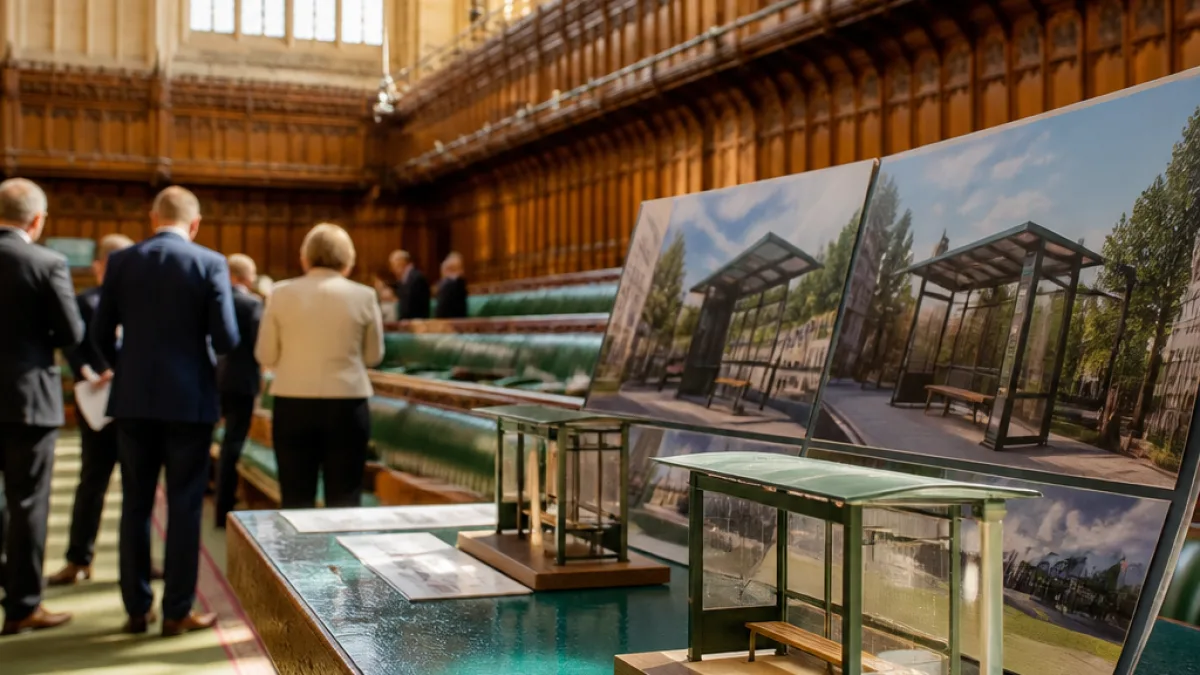
Call from Dunstable MP for consistent, higher-quality bus stops
Alex Mayer, the Member of Parliament for Dunstable and Leighton Buzzard and a member of the Transport Committee, has used a Westminster Hall debate to press for a national standard for bus stops.
The thrust of her argument was that the design and quality of stopping places matter for the attractiveness of bus travel. She told MPs that improving the quality, consistency and attractiveness of bus stops could play a role in persuading more people to choose public transport over private cars.
Ms Mayer pointed to examples of contemporary shelter designs in other areas as illustrations of what could be achieved. The suggestion to establish national guidance comes amid wider debates about how to increase bus patronage across the country and support efforts to reduce congestion and emissions.
What national standards would aim to achieve
- Provide clear, consistent information at stops so passengers know when and where services run;
- Improve the physical environment of stops to make waiting safer and more comfortable;
- Ensure accessibility standards are reliably met, including for passengers with reduced mobility;
- Encourage local authorities and operators to invest in bus infrastructure with a shared framework.
The proposal does not outline specific technical specifications or funding sources. That leaves questions about who would set and enforce any national standard, and how upgrades would be funded — matters that would need resolving if the idea progressed beyond the debate stage.
Local consequences and practical challenges
For Dunstable residents, better bus stops could mean clearer timetables, more shelter from the elements and improved accessibility, potentially helping to make bus travel a more attractive option for short journeys within the town and connections to neighbouring areas. However, the delivery of any national standard would require co-ordination between central government, local authorities and bus operators.
Local councils are responsible for much of the street furniture and highway works that relate to bus stops, while bus companies run the services that use them. Funding could come from central grants, local budgets, developer contributions or a mix of sources, but the debate in Westminster did not set out a funding model.
| Area | Potential benefit | Potential challenge |
|---|---|---|
| Consistency of design | Improves user recognition and wayfinding | Requires agreement across multiple councils and operators |
| Accessibility | Better access for passengers with disabilities | May need significant physical alterations at many stops |
| Information & real-time displays | Reduces uncertainty and improves passenger experience | Costs for installation and ongoing data provision |
The debate led by Ms Mayer did not constitute government policy but is likely to feed into ongoing discussions about how to reverse long-running falls in bus use in many parts of the country. National standards, advocates argue, could help eliminate a postcode lottery in the quality of bus infrastructure.
For Dunstable, where many people rely on buses for daily travel, the central issue will be whether any national framework results in tangible local improvements and whether those improvements are delivered quickly and equitably.
As the proposal moves through parliamentary channels, the finer points — who pays, who enforces and how standards would interact with local priorities — will determine whether the idea becomes a practical route to better bus services in Dunstable and beyond.