Pupils take part in national resource pilot
A group of 20 pupils has helped shape a new Holocaust education website and resource pack designed for use in classrooms across the country.
The students, from Royal Wootton Bassett Academy, took part in a full-day pilot workshop organised as part of the development of materials by the '45 Aid Society. The organisation preserves the accounts of Holocaust survivors who came to Britain and rebuilt their lives after the Second World War.
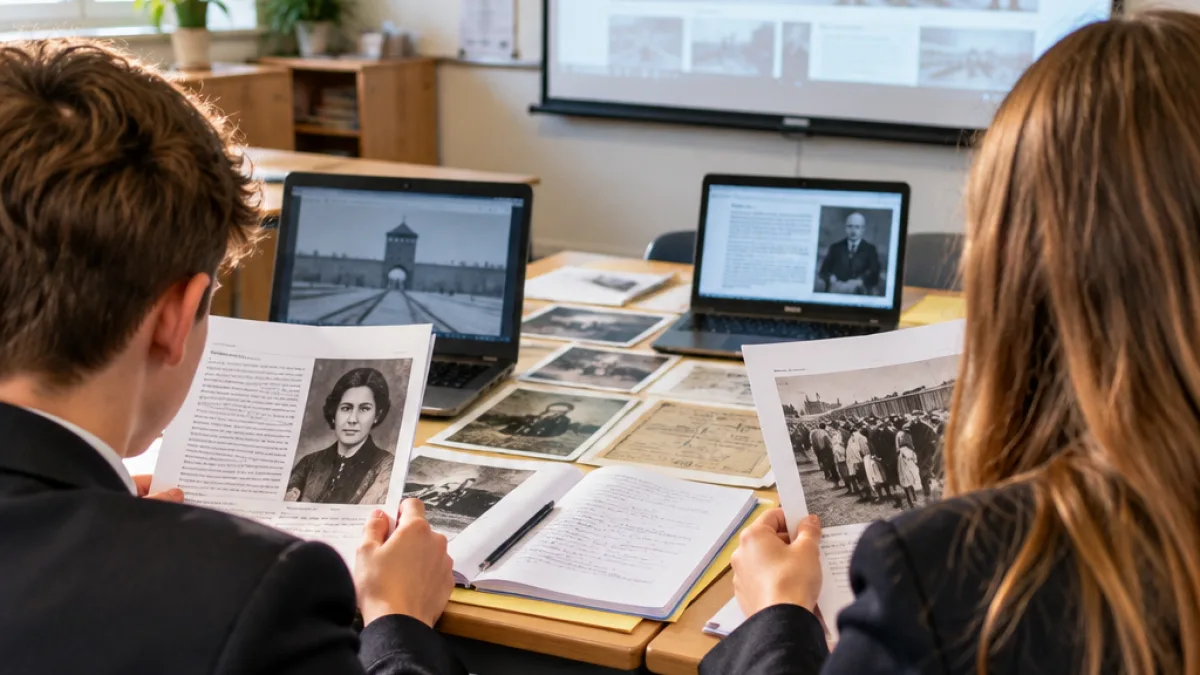
Pupils in Years 8 to 10 examined the proposed website and accompanying materials before their official launch. Their feedback covered the design of the site, how accessible it was and whether it offered sufficient educational value. The exercise gave students a role in deciding how the experiences of survivors should be presented to other young people.
“It can really show how personal and individual it could be.”
One pupil said the project could alter both the way the Holocaust is taught and the language used to discuss it, highlighting the importance of presenting the history through individual lives as well as through major events.
Survivor testimony at the centre of the materials
The resources include testimony from survivors alongside historical sources. During the workshop, pupils studied the group known as “The Boys”, made up of Holocaust survivors who arrived in Britain after the war. The project also includes the stories of more than 200 girls, whose experiences form part of the wider account.
Rather than considering the Holocaust only as a sequence of dates and events, the students explored the survivors’ lives before the war. This included their families, languages, faiths and cultures, followed by the journeys that took them through ghettos and concentration camps before their eventual arrival in Britain.
The approach is intended to help pupils understand the variety of experiences within the history, while showing how survivors’ lives continued after liberation and resettlement. The materials focus on people who established new lives in Britain, connecting the history of persecution and survival with the country in which they later lived.
Developing evidence and enquiry skills
The workshop also provided a practical history lesson in how evidence is assessed. Students worked with primary and secondary sources, considered whether material was reliable and developed ways of testing different accounts against one another.
- Survivor testimonies are combined with historical documents and other sources.
- Pupils considered source reliability and the strengths of different types of evidence.
- Students gave feedback on the resource’s accessibility, design and classroom value.
Those skills are intended to support historical enquiry as well as knowledge of the Holocaust. They may also help pupils approach testimony with care, recognising the difference between a personal account and other forms of historical evidence.
Students contribute to the project’s development
The workshop was attended by Angela Cohen MBE, chair of the '45 Aid Society, historian and author Rosie Whitehouse, and Emily Burton, who created the accompanying workbook. Whitehouse has spent the past two years researching and developing the website.
Students were praised for their maturity, empathy and considered contributions while dealing with challenging subject matter. A spokesperson for Royal Wootton Bassett Academy said their historical curiosity and feedback would help ensure the stories continued to educate future generations.
The resource is due to be officially launched after the pilot process. Its development reflects an effort to involve pupils not simply as recipients of classroom content, but as users able to identify whether materials are clear, accessible and meaningful. For teachers, the combination of testimony, historical sources and structured enquiry offers a resource intended to support both Holocaust knowledge and wider historical thinking.