
Government targets the foundations of the economy
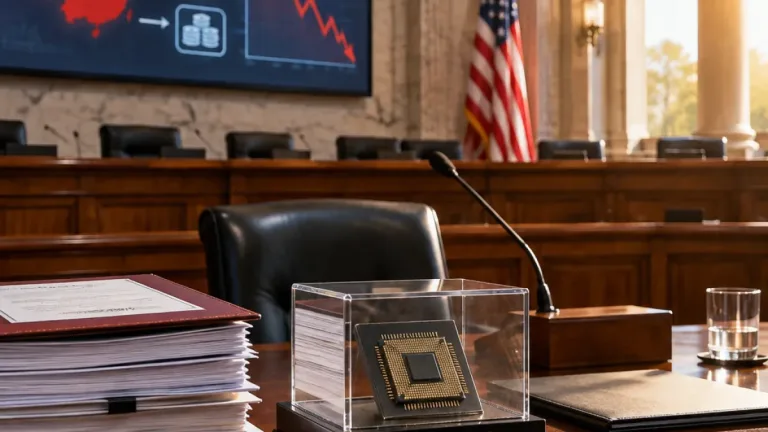
The Government has set out plans to increase public oversight of energy and water infrastructure, arguing that the present system is imposing unnecessary costs on British businesses and consumers. First Secretary of State Louise Haigh told the CBI that essential services needed a new approach, with ministers promising a broad package of measures aimed at improving affordability, accountability and investment.
The announcement places utility infrastructure at the centre of the Government’s economic argument. Energy and water are basic inputs for almost every employer, from manufacturers and retailers to offices and service companies. When those costs rise, businesses face a direct squeeze on margins and may pass part of the increase on through higher prices. For workers, that pressure can ultimately affect wage growth, hiring and job security, although the Government did not set out expected savings or a timetable for delivering them.
Ms Haigh argued that long-standing arrangements had failed to provide an effective market in areas where customers have little practical choice. She said:
“A monopoly is not a market.”
The Government’s stated case is that public control should not be viewed as hostility towards private enterprise. Instead, ministers say the state should ensure that the basic infrastructure on which companies depend is affordable and dependable, allowing private firms to compete and invest more effectively. That is a political and economic distinction that will be tested by the detail of the policy rather than by the announcement alone.
Costs, regulation and investment
According to the Government, expensive energy and water, combined with a complex network of slow and overlapping regulation, have increased operating costs and held back investment. The claim reflects a concern shared across the business debate: companies cannot plan confidently when essential overheads are difficult to control or when regulatory decisions take too long.
However, the source announcement does not specify which assets or organisations would be brought under public control, how any changes would be funded, or how responsibilities would be divided between central government, departments and devolved administrations. Those questions matter to taxpayers as well as investors. A change in ownership or oversight could eventually alter the distribution of risk, but the immediate announcement provides no estimate of its effect on utility bills, company costs or public finances.
| Government concern | Business consequence identified |
|---|---|
| High energy and water costs | Greater operating pressure for employers and consumers |
| Overlapping regulation | Slower decisions and weaker investment incentives |
| Limited public oversight | Concerns over affordability and accountability |
New focus on industrial growth
The Government also announced the appointment of Juergen Maier as its Northern Growth and Reindustrialisation Commissioner. He will work with Mayoral Strategic Authorities, according to the announcement, linking the utility debate with a wider effort to support industrial development and regional growth.
That connection is important for the labour market. Reindustrialisation depends not only on factories and technology but also on reliable infrastructure at prices employers can absorb. If energy and water arrangements remain costly or unpredictable, investment decisions may be delayed, particularly in sectors with high operating requirements. Equally, if public intervention produces higher taxes or prolonged uncertainty, businesses may remain cautious. The Government’s challenge is therefore to show that its approach improves the conditions for investment rather than simply changing who supervises the system.
Quangos also in ministers’ sights
Ms Haigh said organisations operating at arm’s length from government would be examined where their responsibilities could instead be carried out by departments or devolved administrations. The announcement describes those bodies as being “firmly in the government’s sights”, but does not identify which organisations would be affected.
For businesses, the practical test will be whether the reforms make essential services more predictable, reduce unnecessary delay and encourage investment. For households, the test will be whether those changes feed through into more manageable bills. Ministers have presented public control as a route towards affordable, investable and accountable infrastructure. Until the Government publishes the mechanisms, costs and timetable, that remains an ambition rather than a measurable economic outcome.
- Energy and water: ministers say public oversight should improve the foundations on which businesses operate.
- Business costs: the Government links expensive utilities and regulatory delays to weaker investment.
- Industrial policy: Juergen Maier has been appointed Northern Growth and Reindustrialisation Commissioner.