A technology designed to reduce the risk of post-traumatic stress disorder among combat soldiers is expected to be introduced across Israel Defense Forces infantry brigades in the coming weeks, according to the developers. The system was created through research at Tel Aviv University and is being incorporated into military training platforms supplied by Bagira Systems.
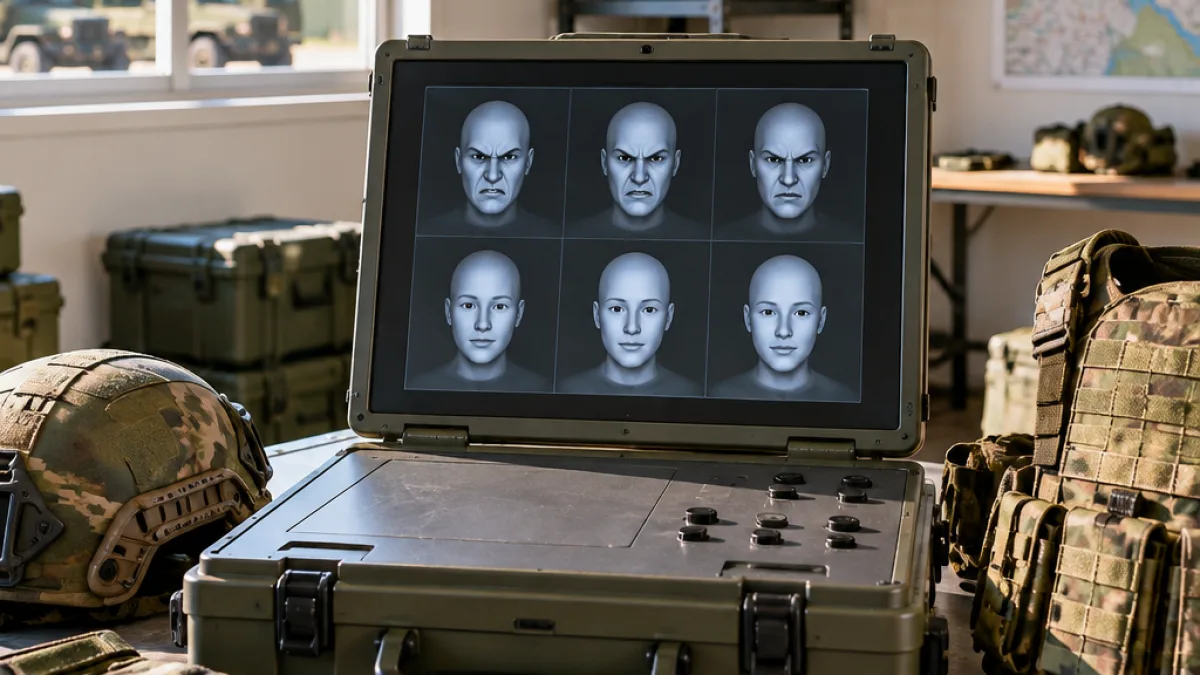
The approach is intended as a preventive measure before deployment, rather than as treatment after trauma has occurred. It does not recreate a battlefield or expose troops to simulated combat. Instead, soldiers complete a short exercise that requires them to move their attention quickly between threatening and neutral facial expressions displayed on a screen.
A short intervention before deployment
The programme's clinical protocol consists of four sessions lasting 10 minutes each. During the exercise, participants see faces displaying expressions including anger or menace and follow instructions directing their attention between different visual cues. The stated aim is to help the brain regulate an automatic response to threatening signals before soldiers face the extreme conditions of combat.
The work was developed by Professor Yair Bar-Haim, who heads Tel Aviv University's National Center for Traumatic Stress and Resilience. The research programme has involved clinical trials carried out with the IDF and military research institutions in the United States. Efforts to bring the system into the Israeli military began roughly a decade ago, but broader use depended on its integration with training infrastructure already used by infantry units.
| Reported feature | Details |
|---|---|
| Training format | Attention exercise using threatening and neutral faces |
| Protocol | Four sessions of 10 minutes |
| Research result | 67% lower rate of clinical PTSD diagnoses in controlled studies |
| Reported symptom result | Reduction of up to 83% in PTSD symptoms |
Evidence and planned deployment
Controlled studies involving hundreds of Israeli infantry soldiers reportedly found a 67 per cent reduction in clinical PTSD diagnoses, alongside a reduction of up to 83 per cent in the occurrence of PTSD symptoms. Those figures are the central evidence offered for the system, although the available account does not provide the underlying study data, the follow-up period or details of how the comparison groups were formed.
The planned military use will combine fixed and portable equipment. The system is expected to operate at permanent training sites, as well as on portable consoles in staging areas and outposts. That arrangement would allow the exercise to be delivered close to deployment, rather than restricting it to specialist medical facilities or an initial training course.
Technology alongside, not instead of, care
The development addresses a longstanding problem in military mental health: the difficulty of identifying in advance which personnel will develop trauma-related illness after combat. Its preventive design may make it easier to deliver at scale because the exercise is brief and can be incorporated into existing training systems. However, a lower reported rate of PTSD in trials does not mean that the intervention removes the risk of psychological injury, nor does it replace diagnosis and care for soldiers who later develop symptoms.
Several questions will matter as the rollout begins: whether results observed in controlled trials are reproduced in routine military conditions; how often soldiers will receive the exercise; and how commanders and clinicians will monitor its effect. The supplied account says the system is due to be introduced in the coming weeks, but does not state how many troops will initially take part or whether the programme will be assessed independently after deployment.
- The system is intended to reduce risk before combat rather than treat established PTSD.
- It uses attention training, not a battlefield simulation.
- The reported evidence comes from controlled studies of Israeli infantry soldiers and includes reductions in diagnoses and symptoms.
- The planned rollout will use both permanent facilities and portable military consoles.
The project marks a shift towards using compact digital interventions as part of operational preparation. Its significance will ultimately depend less on the simplicity of the exercise than on the quality of the evidence gathered during wider use, and on whether soldiers continue to receive appropriate psychological support when prevention does not avert trauma.