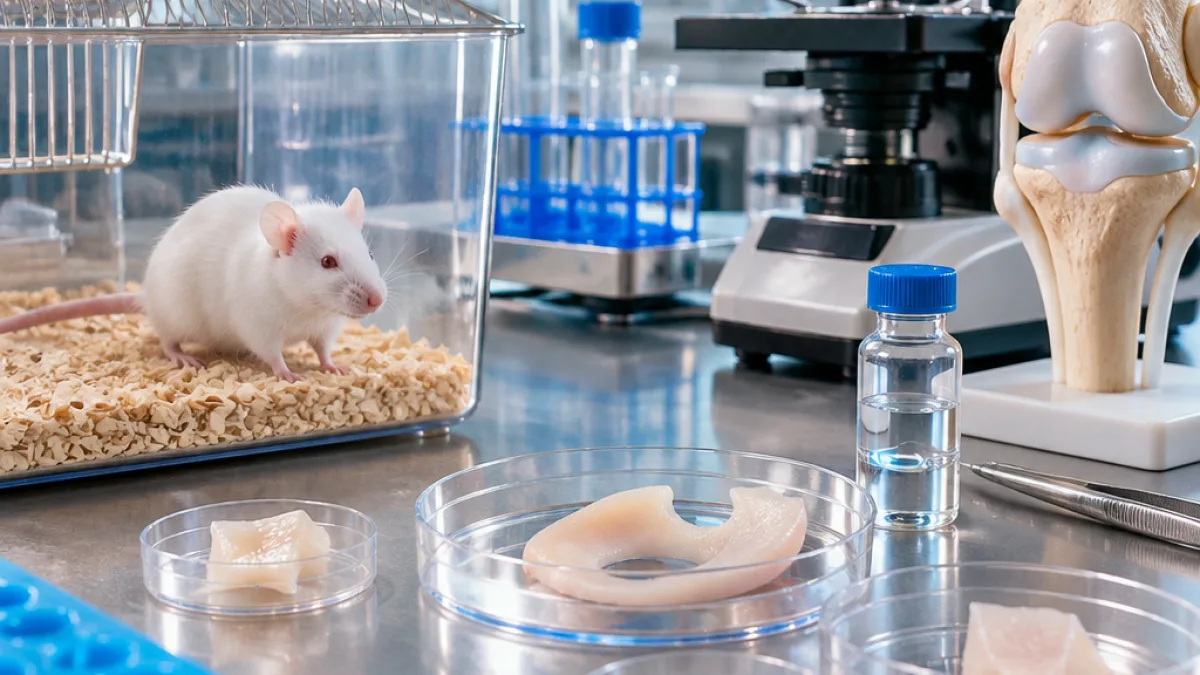
A possible route to restoring worn joints
Scientists have identified a protein that appears to hinder the body’s ability to repair ageing cartilage, raising the prospect of a new approach to osteoarthritis treatment. In experiments led by researchers at Stanford University, reducing the activity of 15-PGDH helped damaged cartilage become thicker in older mice and prevented expected signs of arthritis in younger animals with knee injuries.
The work also produced encouraging results in human cartilage samples taken during knee replacement operations. After treatment, the samples became stiffer and displayed lower levels of inflammation. Those findings suggest that the biological process observed in animals may also be relevant to human tissue, but they do not establish that the same treatment can repair joints in patients. The approach has not yet been tested in clinical trials involving people.
Why the protein matters
Cartilage forms the smooth, cushioning surface within joints. As it deteriorates, ordinary movements including walking, climbing stairs, bending and lifting can become increasingly difficult. Scientists have long regarded severely damaged cartilage as tissue with limited capacity to grow back, making osteoarthritis a particularly difficult condition to reverse.
The Stanford research focused on 15-PGDH because its levels rise with age. The protein appears to interfere with two processes that are important when tissue is damaged: the body’s natural repair response and the control of inflammation. The researchers therefore asked whether blocking it could address not only inflammation but also the loss of cartilage associated with osteoarthritis.
- Older mice: cartilage that had become thin and damaged grew thicker after 15-PGDH activity was blocked.
- Young mice with knee injuries: the treatment stopped the animals developing the arthritis signs that would normally be expected after injuries resembling anterior cruciate ligament tears.
- Human cartilage samples: treated tissue became stiffer and showed reduced inflammation in laboratory tests.
Using the cells already in the joint
One of the most notable aspects of the findings is that the treatment did not appear to depend on adding stem cells. Instead, it seemed to improve the performance of chondrocytes, the cells already found in cartilage. These cells produce and maintain the tissue that helps joints move smoothly.
In effect, the proposed strategy is less like supplying a new building material and more like helping an existing repair crew return to work. That distinction matters because it points towards changing the behaviour of cells already present in the joint, rather than rebuilding cartilage from transplanted cells. The experiments suggest that altering the activity of chondrocytes may enable them to contribute more effectively to tissue repair.
Early evidence, not a treatment yet
The results remain an early-stage scientific finding. The mouse experiments show that blocking 15-PGDH was associated with thicker cartilage in older animals and protection from arthritis-like changes after injury in younger ones. The human work, meanwhile, involved cartilage samples outside the body rather than people receiving the treatment.
| Stage of research | Reported result |
|---|---|
| Older mice | Damaged cartilage became thicker after the protein was blocked |
| Young mice with knee injury | Expected signs of arthritis did not develop |
| Human cartilage samples | Greater stiffness and lower inflammation were observed |
That difference between tissue in a laboratory dish and a functioning human joint is central to interpreting the research. A future therapy would need to show that it is safe, reaches the relevant tissue and produces a meaningful benefit for patients. It would also need to be assessed through clinical trials before researchers could determine whether the method genuinely changes the course of osteoarthritis.
For now, the study provides evidence for a new biological target and a possible way of encouraging the body’s own cartilage cells to respond to damage. Its significance lies not in offering an available cure, but in challenging the assumption that ageing joints can only deteriorate. The next test will be whether the promising response seen in mice and isolated human tissue can be reproduced reliably in people.