Almost 700,000 women attending routine NHS breast screening are expected to be invited to take part in a £10m trial examining whether artificial intelligence can support the detection of breast cancer at an earlier stage. The three-year study will also assess whether the technology can reduce the amount of time specialists spend reviewing screening images, allowing them to focus on other aspects of cancer care.
The research is funded by the Government through the National Institute for Health and Care Research and is being led by the University of Warwick, the University of Cambridge and Cambridge University Hospitals NHS Foundation Trust. Recruitment has begun at Cambridge University Hospitals, which is the first of 30 sites due to participate. More centres are expected to open in the coming months, with thousands more women set to receive invitations.
What the study will examine
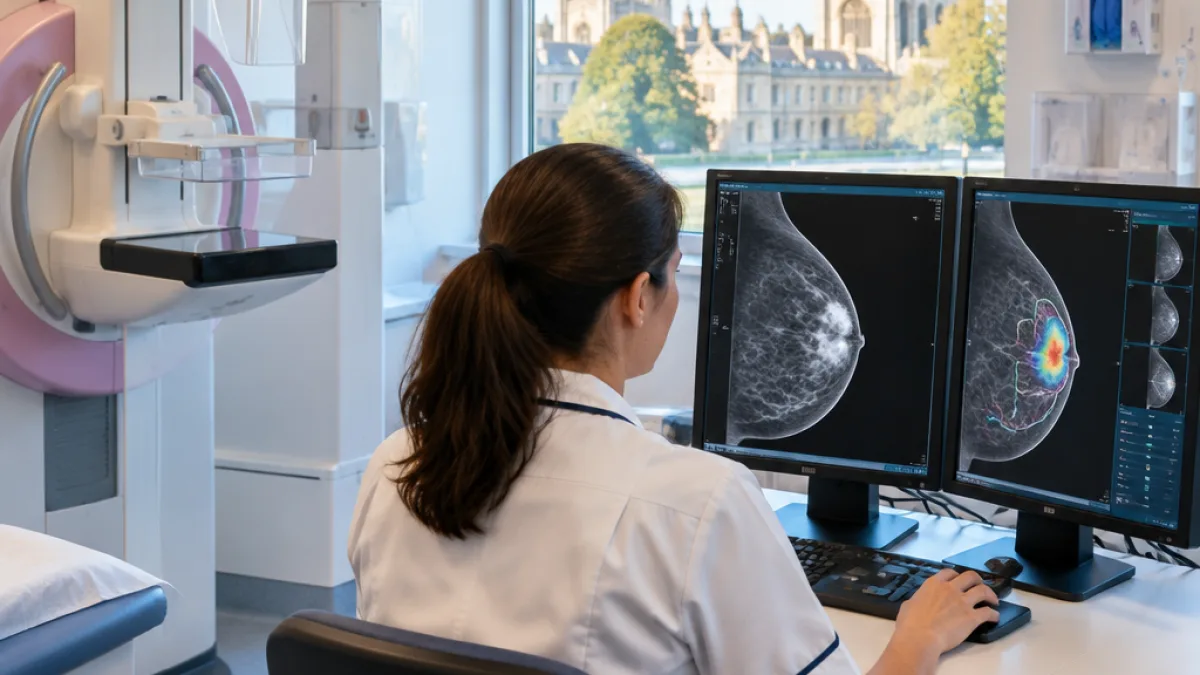
At present, each breast screening examination is checked by two specialists. The trial will test whether AI-assisted tools can help ensure that most images can instead be reviewed by one specialist, while retaining the clinical oversight required within the screening process. The source material does not report any findings from the study, so it is not yet known whether the approach will improve detection, maintain existing standards or deliver the expected reduction in workload.
The central question is therefore not whether an automated system can replace clinicians, but whether it can safely assist them. The trial is intended to produce evidence about the technology in routine NHS screening. Until that evidence is available, the proposed benefits remain potential outcomes rather than established effects. Participation by women invited to the study will help researchers assess the approach across the participating services, but the announcement does not provide further details about the trial’s methods or how its results will be measured.
Potential impact on NHS capacity
If the results support wider use, the technology could have implications beyond the interpretation of individual screening images. The trial organisers say it could release the time of hundreds of radiologists and other specialists across the country. That capacity could then be used for patients requiring cancer tests and treatment, with the stated aim of helping to reduce waiting lists and enabling more people to receive care.
- Almost 700,000 women are expected to be invited over three years.
- The study is backed by £10m in Government funding through the NIHR.
- Recruitment has started at Cambridge University Hospitals, the first of 30 UK sites.
- The trial will assess whether most images can be reviewed by one specialist with AI assistance rather than two.
| Element | Details |
|---|---|
| Duration | Three years |
| Funding | £10m, Government-funded through the NIHR |
| Leadership | Universities of Warwick and Cambridge, with Cambridge University Hospitals NHS Foundation Trust |
| Planned locations | 30 sites across the UK |
Early diagnosis remains the stated aim
During a visit to the trial team at Addenbrooke’s Hospital, health and social care secretary Yvette Cooper said:
“If successful, this technology could help women get a breast cancer diagnosis and start treatment much more quickly, giving them the best possible chance of recovery.”
That statement describes the intended benefit of the research, rather than a result demonstrated by it. The study’s outcome will determine whether AI assistance can contribute to earlier diagnosis while preserving the specialist review process. It will also show whether any efficiency gained can realistically be translated into additional capacity for testing and treatment.
The first phase will now involve recruitment in Cambridge before the remaining sites begin inviting eligible women. The scale of the programme means its findings could be important for the future organisation of NHS breast screening. However, any decision to extend the technology across the service will depend on the evidence produced during the trial, including whether it delivers reliable clinical support without compromising the assessment of screening images.