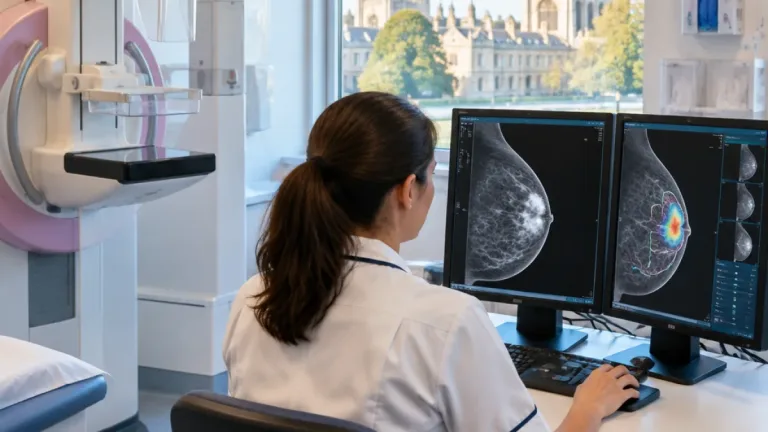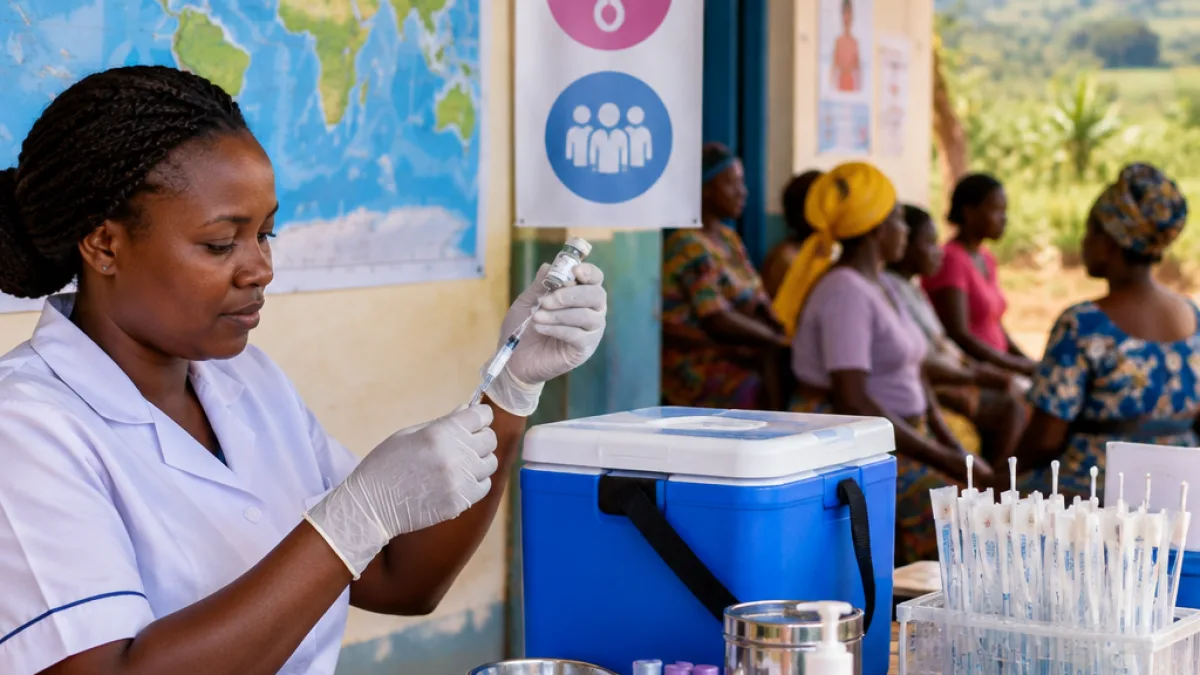
Cervical cancer could become the first cancer eliminated as a public-health problem, according to a global campaign highlighting the combined impact of human papillomavirus vaccination, screening and prompt treatment.
The prospect is based on tools that already exist rather than a new medical discovery. However, the possibility of elimination depends on countries achieving ambitious levels of prevention and care, and on reaching women in communities where access to health services remains limited. The available evidence supports a major opportunity, but it does not mean the disease has already been brought under control worldwide.
A continuing global burden
More than 600,000 women are diagnosed with cervical cancer each year, while about 280,000 die. The figures describe a disease that remains a substantial international health challenge despite the availability of measures intended to prevent infection, detect precancerous changes and treat cancer.
The consequences extend beyond the patients themselves. When a mother dies, children may lose a source of care, protection and support. The campaign describes these children as maternal orphans, whose experiences are often overlooked in assessments of the disease burden. Women with advanced cervical cancer may also face stigma, silence and practical obstacles in seeking potentially lifesaving treatment.
The burden is not evenly distributed. The source material states that 19 of the 20 countries with the highest rates of cervical cancer are in the World Health Organization’s African Region. That disparity means that progress in countries with established vaccination, screening and treatment systems cannot be treated as evidence that the same results are already available elsewhere.
WHO targets for prevention and care
In 2018, the WHO issued a call for action, followed in 2020 by the adoption of a global strategy intended to accelerate the elimination of cervical cancer. Its targets are designed to address the disease at several stages, from preventing the HPV infections that can lead to cervical cancer to ensuring that abnormal findings and established disease receive appropriate care.
| Area | WHO strategy target |
|---|---|
| HPV vaccination | 90% of girls |
| Screening | 70% of women |
| Treatment | 90% access for precancerous lesions or cancer |
These targets are interconnected. Vaccination can reduce the risk of infection, but it does not remove the need for screening or treatment. Screening can identify disease at an earlier stage or detect precancerous changes, but its effect depends on women being able to access follow-up services. Treatment coverage is therefore essential if detection is to translate into fewer deaths.
Supply and delivery remain decisive
There have been signs of progress since the global strategy was launched. Vaccine shortages that had threatened expansion have largely eased, and the number of HPV vaccines available has increased. According to the campaign, 166 countries have now introduced HPV vaccination into their national immunisation programmes. Burundi, Papua New Guinea and Ukraine were among the countries added during the past year.
India has also recently begun one of the world’s largest HPV vaccination campaigns, while Australia and Sweden are described as approaching the threshold for cervical cancer to be considered eliminated as a public-health problem. Rwanda is cited as evidence that progress is possible in Africa, with several districts already meeting key WHO elimination targets.
Those examples demonstrate what can be achieved when vaccination, screening and treatment are organised at scale, but they do not remove the wider implementation challenge. The largest burden remains concentrated in poorer communities, where barriers to care, stigma and limited health infrastructure can prevent people from benefiting from interventions that are technically available.
The campaign’s central message is therefore one of possibility rather than completion. Cervical cancer may be preventable on a scale that would have been difficult to imagine in earlier decades, but the outcome will depend on sustained vaccination, reliable screening and timely treatment across countries with very different resources. Until those services reach women facing the greatest risks, global figures will continue to conceal wide differences in health outcomes.