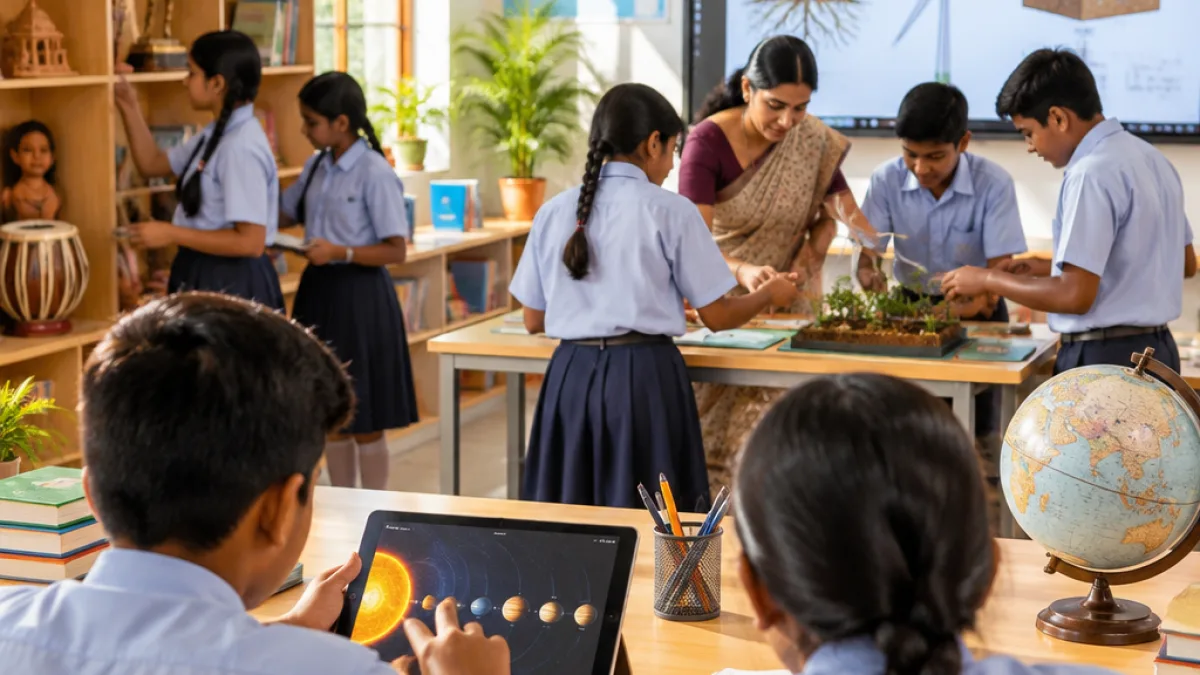
India’s National Education Policy 2020 is seeking to move education away from a system centred primarily on memorisation and examination marks, towards one that places greater weight on understanding, practical application and wider personal development.
An account published by India’s government-backed Economic Times platform describes the policy as a long-term framework for reshaping learning across the country. It presents education as something connected to technological change, social life and cultural identity, rather than as an activity confined to the classroom.
From memorising facts to applying knowledge
For many years, the Indian school curriculum has been described as placing strong emphasis on rote learning. The policy aims to alter that balance by encouraging pupils to understand ideas in depth and use them in everyday circumstances, rather than concentrating solely on securing high examination results.
That approach has consequences for the way lessons are designed and for how achievement is judged. The policy account says assessment is evolving, with schools moving towards more flexible and continuous forms of evaluation. It does not provide national figures showing how widely those changes have been introduced, but says that many schools have adopted the approach and reported tangible results.
“Indian Knowledge System”
The policy also links education with India’s cultural and social setting. Regional languages, indigenous traditions and older bodies of knowledge are identified as potential parts of a modern curriculum. The stated aim is to make learning more meaningful while maintaining a connection with the country’s heritage.
Learning beyond the school building
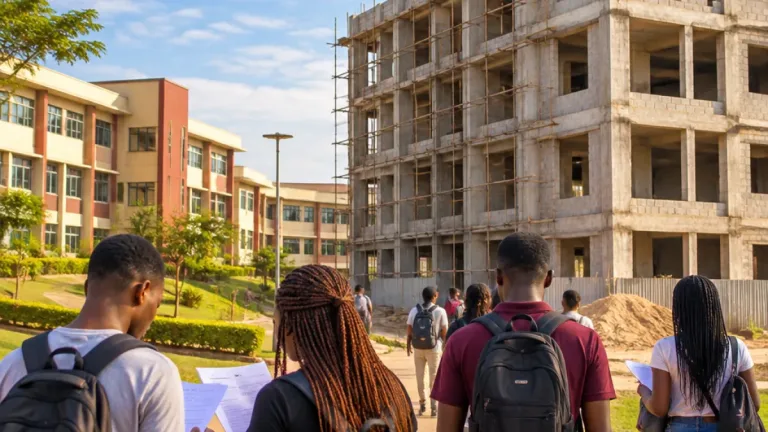
A further strand of the reform is the effort to connect classroom theory with experience outside school. The policy account highlights activities intended to help pupils understand possible careers and their place in the wider community. These include:
- internships and exposure to different professions;
- community service and learning connected with social life;
- practical opportunities that link academic ideas with real situations; and
- greater use of digital literacy as technology becomes more prominent in daily life.
The emphasis on practical learning is presented as a way of making education more engaging and of helping young people think about future opportunities at an earlier stage. It also reflects the policy’s broader argument that schools should prepare pupils not only to pass examinations, but to use what they learn in their lives beyond education.
Technology and the role of teachers
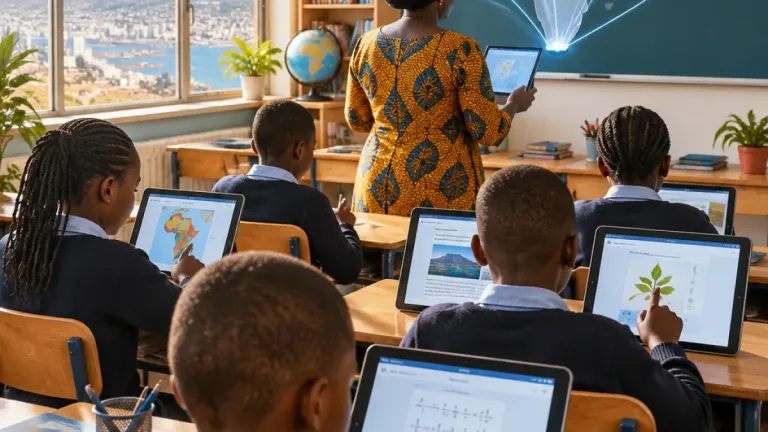
Technology is another central part of the policy’s vision. The account notes that digital tools have become increasingly important in everyday life and says education must respond to that change. Digital literacy is therefore included alongside cultural knowledge, practical skills and academic learning.
Teachers remain central to the proposed transformation. The policy includes teacher training among its priorities, recognising that changes to curriculum and assessment depend on staff being able to deliver them effectively. For schools, the challenge is not limited to introducing new subjects or tools: it also involves changing how pupils are taught and how their progress is followed.
A wider definition of educational success
The policy sets out a model in which educational success is linked to several goals rather than to marks alone. These include a deeper grasp of concepts, the ability to apply knowledge, awareness of Indian heritage, digital capability and the development of citizenship values such as unity in diversity.
| Policy emphasis | Intended direction |
|---|---|
| Assessment | More flexible and continuous evaluation |
| Curriculum | Greater connection between knowledge, culture and practical life |
| Preparation | Digital skills, career awareness and civic values |
| Teaching | Training to support the revised approach |
Its implementation will determine how far those ambitions are reflected in pupils’ daily experience. The source account presents NEP 2020 as a guide for changing the purpose of education, from the accumulation of examination results to a broader effort to develop understanding, skills and social awareness. It offers no detailed assessment of progress across India, but identifies the direction in which the country’s education system is intended to move.