
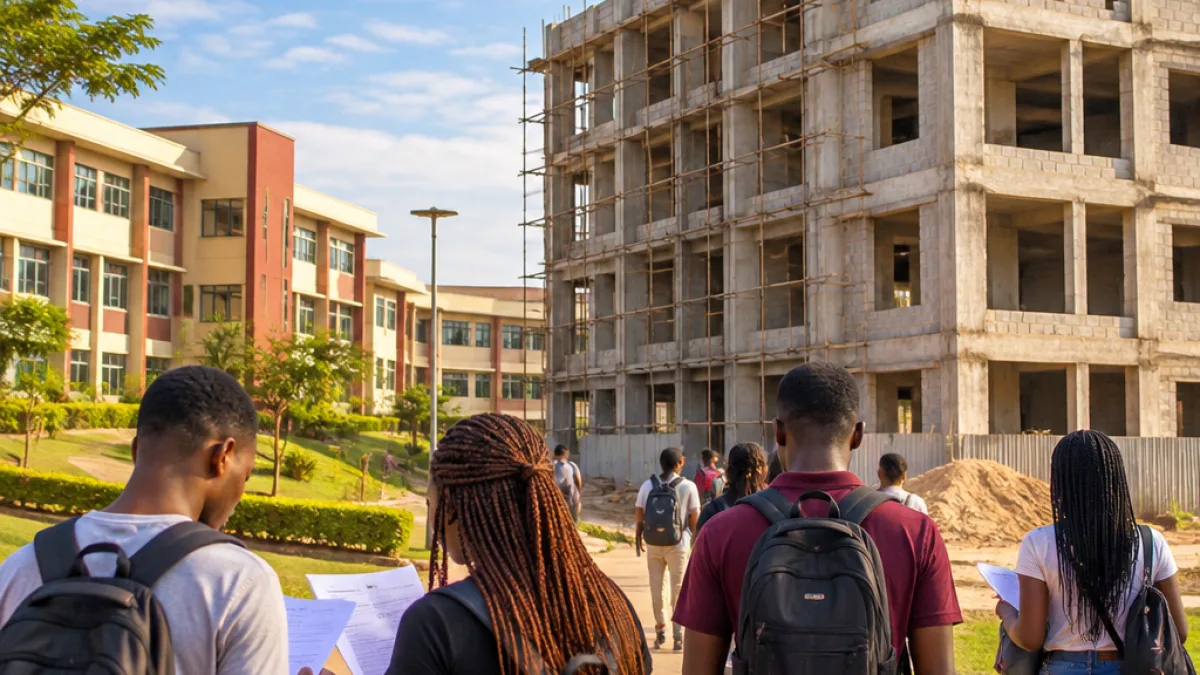
President Bola Tinubu has said no Nigerian student should be excluded from university because of financial hardship, as his administration renewed its support for the Nigerian Education Loan Fund and other measures intended to widen access to higher education.
Speaking on Saturday at the 37th convocation ceremony of the Federal University of Technology, Akure, Mr Tinubu said the loan scheme was designed to provide help to eligible students attending public tertiary institutions. His remarks were delivered by Prof Olatunde Peter Ajagbonna of the National Universities Commission.
“This commitment informed the establishment of the Nigerian Education Loan Fund (NELFUND), which provides financial assistance to eligible students in public tertiary institutions, including support for their upkeep.”
Support for students
The president said NELFUND would offer assistance not only towards the cost of education but also towards students’ upkeep. He presented the initiative as part of a wider effort to make access to university more equitable, regardless of students’ financial circumstances.
The announcement places student finance at the centre of the government’s stated approach to higher education. For pupils considering university and their families, the distinction between being eligible for a loan and being able to meet the wider costs of studying remains important. The address referred specifically to assistance for upkeep, alongside support for study, but did not set out the value of individual awards or the conditions attached to them.
- NELFUND is intended to assist eligible students in public tertiary institutions.
- The support includes help with students’ upkeep as well as financial assistance connected with higher education.
- The government says the scheme is aimed at promoting more equal access to university.
Investment in university facilities
Mr Tinubu also disclosed federal backing for the construction of a 1,500-capacity student hostel at the Federal University of Technology, Akure. The project is being supported in partnership with private-sector organisations, according to the address.
He said the federal government had continued to intervene in tertiary institutions through spending on infrastructure, equipment, research facilities, laboratories, lecture theatres and student accommodation. Taken together, those areas point to an approach that links access to university with the capacity of institutions to provide places to study, conduct research and house students.
| Area | Commitment outlined |
|---|---|
| Student finance | Assistance through NELFUND for eligible students |
| Accommodation | Federal support for a 1,500-place hostel at FUTA |
| University provision | Interventions covering facilities, equipment and research |
Academic calendars and staff relations
The president further promised continued attention to uninterrupted academic calendars and the timely completion of degree programmes. He said agreements had been concluded and signed with various staff unions in public tertiary institutions, with financial provision made for their implementation.
For students, the continuity of teaching is closely tied to the promise of completing programmes on time. For university workers, the implementation of agreements will be a test of the government’s stated commitment to resolving disputes through dialogue. Mr Tinubu urged staff to respond with dedication, professionalism and diligence, while arguing that sustained discussion and mutual understanding were necessary to maintain stability.
The government’s message therefore combines three strands: financial help for students, investment in university facilities and an attempt to protect the regularity of academic programmes. The speech did not provide further details about the timetable for the hostel project, the scale of the NELFUND assistance or the agreements with staff unions. Those details will determine how the commitments are experienced by students, parents and university employees.
At the convocation, Mr Tinubu said universities had a critical role in national development. His pledge that financial circumstances should not bar entry to higher education now places the effectiveness of the loan fund, the delivery of promised infrastructure and the maintenance of stable academic calendars at the heart of that ambition.