
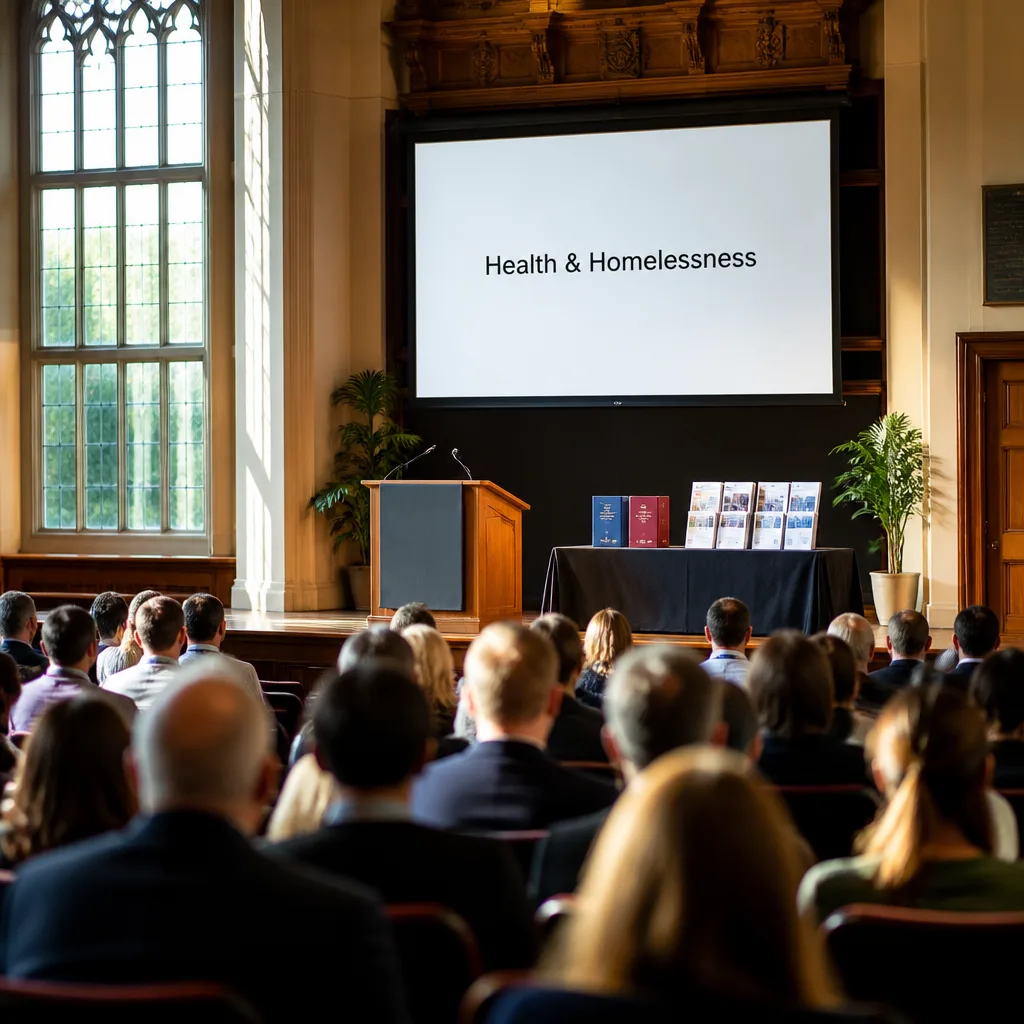
Leaders from public health, clinical practice and faith communities gathered at Harvard this summer to examine how collaboration across sectors could improve responses to homelessness. The event, convened by the Initiative on Health and Homelessness and the Human Flourishing Program, brought researchers, practitioners and faith leaders together to consider how spiritual support and medical care can be combined to better meet the needs of people living without stable housing.
Bridging health and spiritual care
Speakers argued that health is shaped by where people live, work and form social ties, and that for many people spirituality—whether religious or otherwise—remains central to meaning and resilience. Howard Koh, chair of the Initiative on Health and Homelessness and a professor of public health leadership, said the dominant medical model risks overlooking this dimension and urged that spiritual needs be recognised alongside clinical care.
“Health doesn’t start in a doctor’s office but rather where people live, labor, learn, play, and pray,”
The conference organisers framed the event as possibly the first academic conference in the United States specifically convened to discuss the intersection of faith, public health and homelessness. Around 70 participants included public health researchers, faith leaders, clinicians, policymakers and community advocates, reflecting an intent to convene practical and scholarly perspectives.
Practical implications and limitations
Participants emphasised several practical areas where collaboration could alter outcomes for people experiencing homelessness:
- Holistic assessment: incorporating spiritual or existential distress into health assessments where appropriate;
- Partnerships: building referral pathways between clinical services and trusted community faith organisations;
- Training: equipping health practitioners to recognise and sensitively respond to spiritual concerns without proselytising;
- Policy integration: ensuring funding and service models support cross-sector working that includes non-clinical supports.
Those advocating for integration stressed that spiritual care is not a substitute for medical or social interventions. The discussion repeatedly drew attention to the complex, multifactorial causes of homelessness—structural drivers such as housing affordability, employment and social safety nets remain primary determinants of health and wellbeing.
What evidence exists and what is needed
Conference participants referenced longstanding conceptual links between meaning, social connectedness and health. However, evidence on the direct impacts of faith-based interventions on housing or health outcomes is uneven and context-dependent. Good-quality, peer-reviewed research that isolates the effects of spiritual support from other elements of care is limited. Observational studies can indicate associations between social connectedness and better health, but such studies cannot reliably prove causation.
Speakers called for robust mixed-methods research that evaluates integrated programmes: measuring not only clinical outcomes but also housing stability, service engagement, mental wellbeing and measures of lived experience. They also highlighted the ethical importance of safeguarding choice and autonomy: people experiencing homelessness should not be coerced into receiving spiritual care as a condition of accessing medical or housing services.
Conference details at a glance
| Date | Host organisations | Approximate attendance |
|---|---|---|
| 25 June (June) | Initiative on Health and Homelessness; Human Flourishing Program | 70 |
International relevance was a recurring theme: while the conference took place in the United States, the principle of combining community-based spiritual supports with health and social care has potential applicability in other settings, including the United Kingdom. Any adaptation must account for local legal, ethical and cultural contexts, and funders should support rigorous evaluation before widespread adoption.
The meeting underlined a pragmatic message: addressing homelessness effectively requires both evidence-based health and housing interventions and attention to the wider social and existential dimensions of human life. Policymakers and service commissioners should consider how local faith and community organisations can be respectfully integrated into multidisciplinary responses, without supplanting core entitlements to housing and healthcare.
Those involved stressed caution. While spiritual care may bolster resilience and engagement for some individuals, it is not a panacea. Structural change to housing policy, social protection and affordable care remains essential to reduce rates of homelessness and its health harms.














