
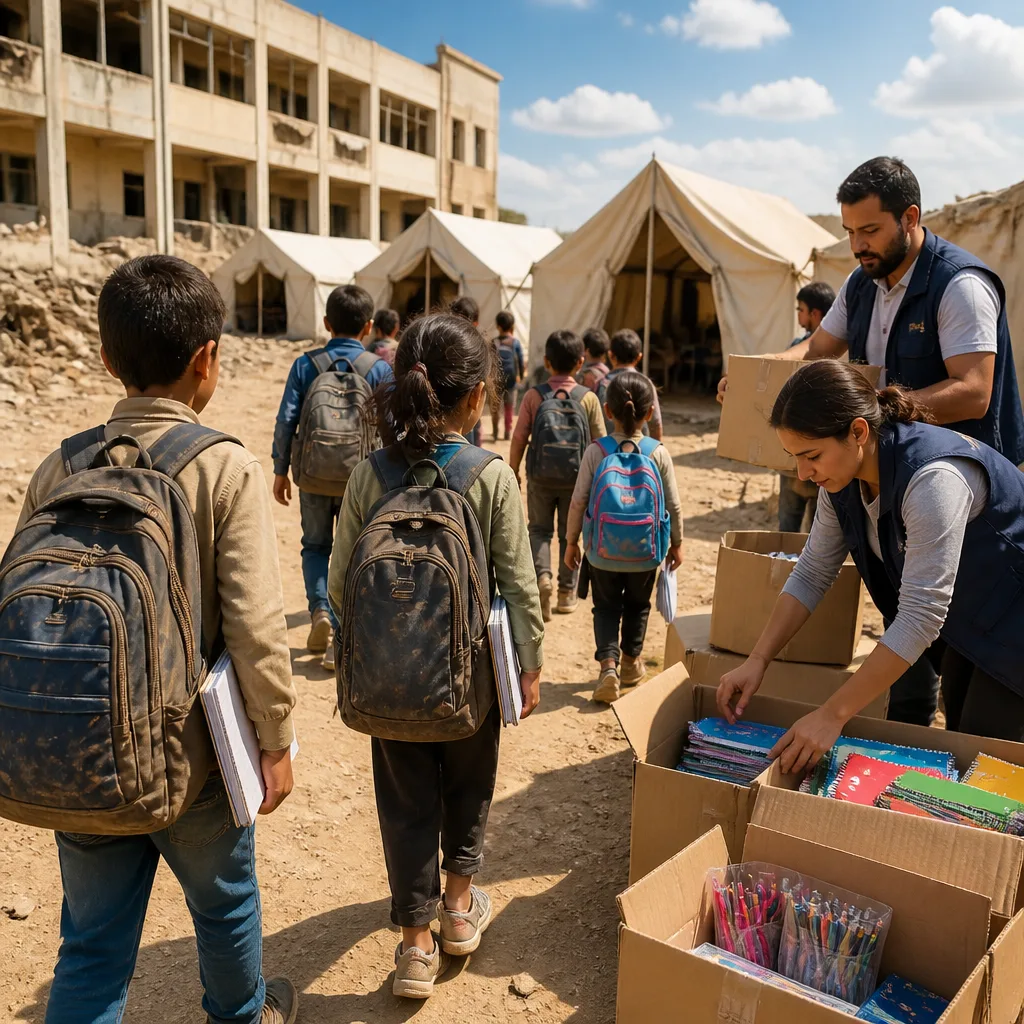
Education Cannot Wait (ECW) has announced a US$22 million multi-year investment to help restore access to safe, quality and inclusive schooling for almost 200,000 children and adolescents in Sudan.
Scope and aim of the intervention
The three-year funding package targets pupils in West Darfur, South Kordofan and Gedaref, regions where education services have been severely disrupted by the conflict that began in April 2023. ECW says the allocation is intended not only to reopen classrooms but to support the broader recovery of the country’s education system.
Scale of the crisis
Since hostilities started, the humanitarian situation has deteriorated sharply. ECW’s announcement cites that some 14 million people have been forced to flee their homes and that overall 33.7 million people now require humanitarian assistance. The fund highlights the particularly grave impact on children: at least 8 million out of Sudan’s 17 million school-age children remain out of school, while many have missed prolonged periods of learning — in some cases approaching 500 days.
"Education in Sudan has been interrupted by conflict, displacement and unimaginable hardship. Yet it remains one of the most powerful tools we have to protect millions of children, restore hope and support recovery,"
The statement quoted came as ECW’s director returned from a high-level mission to Sudan, where she met teachers, pupils, families and education partners to assess needs on the ground.
What the money will support
ECW says the funds will be used to help children and adolescents return to safe and inclusive learning environments and to back measures that rebuild educational provision. The investment is part of the fund’s wider campaigning effort, "Hope Starts Here", which aims to mobilise US$600 million to reach 10 million children affected by the world’s most severe crises.
- Duration: Three years
- Geographic focus: West Darfur, South Kordofan, Gedaref
- Target beneficiaries: nearly 200,000 children and adolescents
Context and consequences
Education in conflict settings performs multiple protective and stabilising roles: it can offer routine and safety for children, provide psychosocial support, and sustain the skills base needed for recovery. The prolonged closure of schools in Sudan has therefore not only interrupted learning but risked long-term harm to a generation’s prospects. Restoring education services will require not only reopening buildings but investing in teachers, learning materials, safeguarding measures and community engagement — all of which ECW’s contribution is designed to catalyse alongside local and international partners.
ECW’s injection of funds comes amid a deepening humanitarian crisis with widespread displacement and acute needs. The scale of the challenge underlines why global pooled financing and coordinated action are central to efforts to prevent further educational loss for millions of children.
| Metric | Figure |
|---|---|
| ECW investment | US$22 million |
| Duration | Three years |
| Children targeted | Nearly 200,000 |
| People displaced | 14 million |
| People needing assistance | 33.7 million |
The pledge will be closely watched by parents, educators and humanitarian agencies working in Sudan, who face the immediate task of translating funding into classrooms, teachers and learning opportunities in highly insecure and disrupted settings. For a generation that has already lost months or years of schooling, the effectiveness of these interventions will be decisive in shaping future prospects.











