
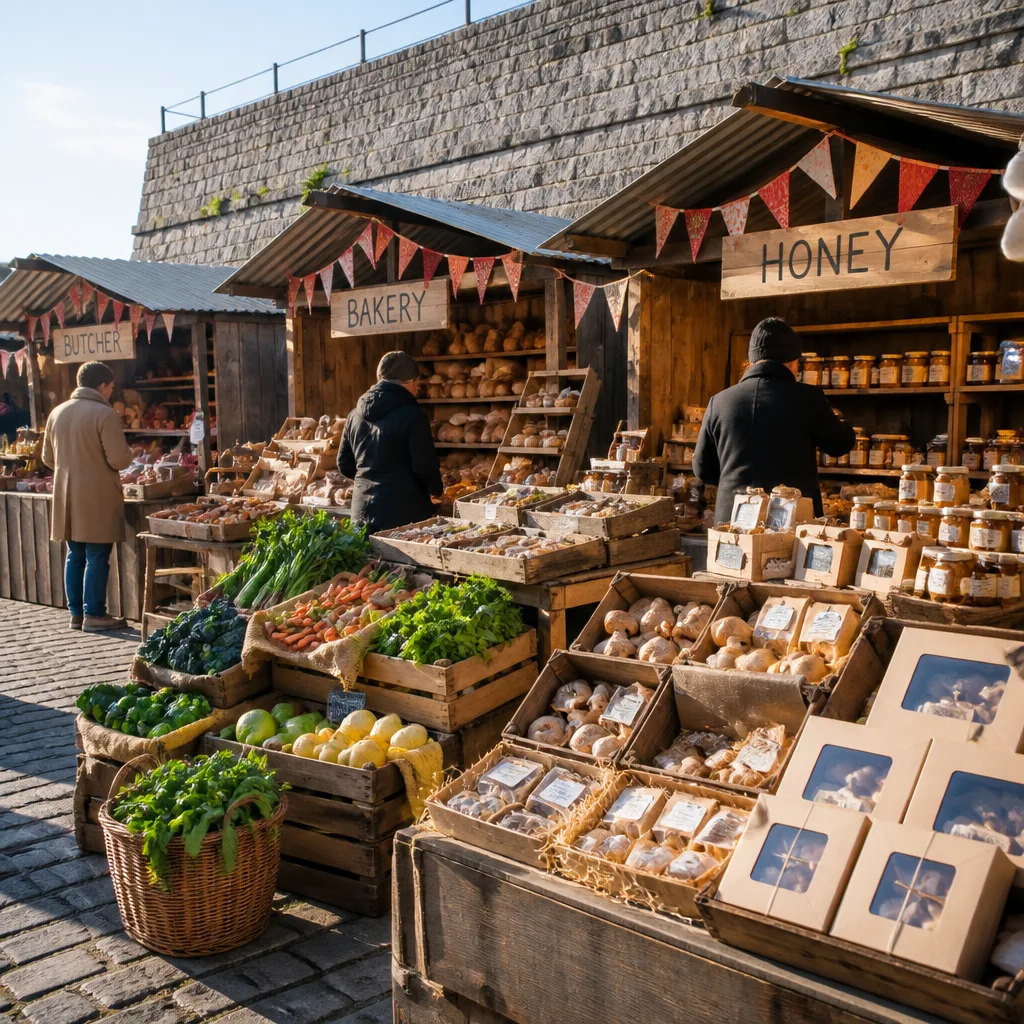
A new farmers’ market will open at The Old Coal Yard business hub in Gagingwell, near Chipping Norton, on Saturday 29 August, organisers have said. The event, scheduled to run from 8.30am to 11.30am, will then take place on a monthly basis, with the next confirmed dates on 12 September and 17 October.
What is on offer
The market aims to feature a mix of food producers and artisan makers from the surrounding area. Confirmed stallholders include:
- Shop Paddock Farm Butchery — cured and fresh meat
- Public House Produce — fresh goods supplied by the organiser
- Saltpig Curing — local rare-breed cured meats
- Forge House Bakery — bread and pastries made with Bruern Flour
- By The Hedge — honey
- Tumblebug — mushrooms grown at Blenheim
- Crafts from Vigour and Skills, art by Catherine Binnie, and vintage/second‑hand clothing from Sarah’s Clothes
- Packaged offerings such as Field to Fork Feasts picnic boxes and produce from FarmAbility
The Old Coal Yard is a multi‑use business site that already hosts a restaurant, a movement studio and a sauna. Earlier this year a Michelin-guide-listed Italian restaurant, Canteen from Notting Hill, announced a pop‑up presence at the venue.
Small scale, but what it means for jobs and prices
On the face of it, monthly markets such as this are modest ventures. They offer direct sales channels for farmers and makers, reduce reliance on larger retailers and can help small producers retain a greater share of the retail price. For stallholders selling specialist products — rare‑breed cured meats, artisanal breads or niche mushroom varieties — the margin on direct sales can be a useful supplement to income, particularly during seasonal peaks.
However, the economic impact should not be overstated. Markets operating for a few hours on a monthly basis provide limited, irregular revenue and are unlikely to substitute for sustained wholesale contracts or consistent footfall. For employees of participating businesses, any jobs created are more likely to be part‑time or casual roles linked to market days rather than stable full‑time positions.
For consumers grappling with elevated food bills, a farmers’ market can offer perceived value through quality and provenance rather than outright price competition with supermarkets. Shoppers paying a premium for traceability, animal welfare or artisan techniques still face the same broader inflationary pressures on inputs such as grain, fuel and energy that affect prices across the food sector.
Context: local hubs and the hospitality rebound
The Old Coal Yard’s mix of leisure and food operators illustrates a growing trend in repurposing rural commercial sites as multi‑service hubs. These venues attempt to aggregate complementary offers — dining, fitness, wellbeing and retail — to attract visitors beyond the immediate community. Successful examples can boost local spending and short‑term employment; unsuccessful ones risk underutilised space and squeezed margins for tenants.
For regional economies, the return or growth of hospitality and speciality food enterprises is a positive sign after pandemic and cost‑pressure disruptions. Yet their sustainability depends on steady consumer demand, sensible pricing strategies and efficient access to supplies. The announced presence of a Michelin‑associated pop‑up earlier in the year suggests The Old Coal Yard is actively pursuing a higher-end leisure market, which may help drive visitors to a Saturday market but could also set expectations about price levels.
| Detail | Information |
|---|---|
| Launch date | 29 August |
| Opening hours | 8.30am–11.30am |
| Frequency | Monthly (next dates: 12 Sept, 17 Oct) |
| Venue | The Old Coal Yard, Gagingwell, near Chipping Norton |
For shoppers looking to stretch household budgets, markets like this will chiefly be an option for discretionary spending — treats, speciality supplies or gifts — rather than a wholesale alternative to supermarkets for everyday staples.
At a time when wage growth and household budgets remain under pressure, initiatives that help small producers keep a greater share of final prices are useful. Yet for those concerned about broader food affordability or local employment, monthly markets are one of many pieces in a larger puzzle that includes policy on farm support, energy costs and retail competition.
Organisers say the market will also feature children’s activities, underlining the event’s aim to be a community draw as much as a commercial platform.














