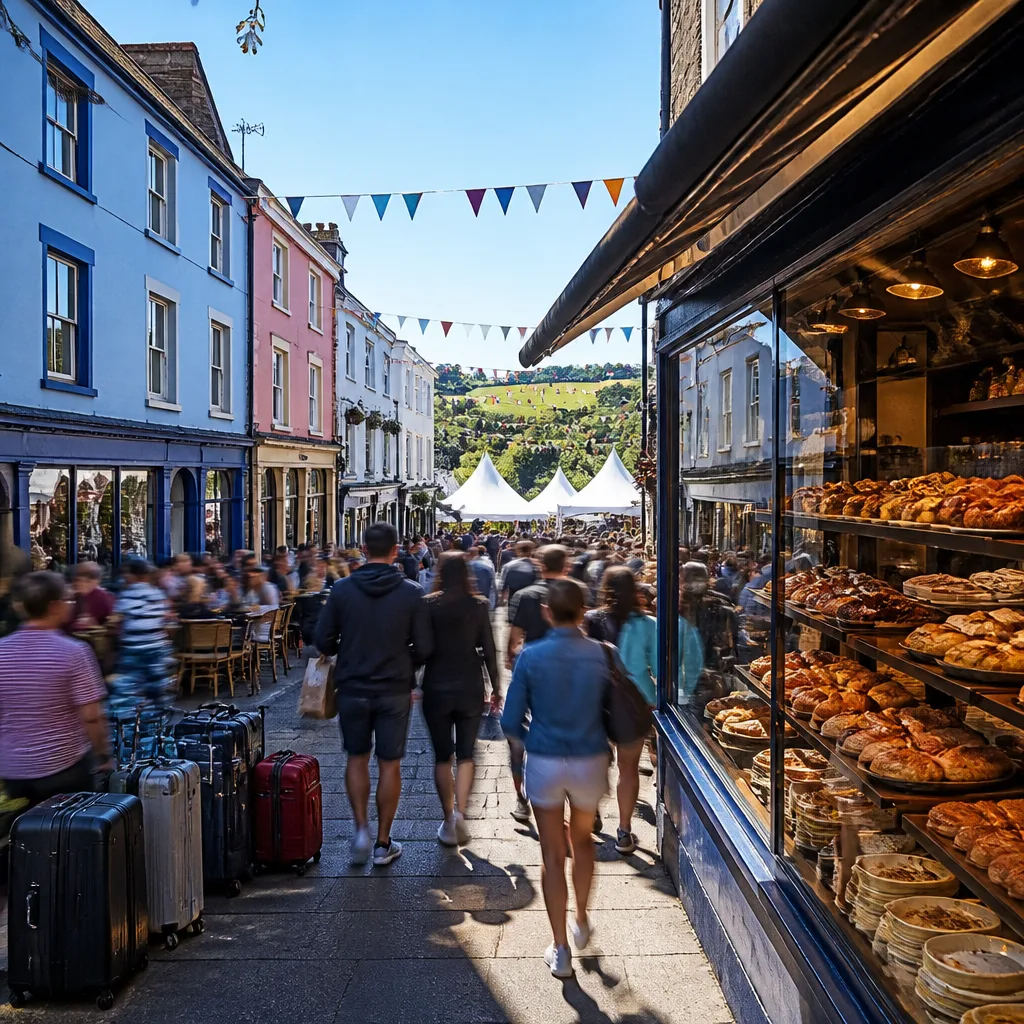
The presence of Eisteddfod y Garreg Las near Cardigan has delivered a clear short‑term economic windfall for the town, local leaders and traders say. Data from the town app showed a 9% increase in footfall in August compared with the same period in 2025, while 11% of visitors were first‑time arrivals.
Visible lift in hospitality and retail
Councillor Clive Davies described the figures as evidence of “significant” spin‑off benefits for the town from the national cultural festival, which took place a short distance away. Traders reported markedly higher demand across hospitality and retail during the week.
“The feedback we’ve been getting has been extremely positive… We would like to think that a lot of those visitors will have liked what they’ve seen and will either come back to Cardigan next summer or pop down here for an occasional weekend visit.”
Among those citing a surge in custom was Geraint James of Awen Teifi, who said shop staff had been “much busier than usual” and that visitors were exploring the surrounding area as well — a pattern that supports not only shops and restaurants but also hotels, holiday lets and other accommodation providers.
Bakeries and cafés bore out the anecdotal evidence with raw throughput figures. At Crwst Bakery, staff served a record 335 covers on one of the busiest days, according to proprietor Osian Jones, who called the week “absolutely immense”.
Why this matters for wages, prices and jobs
Short, sharp spikes in visitor numbers matter for local economies. They create immediate demand for workers on the shop floor, in kitchens and housekeeping — often met by temporary hours or overtime. For small businesses, an intense week can boost weekly takings markedly and provide a buffer against quieter periods.
However, the benefits are not automatic or evenly distributed. Traders pointed to the importance of advance planning and promotion around the event — including signage and town branding — in capturing passing trade. Councillor Davies emphasised that the business boom was the product of actions taken before and during the Eisteddfod.
- Footfall rise: 9% in August versus August 2025 (town app data).
- New visitors: 11% were first‑time visitors to Cardigan.
- Hospitality peak: Crwst Bakery served a record 335 covers in one day.
Those figures underline how cultural festivals can act as demand multipliers for nearby towns. For employees, higher demand can mean extra shifts and tips; for employers, it can justify temporary recruitment or extended opening hours. But there are accompanying pressures: increased footfall can raise operating costs through higher stock usage, extra staffing and greater wear and tear on premises.
| Metric | Reported figure |
|---|---|
| Footfall increase (Aug vs Aug 2025) | 9% |
| Proportion of first‑time visitors | 11% |
| Peak covers at Crwst Bakery (single day) | 335 |
Outlook and the challenge of sustaining gains
Local leaders expressed hope the new arrivals will return outside the festival period, turning a spike into a more sustained revenue stream. That ambition depends on repeat visits and wider marketing of what the town and surrounding area offer — a task that requires co‑ordination between councils, tourism bodies and the business community.
For the Treasury and regional policymakers, such localised booms are a reminder that national cultural events can generate distributable economic benefits beyond host sites. The policy task is turning episodic attention into steady footfall, without imposing undue costs on small businesses that must weigh extra staffing and stock against uncertain future returns.
For now, Cardigan’s traders are enjoying a tangible payoff from the Eisteddfod: fuller tills, busier shifts and the prospect of converting curious visitors into repeat customers. Whether that short‑term surge translates into longer‑term jobs or higher local wages will depend on how effectively the town converts initial interest into revisits and longer stays.