
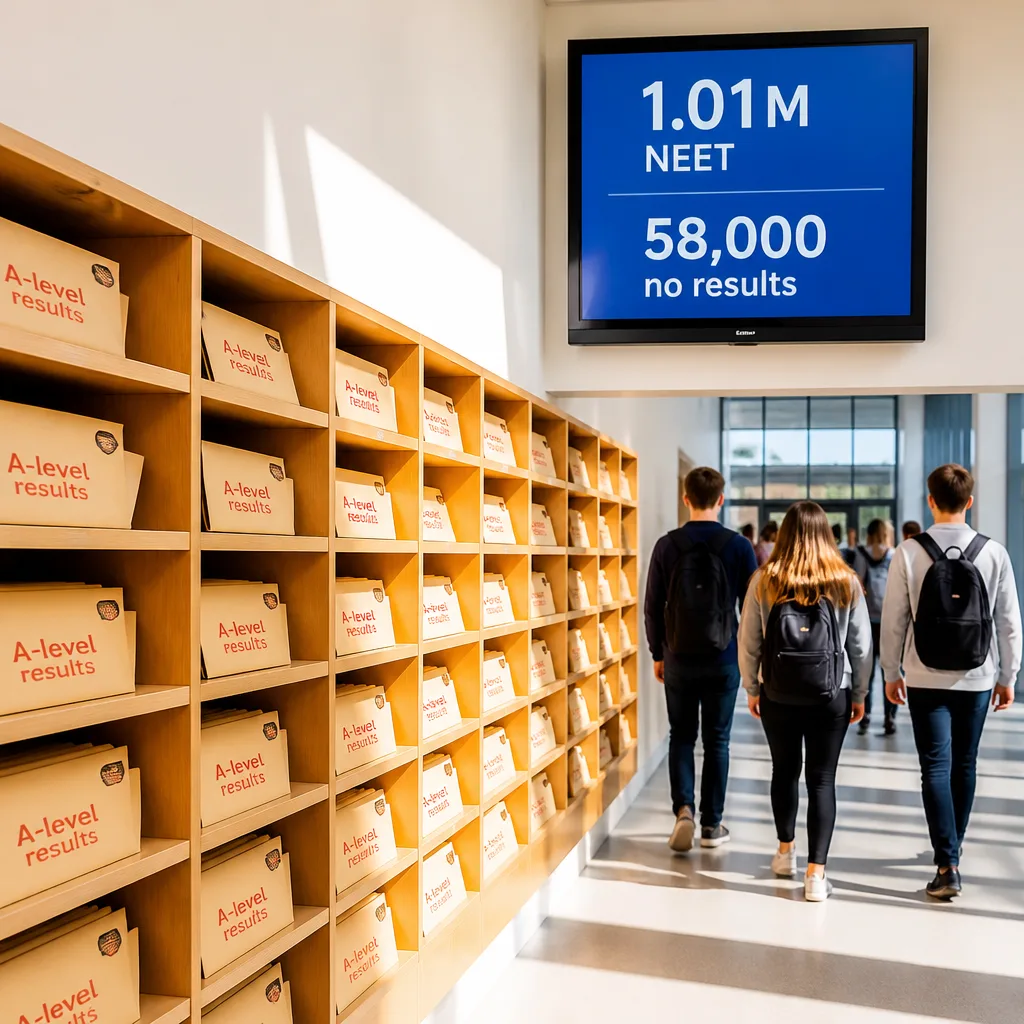
Hundreds of thousands of pupils and college leavers across England, Wales and Northern Ireland are receiving A-level grades today, a key milestone that will help many decide whether to go on to university, start an apprenticeship or enter the workforce.
Thousands get no results as drop-out figures bite
The Department for Education estimates that as many as 58,000 18-year-olds in England will not receive A-level results because they have dropped out of education or training. Some of those young people are in work but will not be collecting formal exam outcomes today.
The disclosure comes against a backdrop of a long-term rise in young people neither working nor learning. The latest official figures showed that the number of 16 to 24-year-olds who are not in education, employment or training surpassed one million for the first time since 2013, reaching 1.01 million in the three months from January to March.
Government response: technical routes and apprenticeships
The Education Secretary has framed today's results day as an impetus to expand technical and vocational routes, promising a shift in emphasis to alternatives to traditional academic study.
“My priority is making sure every young person has the skills, knowledge, and confidence to thrive in the jobs of the future.”
The government is rolling out new V Levels to sit alongside A-levels and has pledged to fully fund apprenticeship training for those aged under 25, measures ministers say are needed to tackle the scale of young people not engaged in work or learning.
What this means for students
For many students, receiving their A-level grades will confirm plans to progress to higher education; for others it will prompt a change of course. Results day also magnifies concern about whether enough high-quality alternatives exist for those who do not follow the traditional university route.
Policymakers and local providers face the immediate task of converting declarations on technical education into opportunities on the ground. The government’s statements suggest a focus on building clearer pathways from school to careers and strengthening post‑16 options, but the practical challenge remains to ensure those routes are accessible and appealing to young people who have already disengaged.
- 58,000 – estimated number of 18-year-olds in England receiving no results today due to dropping out
- 1.01 million – 16–24-year-olds recorded as not in education, employment or training in Jan–Mar
- New V Levels and fully funded apprenticeships for under‑25s are government priorities
| Measure | Detail |
|---|---|
| Estimated 18-year-olds with no results | 58,000 (England) |
| NEET total (16–24) | 1.01 million (Jan–Mar) |
Results day often generates intense media attention around university places, clearing and personal achievement. This year it also highlights how the education system must respond to a cohort of young people who are disconnected from formal learning and work. Officials argue that better technical qualifications and more funded apprenticeships will provide fresh routes into employment; the scale of the NEET figures suggests the reforms will need to be implemented swiftly and at scale if they are to make a material difference.
As students open their results today, schools, colleges and careers services will be under pressure to offer rapid advice and alternatives. With headline figures showing the highest NEET total in more than a decade, families and young people are likely to watch closely whether new policies translate into real options for those not destined for full-time university study.











