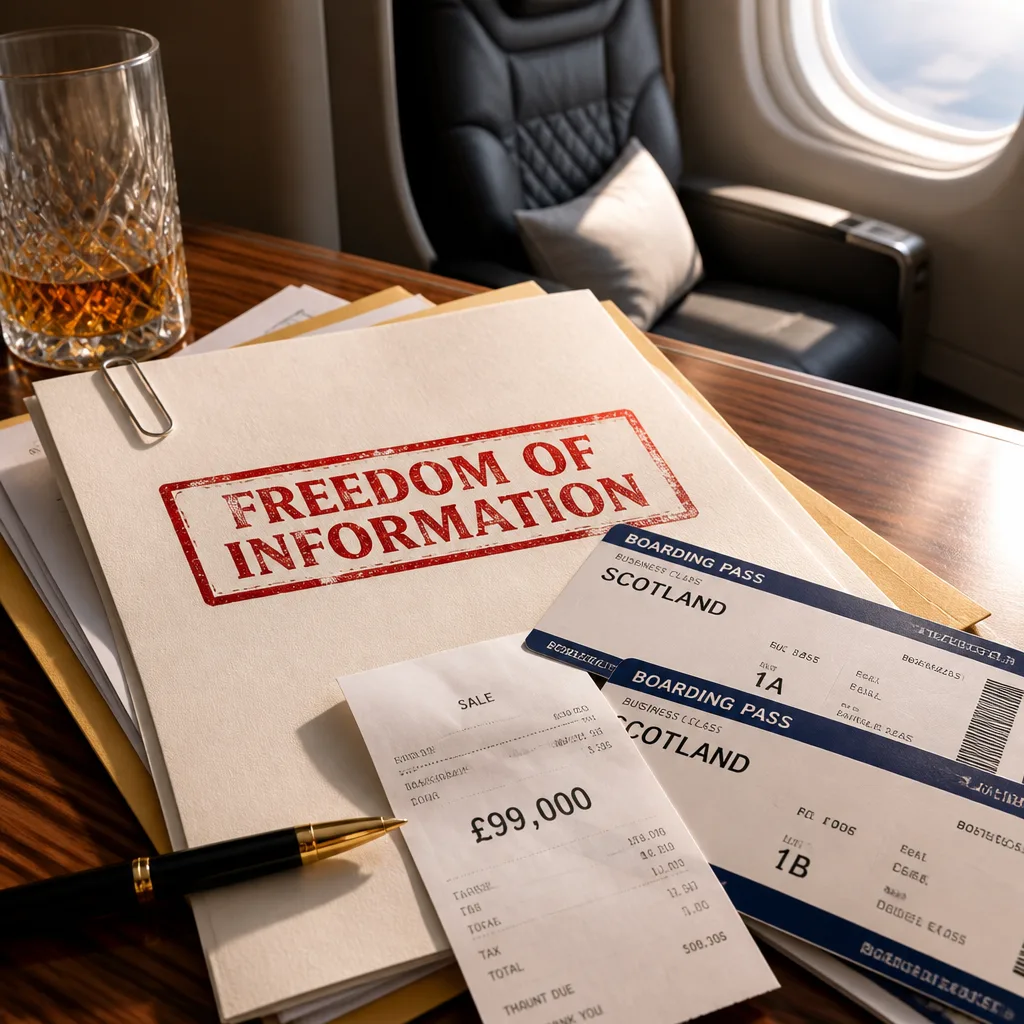
Nearly £100,000 of Scottish Government money was spent on travel relating to the national football team's World Cup fixtures in the United States, according to information released under freedom-of-information legislation — prompting questions about value for money and official travel policies.
What the disclosures show
The data reveal that flights for the First Minister, his private secretary John Webster and his chief of staff Colin McAllister were booked in business class, with those airfares alone amounting to more than £45,000. The overall cost for Mr Swinney and Scottish Government officials to attend matches in Boston and a later visit to Kentucky approached £100,000. Separately, sports minister Maree Todd travelled to Miami for Scotland’s final group game against Brazil.
The publication of the figures has drawn scrutiny because of the sums involved and because they were made public only after an information request. Ministers and officials argue the travel was necessary to support the national team and to ensure senior staff were able to perform their duties while abroad.
Defence from ministers and the optics for public finances
Transport Secretary Stephen Flynn, defending the arrangements while appearing at the Edinburgh Fringe, said it was important for the leader of the country and his key advisers to arrive ready to work. He contrasted his own economy-class journey — which included a stop in Dublin — with the business-class flights purchased for the First Minister’s party.
“I find it strange that we would expect the leader of the country not to be on his game when he lands in Boston.”
Mr Flynn told his audience that senior officials often work “all hours every single day” on matters that are not always visible to the public, and suggested the ability to operate effectively on arrival was a legitimate consideration when choosing travel class.
What this means for taxpayers and public sector choices
The disclosure touches on a perennial question for public-sector budgets: how to balance cost control with the need to enable ministers and senior officials to carry out demanding roles. While £100,000 is a small fraction of total public expenditure, such sums are visible and politically sensitive at a time when many parts of the public sector face tight budgets.
For businesses and households watching public spending, three practical considerations follow:
- Perception of prudence: high-profile travel costs can affect public confidence in fiscal stewardship, which in turn feeds wider debates about public-sector pay and service funding.
- Opportunity cost: the money used on premium travel could alternatively be directed to other public services or programmes, a point likely to be pressed by opposition parties and campaign groups.
- Precedent and policy: the case may prompt a review of travel guidance for ministers and advisers, potentially tightening rules or requiring clearer justification for business-class bookings.
Balance of accountability and operational need
There is a reasonable debate to be had about what constitutes necessary expenditure for senior office-holders who must perform in high-pressure settings. But transparency requirements exist precisely so the public can judge whether choices made are justified.
| Item | Reported cost |
|---|---|
| Flights for First Minister, private secretary and chief of staff (business class) | £45,000+ |
| Total travel related to Boston and Kentucky visits | Approaching £100,000 |
Ministers will need to persuade the public that the benefits — whether diplomatic, representational or practical — outweigh the headline costs. For the Scottish Government, the political impact may matter more than the absolute sum: perceptions of extravagance can become a drag on credibility at a time when many voters are concerned about the cost of living and public spending priorities.
As scrutiny intensifies, the government may publish more detailed breakdowns or revisit travel rules. Until then, the figures released under freedom-of-information rules will be a focal point for questions about senior officials' travel and the standards applied to public expenditure.