
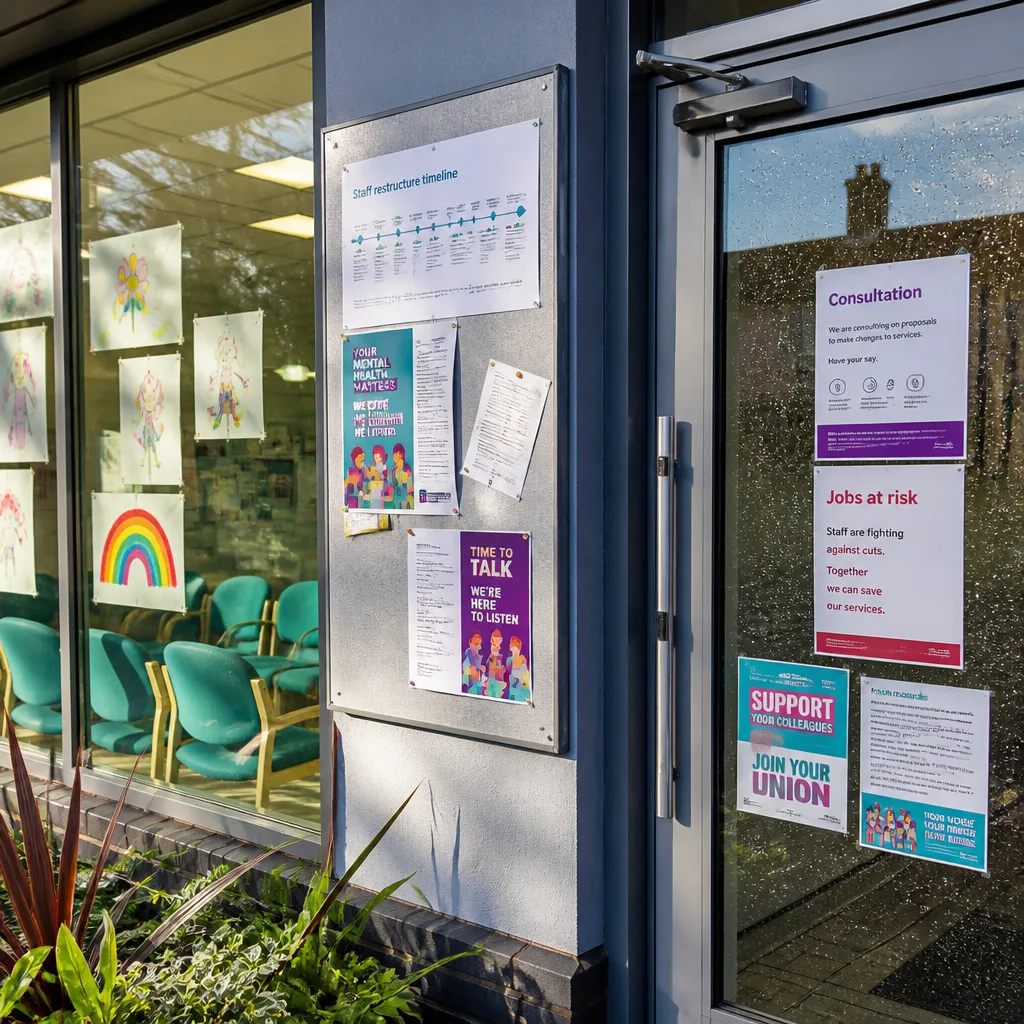
East London NHS Foundation Trust (ELFT) has launched proposals to reorganise mental health provision that would affect more than 330 jobs, primarily within child and adolescent services, adult mental health and community teams, prompting alarm from trade unions and local politicians.
Trust cites reconfiguration amid finance rules
The changes are presented by the trust as a service
"redesign", part of plans to meet new requirements imposed on Integrated Care Boards (ICBs) to balance their finances. Opponents say the move is occurring despite ELFT holding substantial cash reserves — reported at around £150m — and warn of damaging consequences for areas with high needs, including Tower Hamlets.
Unite and other unions representing affected staff have criticised the speed and scope of the proposals, arguing that the trust has not carried out adequate consultation over anticipated changes and alleging instances of trade union victimisation. The union says senior representatives were among the first to face redundancy.
Local needs, national implications
Campaigners say the trusts serve a population with a younger age profile and pockets of high deprivation, factors associated with elevated demand for mental health services. They argue reducing workforce capacity now risks leaving services unable to meet need, with consequences that will be felt beyond the trust’s boundaries.
- Who would be affected: child and adolescent mental health services (CAMHS), adult mental health and community health teams.
- Scale: more than 330 roles reportedly at risk.
- Trust finances: ELFT is said to hold around £150m in cash reserves.
Those opposing the plans point to broader system effects. Reductions in community mental health provision are associated, in a number of health services analyses, with increases in emergency department attendances, crisis presentations and pressures on police and social care — outcomes that can shift costs rather than reduce them.
While causation is complex and local context matters, experts emphasise that cutting frontline staff where demand is rising tends to increase the use of more expensive urgent care pathways. That pattern has been documented in health services research and highlighted by charities and local authorities in previous service reconfigurations.
Process and accountability concerns
Trade unions have raised procedural issues, saying formal and comprehensive public consultation has not taken place on changes they regard as major redesigns of services. The concerns have been taken up with the trust’s leadership by local MPs, who have publicly backed staff resisting the proposals.
Critics also argue that requiring ICBs to secure financial balance has created incentives to make cuts at provider level, even where a trust’s own reserves are healthy. This tension between national financial rules and local service sustainability is becoming a recurring theme in debates about NHS reform.
| Item | Reported figure |
|---|---|
| Roles at risk | 330+ |
| ELFT cash reserves | £150m |
| Boroughs served (including Tower Hamlets) | 5 |
The trust has framed the proposals as a necessary reconfiguration to deliver sustainable services. Those opposed say change should be accompanied by transparent, statutory consultation and clear evidence that cuts will not erode access or quality.
As the dispute unfolds, the key questions for policymakers are whether the proposed workforce reductions reflect an unavoidable response to system-wide financial rules, and how to ensure that mental health services remain accessible and resilient in areas where need is high. The outcome will have implications for patients, staff and partner services across health and social care.














