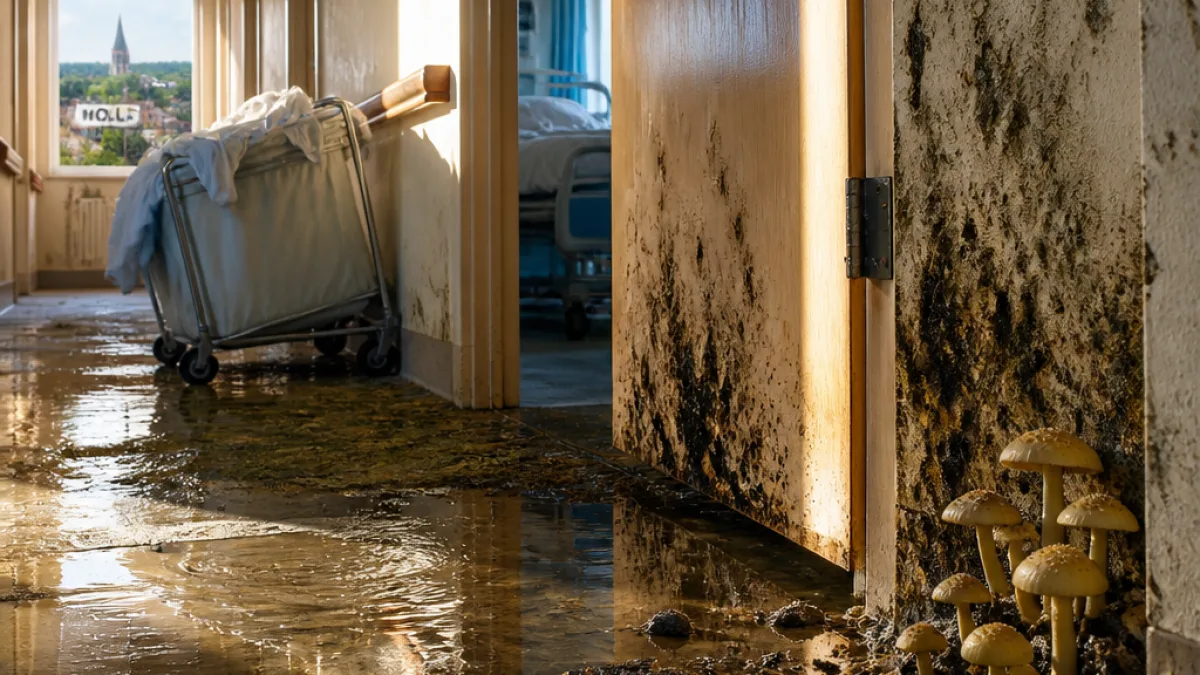
The Baltimore City Office of Inspector General (OIG) has published a report detailing widespread building and hygiene failures at three hotels converted into homeless shelters, citing mould growth, mushrooms sprouting inside rooms, pest infestations, broken laundry equipment and blocked drains. The investigation — sparked by a complaint in July 2025 — documents conditions that public-health and housing officials describe as unacceptable for people placed in emergency accommodation.
What the OIG found
The OIG examined three hotel sites that were repurposed as shelters during the COVID-19 pandemic: the former Sleep Inn and Suites on N. Front Street, the former Holiday Inn Express on N. Gray Street, and the former Fairfield by Marriott Inn & Suites Baltimore Downtown/Inner Harbor on S. President Street. The Sleep Inn, purchased by the city to serve as a family shelter, and the Holiday Inn, used for single men, were overseen by separate contractors responsible for operations and building maintenance.
- Mould and fungal growth: Investigators documented elevated mould spore levels in testing at the Sleep Inn in July 2025, with higher counts in three of six rooms tested compared with outdoor levels. Photographs included in the report show mushrooms growing inside a room.
- Ventilation and moisture problems: Staff and residents reported non-functioning ventilation fans and mould in heating and cooling units, which investigators linked to poor moisture control and condensation.
- Sanitation and pests: Complaints included untreated sewage, bed bugs and pest infestations; residents also reported dirty or bloody bedding, broken laundry machines and shortages of basic supplies such as soap and toilet paper.
- Plumbing failures: Video evidence of dark water backing up into a bathtub was cited in the OIG file.
Inspectors interviewed current and former staff, reviewed resident complaints and conducted site visits. While not every allegation could be fully substantiated, the evidence the OIG gathered was sufficient to raise serious concerns about the safety and habitability of the buildings when used as shelters.
Voices from the investigation
"critical" and "horrific"
Those words were used by former employees at the Mayor's Office of Homeless Services to describe conditions they witnessed in the hotels, according to reporting on the OIG findings. The language highlights how staff and residents experienced the problems as more than mere discomforts — signalling risks to health and dignity while people were housed there.
| Site | Primary use | Key issues reported |
|---|---|---|
| Sleep Inn & Suites | Family shelter (city-purchased) | Mould, mushrooms, pest infestations, broken laundry, ventilation failures |
| Holiday Inn Express | Single men’s shelter | Water damage, sanitary complaints |
| Fairfield Inn & Suites | Emergency shelter | Complaints investigated; some substantiated |
Why this matters to local communities
Although the OIG report concerns Baltimore, its findings have direct lessons for local authorities, voluntary organisations and residents here in Wales. Many towns, including those near Mold, have used or considered the use of hotels and similar buildings to provide emergency or temporary accommodation during and after the pandemic. The Baltimore case underlines the need for:
- clear contractual responsibilities between commissioners, operators and maintenance providers;
- regular, independent building condition checks, including ventilation and mould testing where moisture problems are suspected;
- robust procedures for handling resident complaints and ensuring access to clean laundry, bedding and sanitary supplies;
- timely remedial work where plumbing or structural issues pose health risks.
Local residents and councillors watching how homelessness services are delivered will want reassurance that accommodation used in an emergency is safe and breathable, especially where families and people with underlying health problems are placed. The OIG’s evidence of mould and fungal growth — problems that can aggravate respiratory conditions — highlights the potential human cost of delays in maintenance and poor moisture control.
The report does not stand as proof that similar conditions exist in Welsh emergency accommodation, but it is a reminder for local authorities and housing providers to maintain vigilance. Where hotels or other unconventional sites are used, ensuring clear oversight, timely repairs and effective complaint systems should be non-negotiable parts of protecting public health.
For residents of Mold and the surrounding county, the Baltimore findings are a prompt to ask local decision-makers how temporary accommodation is inspected and maintained, and what steps are taken when tenants report health and safety concerns.