Dig beneath Cathedral Hotel reveals high-status medieval footprint in Salisbury
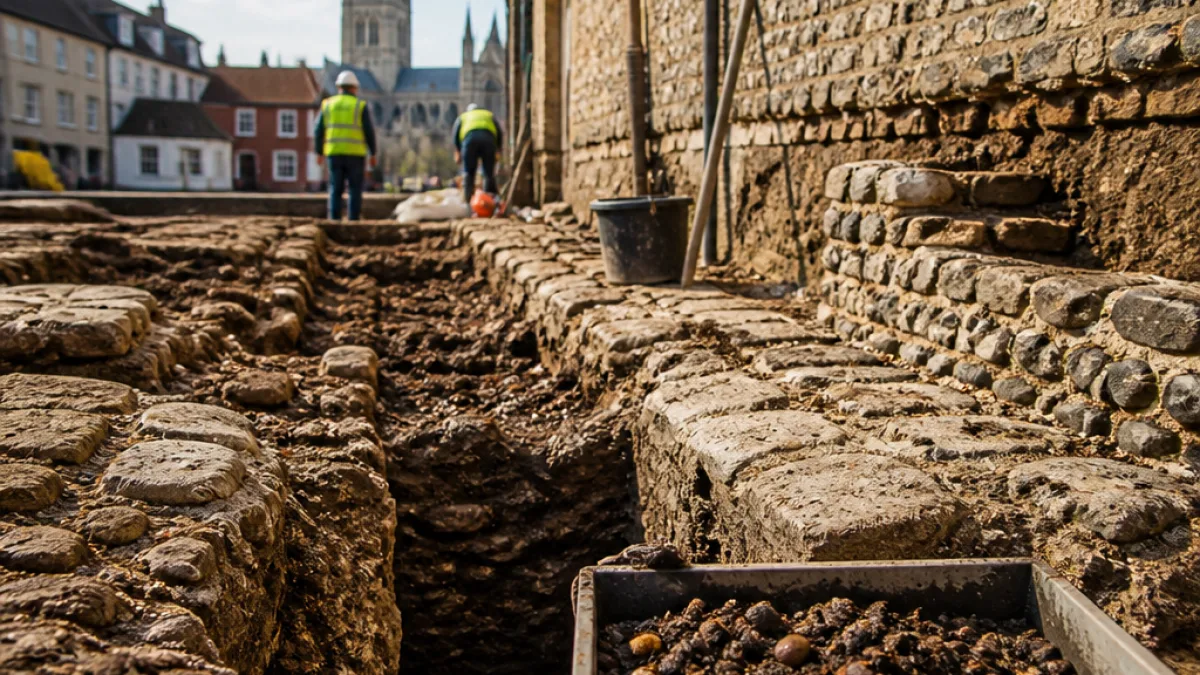
Redevelopment work beneath the Cathedral Hotel, sited on the former Cross Keys Chequer close to Salisbury’s market and Guildhall Square, has exposed substantial medieval foundations and a cesspit containing fruit remains. Archaeologists from Wessex Archaeology said the finds could shed new light on the diet, health and domestic arrangements of inhabitants in Salisbury more than 700 years ago.
Excavators uncovered a well-built flint footing running close to the street and substantial wall foundations beneath the present building. The scale and quality of the masonry point to a high-status property occupying the plot in the medieval period, consistent with the pattern of wealthier merchants and influential families living in plots around the market.
"Plots around the market were generally occupied by wealthier merchants and influential families," said Phil Harding of Wessex Archaeology.
Archaeological recording is being carried out as part of redevelopment of the site that stands on the layout established after the move from Old Sarum around 1220 under Bishop Richard Poore. The city’s distinctive grid of chequers — individual tenement plots that still shape the centre today — means buried remains in this area can be particularly informative about the urban fabric and social hierarchy of medieval New Sarum.
Early analysis of the cesspit deposit has identified plum stones, apple pips and insect remains. While small on their own, these organic fragments can, when subjected to further environmental and laboratory study, illuminate contemporary diet, food storage and waste practices, and provide comparative data for other excavated sites across Salisbury.
- Finds include flint foundations and sizeable wall footings suggestive of a substantial dwelling.
- The cesspit deposit contains fruit remains such as plum stones and apple pips, plus insect traces.
- Site lies on a chequer plot created after the foundation of New Sarum c.1220, close to the market and Guildhall Square.
Wessex Archaeology emphasised that the cesspit may offer the most detailed window into everyday life because preserved organic deposits often retain botanical and insect evidence that does not survive elsewhere. Further environmental sampling and specialist analysis will be required to extract the fullest scientific value from the material already identified.
| Find | Possible significance |
|---|---|
| Flint footing and wall foundations | Indicate a substantial, probably high-status structure fronting the street |
| Plum stones and apple pips | Evidence of diet and food processing; useful for environmental reconstruction |
| Insect remains | Can inform on hygiene, storage conditions and local environment |
The site had limited archaeological investigation before redevelopment in the 1960s, making the current work particularly valuable. The new evidence will allow archaeologists and local historians to compare occupants of this plot with those in other parts of the city, refine understanding of household arrangements and workshops that likely sat behind street-facing houses, and better interpret the evolution of the market quarter.
For Salisbury residents, the discoveries are a reminder of the layered history beneath the city centre. As work continues at the hotel, further reports are expected once specialists complete environmental processing and analysis of the recovered material. The results have the potential to enrich local interpretation and could inform how the redevelopment is presented to visitors and customers in this historic part of town.