
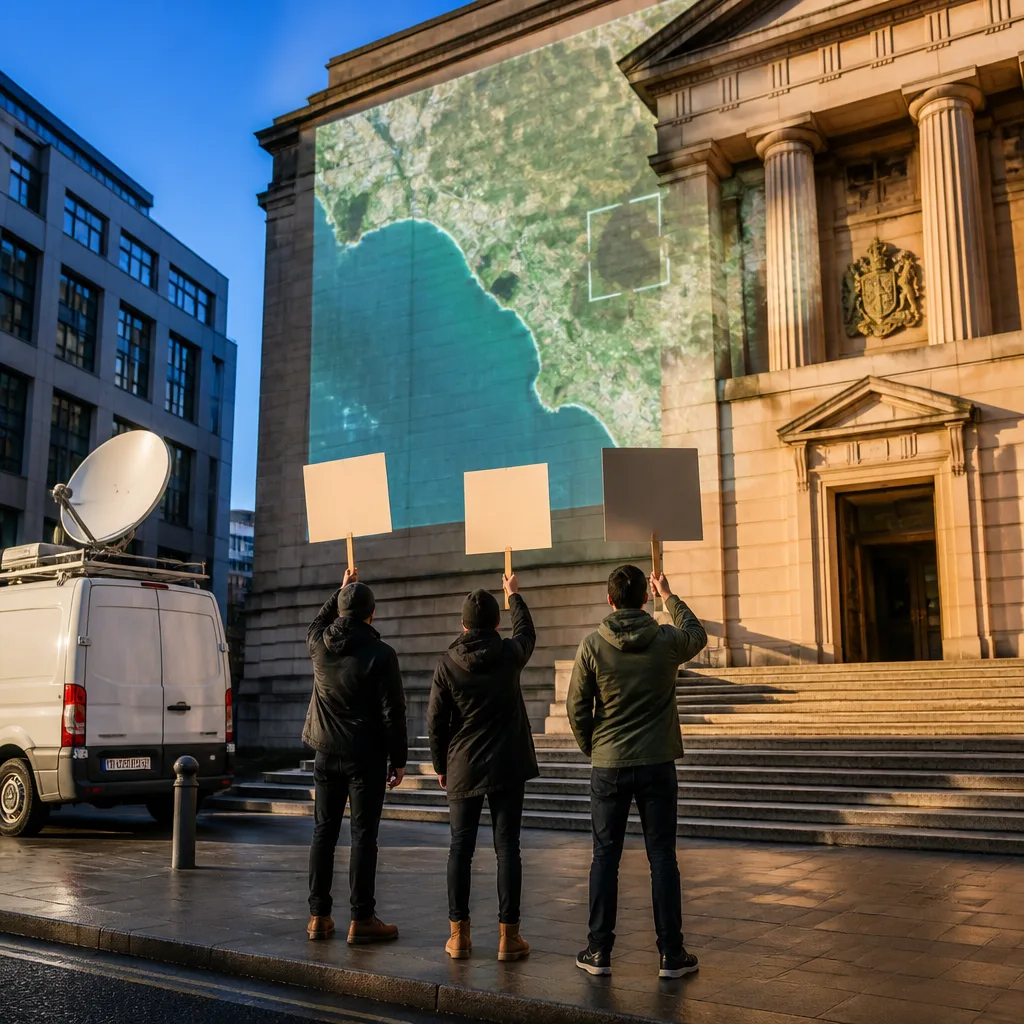
The New Zealand government faces a High Court challenge in Wellington over licences granted to US geospatial intelligence company BlackSky, with plaintiffs alleging the technologies launched from New Zealand have been used by the Israeli military during operations in the Gaza Strip.
Claim alleges direct harm and state responsibility
The lawsuit, lodged on Wednesday 12 August, was brought by three individuals: Palestinian-New Zealand engineer Yasser Abdel Aal, information technology specialist Maher Nazzal, and Maori-Tongan doctor Timoti Te Moki. The claim seeks to overturn judicial reviews and licences issued by the Ministry of Space on the basis that the technology has contributed to harm in Gaza.
The statement of claim, obtained by The New Arab, sets out that the plaintiffs are pursuing the action because of personal and familial losses linked to Israeli strikes. It says Abdel Aal lost more than 85 members of his extended family to airstrikes and that relatives of two of his sisters are currently living in tents in the Al-Mawasi area, lacking basic humanitarian necessities.
Plaintiffs: not opposing technology, but seeking accountability
One of the claimants, Maher Nazzal, who is head of the Palestinian Forum of New Zealand, told The New Arab he was taking part because he believes New Zealand has a moral and legal duty to ensure technologies launched from its territory are not used in ways that cause suffering.
"This case is not about opposing the space or technology sector but about holding the government accountable for its decisions and its duty to ensure that what is launched from New Zealand is not used to provide information or capabilities that could help target Palestinians,"
Nazzal added that he was not asking the government to do the impossible but to act in line with New Zealand's obligations under international law and to consider whether licences might facilitate military activity that leads to civilian harm.
What the claim seeks and its wider significance
The legal action asks the High Court to overturn prior judicial reviews and the Ministry of Space licences that enabled activity by BlackSky. The plaintiffs frame the case as a test of whether the state must assess and prevent uses of space and geospatial services that could be employed in armed conflict to target civilians.
While the statement of claim details the plaintiffs' personal losses and displacement, it also emphasises a broader point: that emerging space and geospatial services can have dual-use implications, and that governments licensing those services may bear responsibility if they contribute to human rights violations.
- Date filed: 12 August (High Court, Wellington)
- Defendant: New Zealand government / Ministry of Space (licences to BlackSky)
- Plaintiffs: Abdel Aal, Nazzal, Te Moki (citizens and professionals claiming direct harm)
Below is a concise summary of the claimants and the harms they describe.
| Name | Background | Alleged harm |
|---|---|---|
| Yasser Abdel Aal | Palestinian-New Zealand engineer | Claims loss of more than 85 relatives to Israeli airstrikes; relatives displaced in Al-Mawasi |
| Maher Nazzal | IT expert; head of the Palestinian Forum of New Zealand | Argues government should ensure launched technology is not used to target Palestinians |
| Timoti Te Moki | Maori-Tongan doctor | Named as co-plaintiff asserting direct harm from the conflict |
Implications for technology policy and export control
The case raises questions about how democracies regulate dual-use space capabilities and whether licensing decisions must include assessments of downstream military application and risk to civilians. It also highlights tensions between supporting domestic space activity and meeting international human rights obligations.
The plaintiffs stress their intention is not to block the space sector but to require the government to exercise due diligence when approving licences. The legal proceedings will test the extent of ministerial responsibility in relation to how geospatial services are used once operational.
The High Court hearing will be watched closely by technology, human rights and foreign policy observers, as it could set a precedent for how nations govern terrestrial launches and licences for data-providing services that operate in conflict contexts.









