
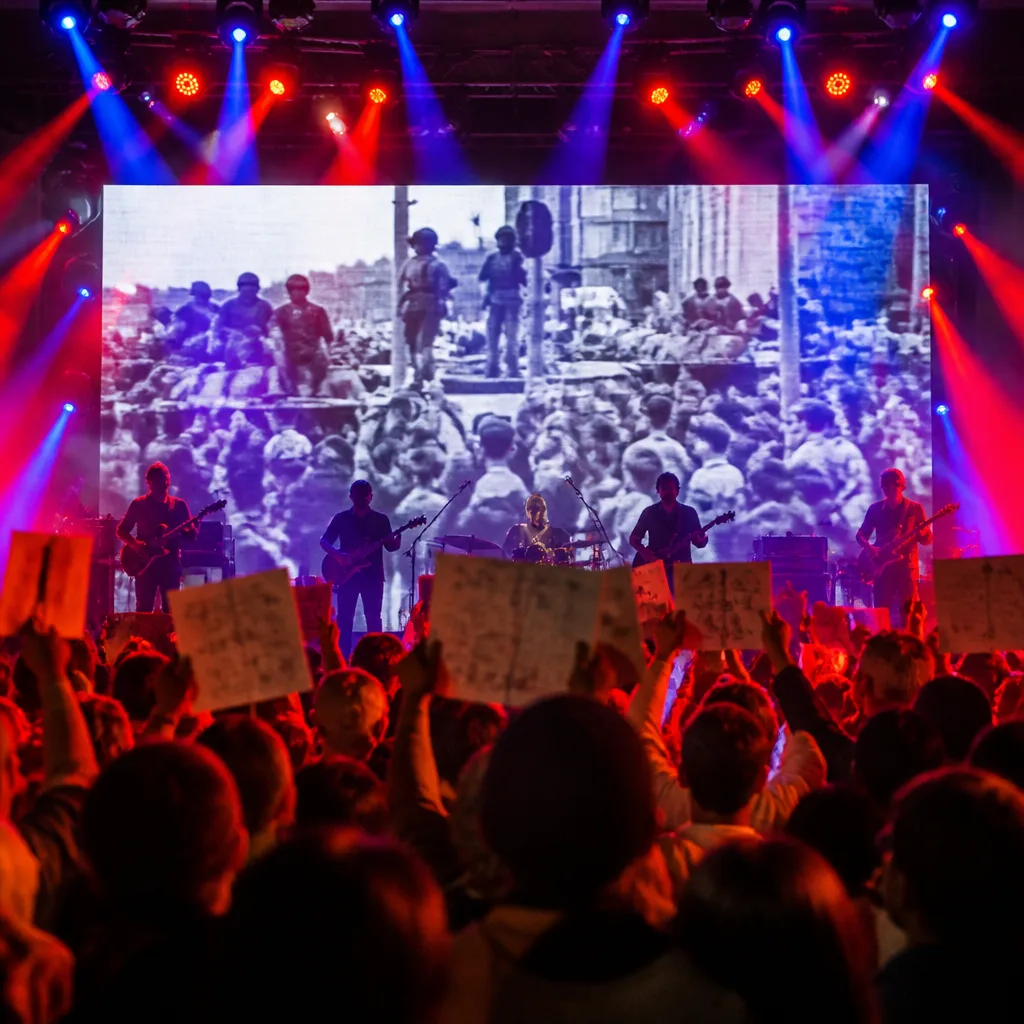
Massive Attack have incorporated a cover of the Korean protest song Regret of the Times (sidae yugam) into their recent concerts in Australia and on their international tour, accompanied by archival images and film from the Gwangju democratisation movement of May 1980.
Band frames K-pop within a history of dissent
The Bristol trio, which has regularly used political imagery in performances, presented the 1995 track by Seo Taeji and Boys as a lineage moment for modern Korean popular music. Their staging linked the song to the 1980 events in Gwangju, when a student-led uprising was met with a violent state response under martial law. The protests are widely regarded as a turning point in South Korea’s anti-authoritarian movement; the state-led suppression resulted in the deaths and injuries of hundreds, although some commentators say the true toll may have been higher.
Massive Attack described the decision to perform the song as an "act of continuity, revival & solidarity" with Seo Taeji’s work, which the band say helped shape what is now a global pop phenomenon. The group’s use of Gwangju footage underlines the song’s status in Korean music history as a symbol of protest.
Censorship and cultural politics in South Korea
The song’s original release in 1995 encountered institutional resistance. Korea’s Public Performance Ethics Committee demanded removal of lyrics it regarded as politically objectionable. Seo Taeji and Boys responded by issuing an instrumental version, rather than altering the words.
This controversy was not exceptional in the South Korean context. Cultural production had been subject to close state supervision amid rapid industrialisation from the 1960s onwards. The reaction to Regret of the Times triggered a substantial fan-led campaign. A widespread petition sought the abolition of the pre-release screening system for music. The campaign helped bring change: the system was overturned in 1996.
| Year | Event |
|---|---|
| 1980 | Gwangju democratisation movement; state suppression of protests |
| 1995 | Release of "Regret of the Times" by Seo Taeji and Boys; censorship dispute |
| 1996 | Abolition of pre-release screening system following petition |
What the staging means
The decision by a British act to foreground a South Korean protest song on a global stage speaks to two linked developments.
- Historical memory: revisiting Gwangju through concert visuals places the events in the public gaze beyond Korean borders.
- Cultural lineage: the performance asserts a political root to K-pop, countering narratives that frame the genre solely as commercial entertainment.
"Act of continuity, revival & solidarity"
By invoking Seo Taeji and Boys, Massive Attack draw attention to the role of artists in challenging censorship and shaping public debate. The original dispute over the song’s lyrics, and the broader campaign that followed, remain a landmark in South Korea’s cultural liberalisation.
For audiences unfamiliar with the history, the juxtaposition is a prompt to reassess the political dimensions of popular music. For those in South Korea and the Korean diaspora, the staging will resonate as a recognition of a painful and contested episode in modern Korean history.
It is not the first time Western acts have engaged with Korean cultural material. What sets this instance apart is the explicit linkage of a mainstream pop genealogy with a moment of violent repression, delivered by a band known for its political curation.
The presentation will reopen conversations about censorship, artistic freedom and how music can carry historical memory across borders. It also demonstrates how global tours can act as platforms for recontextualising national histories within international cultural discourse.












