
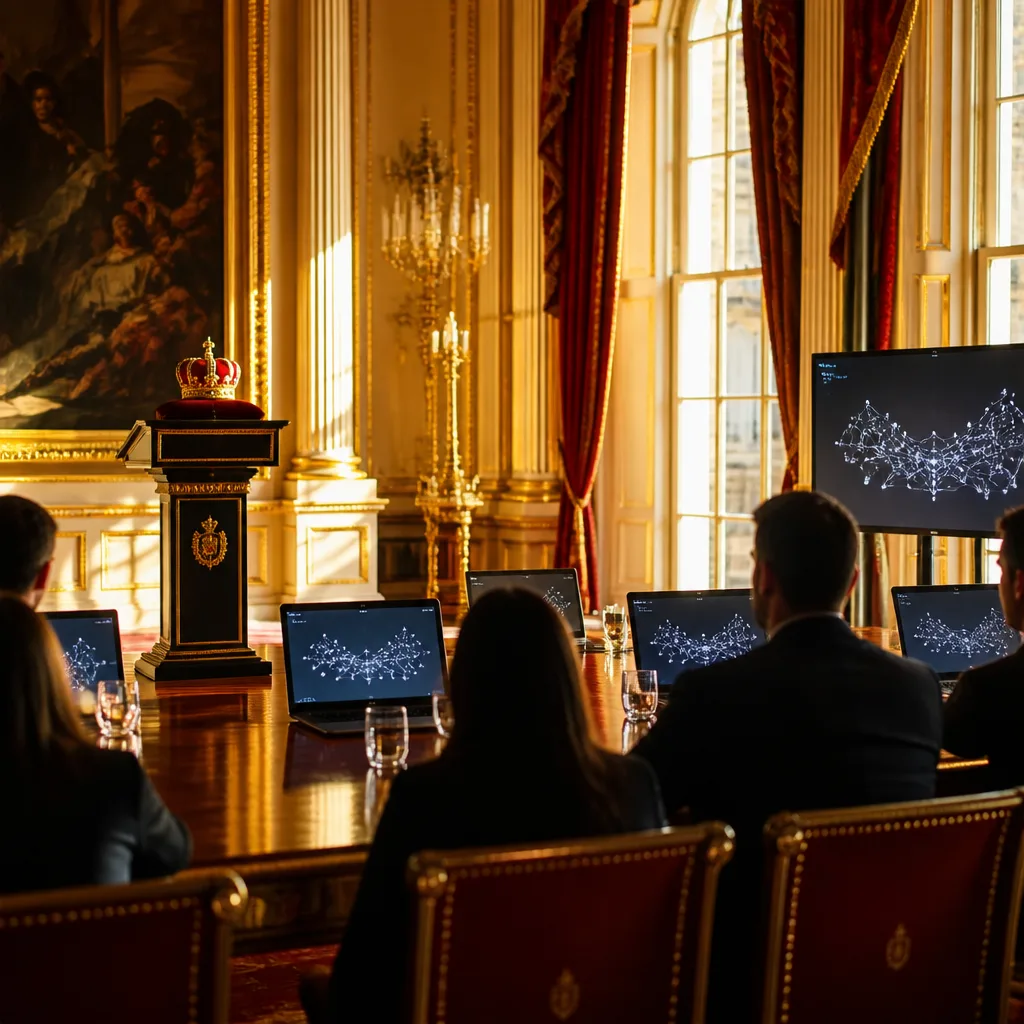
King Charles has told senior executives from leading artificial intelligence firms that the technology poses potential “existential dangers” if it falls into the wrong hands and called for urgent safeguards to prevent catastrophic misuse.
Royal plea to industry: act now to prevent harm
Speaking to representatives from Nvidia, Google DeepMind, OpenAI and Anthropic, the King said those who designed the systems were increasingly warning that AI might acquire “darker capacities” — possibly even lethal ones — and that steps must be taken before it is “too late”. The intervention underlines growing concern among political and civic leaders about the pace of development in advanced AI systems and their potential for harm.
“Those who have created these technologies are now increasingly warning that AI risks developing darker capacities - perhaps even to take life,” the King said. “In this regard, if I may say so, there seems urgency in adequately considering the existential dangers of such technologies falling into the wrong hands, and being used in potentially catastrophic ways.”
He added that the role of those in the industry was not solely to advance technology but to ensure it “remains firmly in the service of humanity, community and the natural world”. The remarks do not constitute a policy announcement, but they represent a high-profile prompt to the sector at a moment when governments and regulators worldwide are grappling with how to govern increasingly capable systems.
Why the message matters
The meeting brought together firms whose work spans hardware, research and consumer and developer-facing platforms. That combination is significant because debate about risk has shifted from abstract concerns to concrete questions: how to stop misuse, how to ensure safety at scale, and how to align commercial incentives with public interest.
The King’s comments echo warnings made publicly in recent months by researchers and executives who have called for pauses, tighter safety checks and stronger governance frameworks as models grow more powerful. While industry and many governments already invest in safety research, the monarch’s intervention frames the issue as not just technical but moral and civic.
- Urgency: The King explicitly urged that risks be considered now, before it is “too late”.
- Stakeholders: Leaders from multiple major AI organisations were present, indicating cross-industry relevance.
- Focus: The emphasis was on preventing catastrophic misuse rather than on commercial opportunity.
There was no public announcement of new safety standards, regulatory steps or commitments from the companies at the time of the remarks. However, the appearance of multiple industry representatives at a single discussion with the monarch illustrates how the conversation about AI safety has moved into mainstream public and political spaces.
| Organisation | Mentioned |
|---|---|
| Nvidia | Yes |
| Google DeepMind | Yes |
| OpenAI | Yes |
| Anthropic | Yes |
Public officials in the UK and elsewhere have already signalled an appetite for regulatory action on AI, though approaches differ: some favour mandatory safety checks and transparency; others are exploring new oversight bodies and international coordination. The King's intervention adds moral weight to calls for stronger measures but does not substitute for formal policymaking by ministers or legislators.
For the British public, the statement frames AI as an issue of national importance that touches on security, ethics and public welfare. For industry leaders, it is a reminder that technological advances sit within a broader social contract: developers and firms are being asked to weigh competitive advantage against the potential for irreversible harm.
Whether the King's appeal will accelerate concrete regulatory steps or new private-sector commitments remains to be seen. What is clear is that concerns about AI are no longer confined to specialist forums — they are now being aired at the highest symbolic levels of national life, and the expectation of action is growing.









