
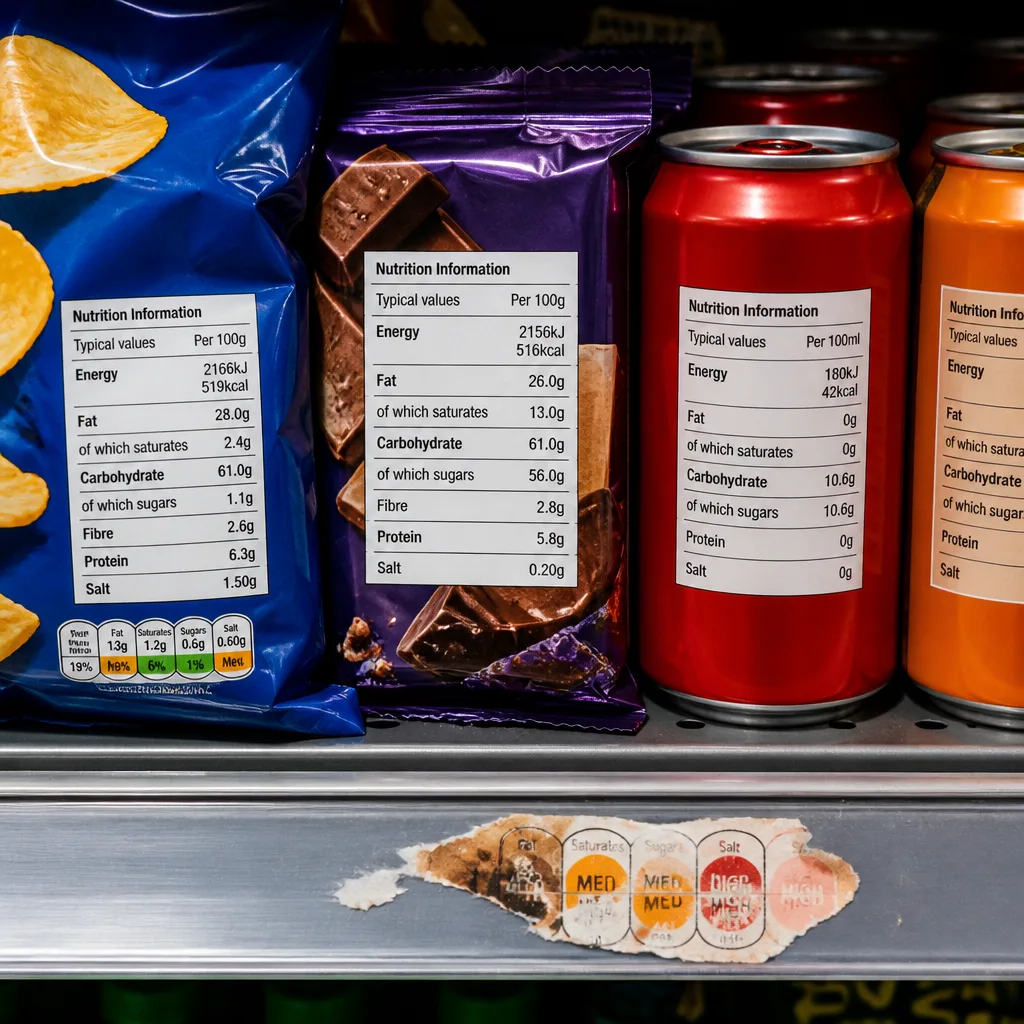
India’s food‑safety regulator has stepped back from plans to require prominent, colourful front‑of‑pack health warnings on packaged food and soft drinks, instead proposing that manufacturers display a black‑and‑white table of sugar, fat and salt content, according to reporting by Reuters.
Regulatory retreat and industry influence
The change follows sustained opposition from multinational and domestic food companies. Consumer advocates and some public‑health experts warn the move will dilute the clarity of information available to shoppers and may hinder efforts to reduce consumption of high‑sugar products.
Reuters highlighted a striking example: a can of Fanta sold in London contains around 63 calories, while the same brand marketed in India reportedly carries about three times as much sugar. The presence of an artificial dye in the Indian product is listed only in small print on the back of the can, whereas similar ingredients in Europe would trigger a prominent warning label.
Why label design matters
Front‑of‑pack warning labels are intended to convey quickly and simply which products are high in nutrients associated with long‑term health risks, such as excess sugar, salt and saturated fat. A growing body of peer‑reviewed research suggests that clear, interpretive labels on the front of packs — particularly those that use colour or simple symbols — help consumers identify less healthy options more rapidly and can influence purchasing decisions.
Industry opponents argue that warning labels oversimplify complex diets and do not accommodate the diversity of Indian cuisine, which they say features more intense flavours than many Western diets. The regulator’s proposal of a black‑and‑white table of nutrient amounts is presented as an alternative intended to provide more detailed information without single‑colour graphic warnings.
- Regulator action: abandoned plan for colourful front‑of‑pack warnings; proposed black‑and‑white nutrient table instead.
- Industry stance: major food and beverage companies resisted mandatory warning labels, arguing they do not suit Indian culinary contexts.
- Public‑health concern: advocates say the change could weaken consumer signals about high‑sugar or high‑salt products.
Potential public‑health consequences
Clear front‑of‑pack labels are one of several policy tools used internationally to tackle rising rates of overweight, obesity and diet‑related conditions such as type 2 diabetes and cardiovascular disease. If the new Indian approach reduces the salience of warnings, it could complicate efforts to nudge population diets in a healthier direction.
Policy design matters: the way information is presented changes how consumers interpret and act on it. While detailed nutrient tables provide precise values, they typically require greater time and numeracy to interpret than a bold front‑of‑pack icon or colour code.
| Label approach | Strength | Limitation |
|---|---|---|
| Colourful/front‑of‑pack warnings | Immediate, easy to interpret at point of purchase | Can be criticised as reductive; contested by industry |
| Black‑and‑white nutrient table | Provides detailed numeric information | Requires time and numeracy; may be less salient |
| Small‑print ingredient listing | Comprehensive ingredient disclosure | Often overlooked by consumers at purchase |
Public‑health bodies and campaigners will be watching how India’s regulator proceeds. The government’s eventual decision will affect not only domestic manufacturers but also multinational producers that adapt recipes and labelling for local markets. For example, a familiar brand sold in different countries can vary substantially in sugar content and additives.
Ultimately, the effectiveness of nutrition labelling depends on implementation, consumer education and whether labels are part of a wider package of policies — including marketing restrictions, taxation of sugary drinks and efforts to improve access to healthier options.
"The colour and prominence of warnings can determine whether a busy shopper notices and acts on them," the Reuters report noted, citing concerns raised in the debate.
Policymakers must balance industry concerns about cultural dietary differences with the public‑health imperative to reduce preventable disease. The debate in India mirrors wider international tensions over how best to present nutritional information to protect consumers without unduly burdening business — a balance each country has approached differently.
Further research and transparent consultation will be essential to assess whether the regulator’s proposed compromise will achieve meaningful improvements in diet and health outcomes, or simply preserve the status quo of variable product recipes and limited front‑of‑pack warnings.














