
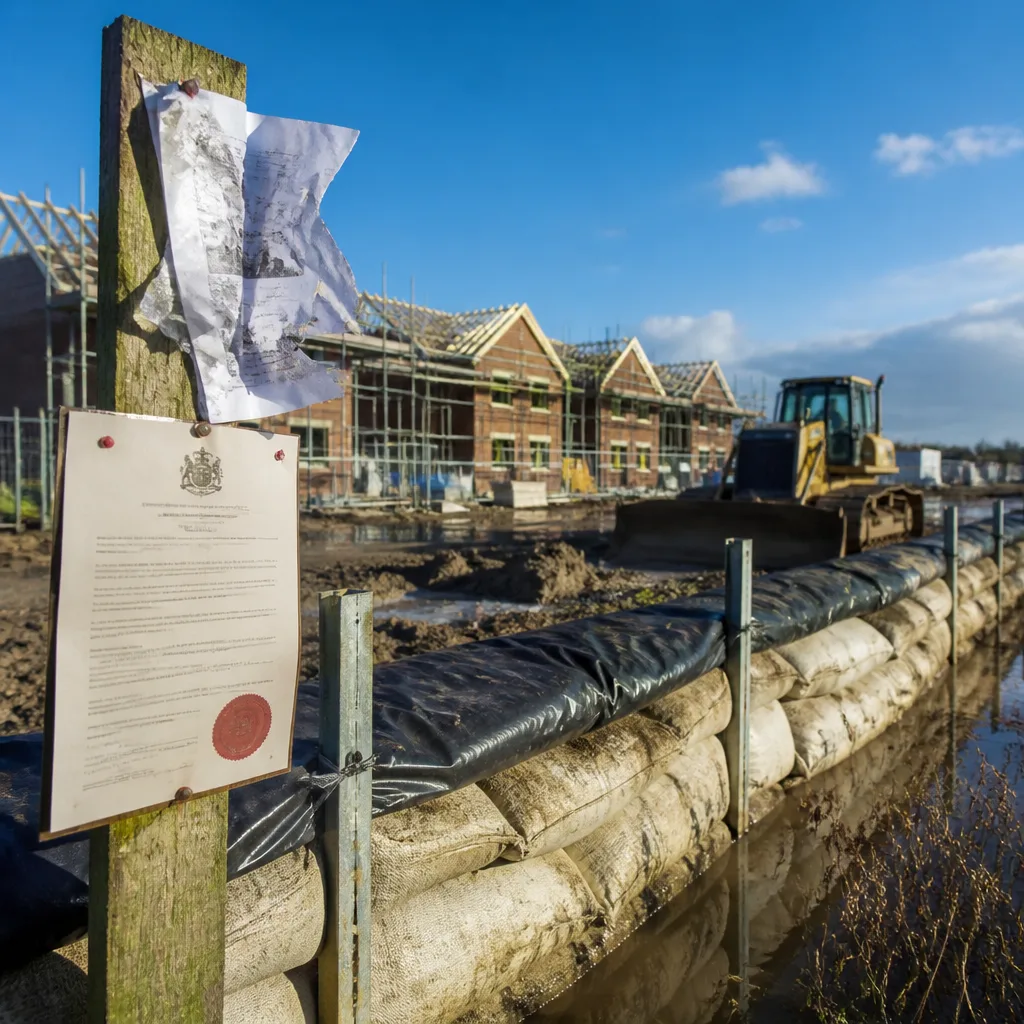
The high court has ruled that homes may be built on a site designated as the highest flood-risk category even though the development failed the statutory safety test designed to prevent such proposals, a decision that campaigners and some politicians say could have nationwide consequences.
Judgment clears controversial north Somerset development
The ruling clears the way for permission for 190 new homes on land in north Somerset that the Environment Agency and others classify as flood zone 3a, the highest level of flood risk before land is considered a functional floodplain. The developer had been refused by the local planning authority and lost a planning appeal, but the high court decision overturned those refusals.
The development obtained approval despite failing the sequential test — the mechanism in national planning policy intended to ensure developments are directed to areas at lower flood risk. An inspector had found 12 alternative sites at lower risk than the appeal site but nevertheless allowed the scheme.
“This is a dangerous and nationally significant exploitation of planning loopholes,”
Those are the words of Tessa Munt, chair of the Flooding and Flooded Communities all-party parliamentary group (APPG), who has said she will meet the housing and planning minister, Matthew Pennycook, to seek an urgent amendment to the national planning policy framework (NPPF).
National response and calls for policy change
The judgment has prompted an immediate policy response from voices across the flood resilience sector. Delegates at a flood resilience conference agreed to press for a change in the law to prevent the judgment becoming a routine route for speculative developments on high-risk land.
Keating Chambers — the set that instructed Charles Banner KC, who represented Persimmon Homes in the litigation — described the ruling as “hugely important” and said it would be of “immense interest to the planning and development sector.”
- Site: north Somerset (Yatton area)
- Homes approved: 190
- Flood risk category: Flood zone 3a
- Alternative sites identified by inspector: 12
Campaigners, local councillors and regional authorities had strongly opposed the scheme, warning that surrounding properties could be put at greater risk if housing is approved on the floodplain. Insurers, lenders and the Government-backed Flood Re insurance initiative were also cited by opponents as likely to be affected by a precedent that weakens the sequential barrier.
Legal and planning implications
The sequential test sits at the heart of flood risk planning policy. It requires decision-makers to seek reasonably available sites at lower risk before allowing development on higher-risk land. The inspector’s finding of 12 alternative sites would normally be expected to be decisive. The high court’s acceptance of the development despite that finding indicates a legal interpretation that may prioritise other material considerations over the sequential outcome in certain circumstances.
That interpretation could prompt a wave of similar appeals or encourage developers to press planning authorities to reassess sites previously considered unsuitable on flood-risk grounds. Ministers face an immediate choice: rely on case-by-case decision-making or alter the wording of the NPPF to reassert the sequential approach.
Either course carries consequences. Leaving the decision as a flexible precedent may increase approval rates for high-risk developments, with knock-on effects for insurance markets and local flood management. Amending the NPPF would be a central intervention, but would require political will and could take time to frame and consult upon.
| Item | Value |
|---|---|
| Approved homes | 190 |
| Flood risk zone | 3a |
| Alternative sites found by inspector | 12 |
For now, the immediate practical result is that the developer has legal permission to proceed. For others — local planners, residents and national policymakers — the ruling raises urgent questions about how flood risk should be weighed against housing need and other planning objectives.
Ministers have been asked to act swiftly. The APPG chair will meet the housing and planning minister to press for a change to the NPPF so that the high court judgment does not become the basis for a new normal in floodplain development.












