
Women who received health visitor support alongside a targeted relapse‑prevention programme were significantly more likely to remain smoke‑free 12 months after giving birth, a large randomised controlled trial has found.
Trial and main finding
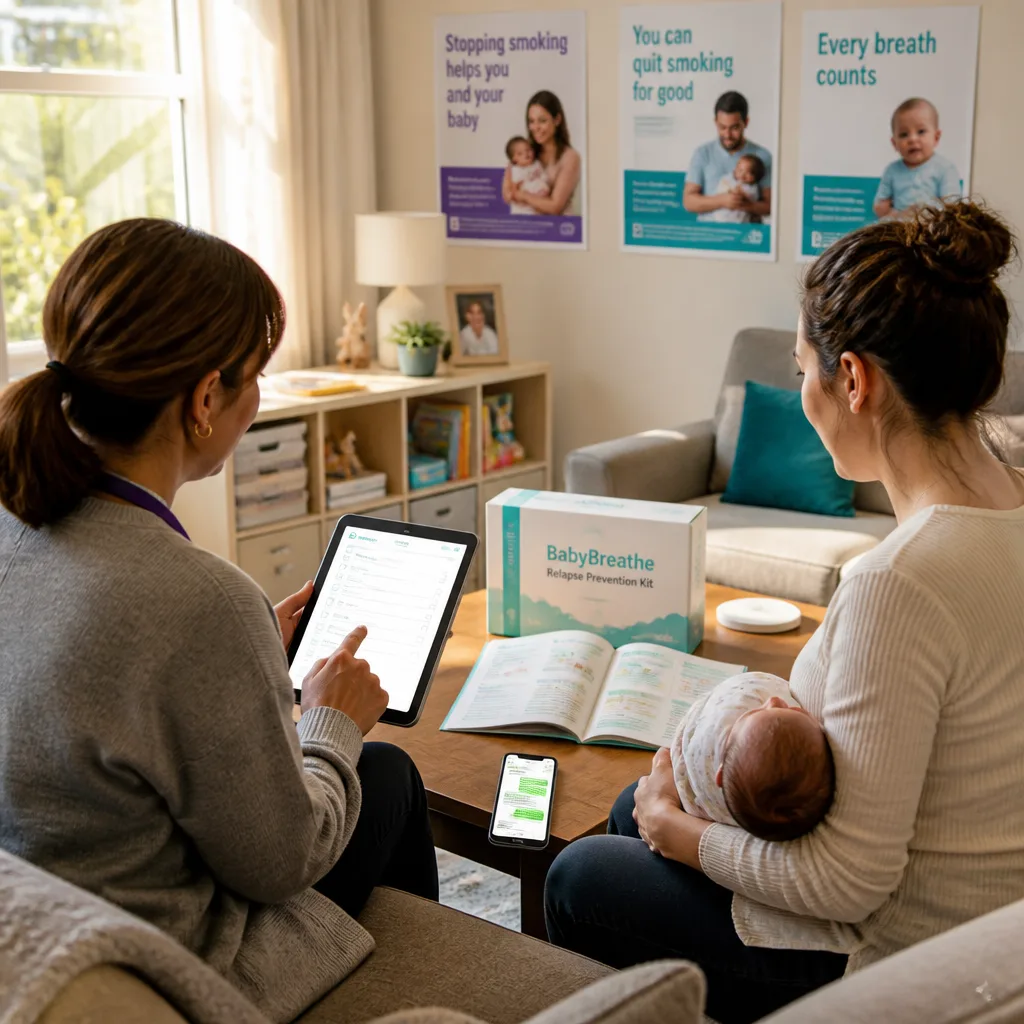
The study, published in the BMJ and funded by the National Institute for Health and Care Research (NIHR), tested the BabyBreathe programme. The intervention combines one‑to‑one support from trained health visitors, digital tools, text messages, a dedicated website and app, plus a relapse‑prevention kit sent to families after birth.
Researchers enrolled 886 women in England and Scotland who had successfully stopped smoking before or during pregnancy. Participants were randomly assigned to receive either the BabyBreathe intervention or usual care. The primary outcome was sustained abstinence from smoking at 12 months after birth. Women who received BabyBreathe as intended with health visitor support were significantly more likely to be smoke‑free at one year compared with those who received usual care.
“Quitting smoking during pregnancy is an incredible achievement, but staying smoke‑free after a baby is born can be just as challenging… Our research shows that when health visiting services are trained and supported to deliver specialist relapse prevention advice, they can make a real difference,”
The lead investigator, Professor Caitlin Notley of the University of East Anglia, emphasised that the postpartum months are a high‑risk period for relapse and that sustained support is often lacking once pregnancy ends.
Delivery challenges and limitations
The trial also highlighted implementation issues. Around one in five participants did not receive the BabyBreathe intervention as intended. Reasons included health visitor workforce pressures, missed appointments and administrative difficulties. The trial therefore demonstrates both the potential effectiveness of a health visitor‑delivered relapse‑prevention package and the fragility of delivering such programmes in routine practice.
As with any trial, there are limitations to consider. The findings relate to a population of women who had already stopped smoking before or during pregnancy and therefore do not address initiation during pregnancy. The effectiveness signal pertains to those who received the full, intended intervention; real‑world impact will depend on workforce capacity, training, fidelity of delivery and service organisation.
- Participants: 886 women in England and Scotland
- Intervention: BabyBreathe — health visitor support, digital tools, texts, website/app, relapse kit
- Outcome: Significantly higher likelihood of remaining smoke‑free at 12 months when delivered as intended
| Measure | Detail |
|---|---|
| Sample size | 886 |
| Geography | England and Scotland |
| Follow‑up | 12 months after birth |
Policy and service implications
The trial’s findings are pertinent to NHS England, NHS Scotland and local authority health visiting services. Health visiting is a universal service that reaches most new mothers, making it a logical channel for sustained relapse‑prevention efforts. However, workforce shortages and competing demands on health visitors were directly implicated in reduced delivery fidelity in the trial.
For policymakers and commissioners, the study suggests two complementary priorities: ensuring adequate training and resources so health visitors can deliver specialist relapse prevention, and exploring how digital components of the package might bolster reach and consistency where face‑to‑face contact is constrained.
From an evidence perspective, the research illustrates the principle that support does not end with cessation in pregnancy: continued, structured relapse prevention can change outcomes for mothers, infants and families. Longer‑term follow‑up and implementation studies will be needed to quantify cost‑effectiveness, examine equity of access across diverse populations and determine how best to embed such an intervention within existing maternal and child health services.
The BMJ publication and NIHR funding add academic and policy weight to the findings, but translating trial efficacy into routine practice will require addressing workforce capacity, appointment systems and administrative processes that hindered delivery for a significant minority of participants in this study.
Overall, the trial offers robust, randomised evidence that targeted, health visitor‑supported relapse prevention can reduce postpartum smoking relapse — an outcome with clear downstream benefits for maternal and infant health — while underscoring that successful rollout depends on practical service‑delivery solutions.














