
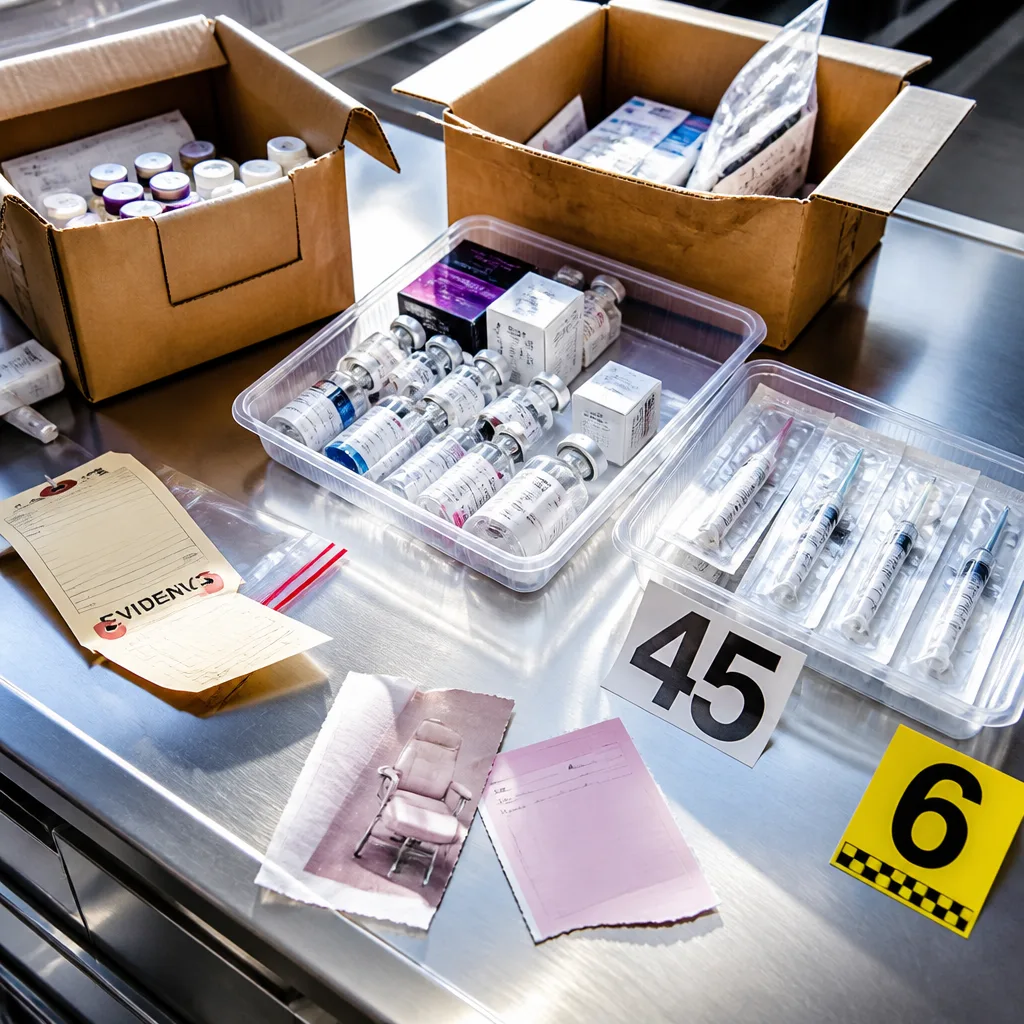
Health Canada has seized multiple unauthorised and counterfeit injectable health products from Dyosa Beauty & Wellness Lounge in Hamilton, Ontario, saying the items "may pose serious health risks" and advising people not to buy or use unauthorised health products.
What was seized
The federal agency identified both unauthorised injectable drugs and counterfeit injectable medical devices among the items removed from the salon at 45 Wellington St. N.. Photographs supplied with the advisory show branded and unbranded vials and syringes. Health Canada noted that some products were labelled in English and a foreign language.
| Category | Examples listed by Health Canada |
|---|---|
| Unauthorised injectable drug | Botox cosmetic for injection; Huons ascorbic acid injection; Laennec injection (placenta product); Lemon bottle ampoule solution (labelled for topical use but containing vials for injection) |
| Counterfeit injectable medical device | Juvéderm Ultra 3; Juvéderm Voluma with lidocaine; Restylane Kysse with lidocaine |
Health advice and regulatory steps
Health Canada advised consumers: do not buy or use unauthorised health products. It encouraged anyone who has used or been administered these products and who has health concerns to consult a licensed healthcare professional — specifically naming a physician, nurse practitioner or pharmacist. When receiving injectable products, patients are urged to ask the person administering the injection to show the product label and to verify that it has been authorised for sale by Health Canada.
The advisory also highlighted that some items appearing to be for topical use contained vials intended for injection, a distinction that affects safety and proper regulatory oversight. Several items recovered were described as counterfeit medical devices, meaning they falsely purport to be legitimate branded injectable gels.
Risks and limits of the available information
Unauthorised and counterfeit injectable products can carry a range of risks: contamination, incorrect formulation, variable dosing and lack of appropriate sterility or labelling. These hazards increase the potential for local and systemic infection, allergic reaction, incorrect therapeutic effect or harm from unknown constituents.
Health Canada’s notice does not provide details of any specific adverse events linked to the seized products, nor does it report how many people may have been injected with them. The announcement is a regulatory action and public warning rather than an epidemiological report. It also notes that some products were advertised for sale through the business, but does not list customers or outcomes.
- Do not buy or use unauthorised injectable health products.
- If you have received an injection you believe may be unauthorised, consult a licensed healthcare professional.
- When treated, insist the practitioner shows the product label and confirms Health Canada authorisation.
Regulators globally have previously warned about risks from counterfeit cosmetic injectables and unauthorised preparations. Peer‑reviewed studies into complications from unregulated aesthetic procedures have documented infections and tissue damage when sterility and correct product sourcing are not assured. While those studies describe associations between unregulated treatments and harm, they also highlight the difficulty of quantifying risk without systematic case reporting.
Health Canada’s seizure is an enforcement and consumer-safety measure intended to remove potentially dangerous products from circulation and to alert the public. Consumers with concerns should contact their healthcare provider or provincial health authorities for clinical advice, and check Health Canada’s online resources for lists of authorised health products and further guidance.














