
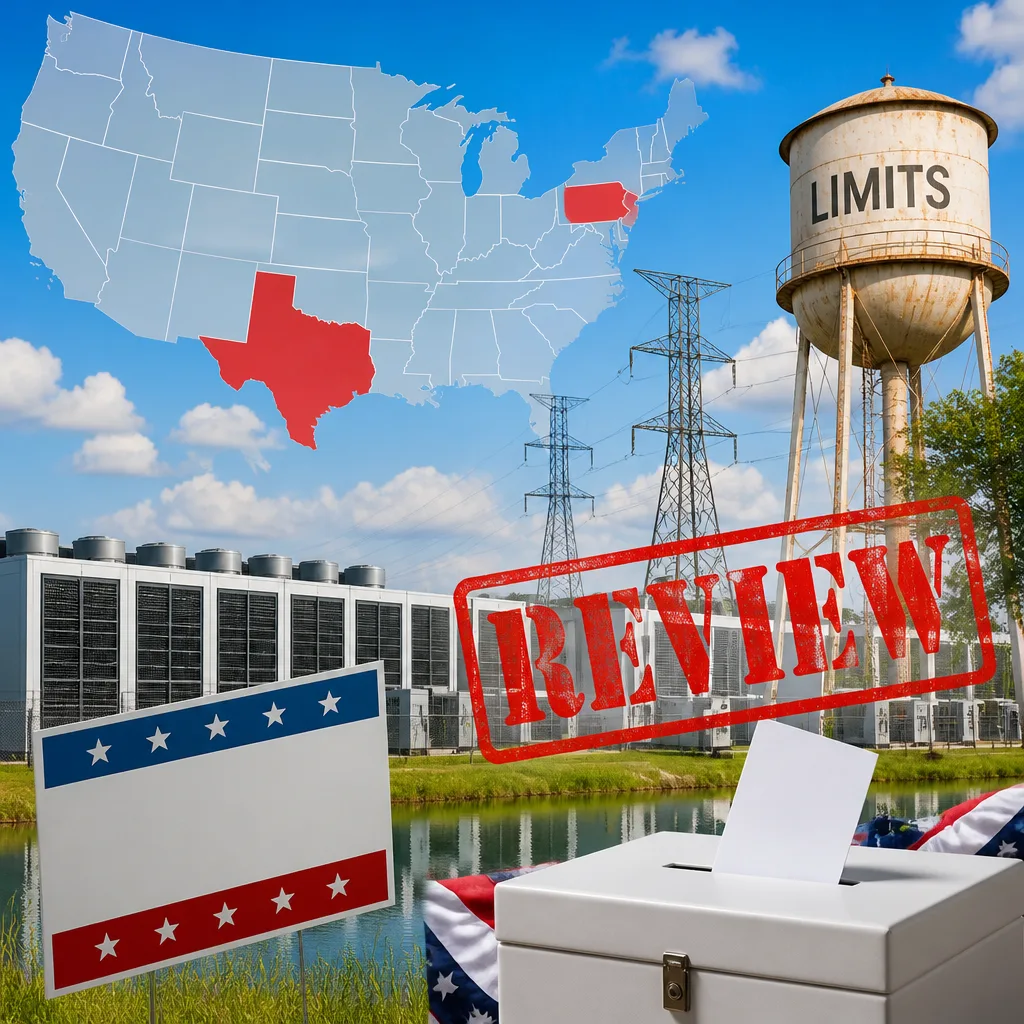
Governors in multiple states have altered policy towards large data centres as the issue becomes politically charged ahead of the midterm elections, with claims that such facilities strain local electricity and water supplies shaping campaign rhetoric and regulatory decisions.
From incentives to restrictions
In Pennsylvania, Democratic Governor Josh Shapiro announced his administration will no longer prioritise data-centre projects for construction permits or award tax exemptions to those that fail to meet new standards. His office said developers must agree to meet the full cost of their electricity, limit water use and undertake a local outreach campaign to qualify.
"Pennsylvania is seeing an unacceptable number of speculative proposals for data centres swamp our commonwealth — many of them led by developers who have no regard for local communities," the governor said.
Mr Shapiro's intervention follows community opposition to proposed server farms across the state. The governor, who has been discussed as a potential 2028 presidential contender, faces a competitive campaign in which Republican challenger Stacy Garrity has pressed the issue.
Regulatory moves in other battlegrounds
The political shift is not limited to Pennsylvania. In Texas, where large-scale data-centre investment has been actively courted in recent years, Republican Governor Greg Abbott instructed regulators to examine whether households were paying more as a consequence of data-centre demand for power. He ordered officials to pause approvals for some projects until regulatory work is completed and has promised a legislative push to impose further rules next year.
Campaigning has reflected the change in tone. In rural Texas markets, Democratic challenger Gina Hinojosa released television advertising accusing Mr Abbott of prioritising data-centre interests over local communities, arguing that server farms threaten rural life, ranchland and dwindling water supplies.
Why the politics have hardened
At one time, both Mr Shapiro and Mr Abbott were publicly welcoming to data-centre investment, actively seeking to recruit projects seen as economic drivers. The rapid expansion of facilities to power artificial intelligence and cloud services has altered local perceptions, however, with residents and some politicians increasingly concerned about environmental and infrastructure impacts.
Analysts and campaigners say the issue crosses traditional party lines: opposition often emerges from rural and suburban communities, irrespective of whether they generally support Republican or Democratic candidates. As a result, opponents and challengers have sought to exploit local unease for electoral advantage, while incumbents have moved to demonstrate responsiveness.
- Pennsylvania: New permit and tax-exemption conditions announced by the governor.
- Texas: Regulators ordered to review impacts on power costs; temporary hold on some approvals; pledge of legislation next year.
| State | Recent action |
|---|---|
| Pennsylvania | Permitting priorities and tax exemptions conditioned on standards |
| Texas | Regulatory review ordered; approvals paused pending work; legislative proposals promised |
The developments highlight a broader tension between economic development strategies that prize high-tech investment and local concerns about environmental footprints and public-service costs. Energy-intensive server farms consume large amounts of electricity and, in some regions, substantial quantities of water for cooling. That has provoked complaints from residents, local officials and competing users of scarce resources.
How far state actions will extend — whether through permitting conditions, tax changes, or binding regulation — remains uncertain. In Pennsylvania, the administration has set conditions to qualify for incentives. In Texas, the governor has signalled a willingness to pursue statutory controls next year.
For candidates and sitting governors, the political calculation is evident. Opponents have seized on instances of local opposition to create campaign momentum. Incumbents have responded by tightening policy or ordering reviews to signal they are addressing constituent concerns.
The debate is likely to continue as the midterms approach and as demand for computing capacity grows to support artificial-intelligence services and cloud platforms. Policymakers will face pressure to balance the economic benefits of investment against the environmental and infrastructural costs reported by communities.












