
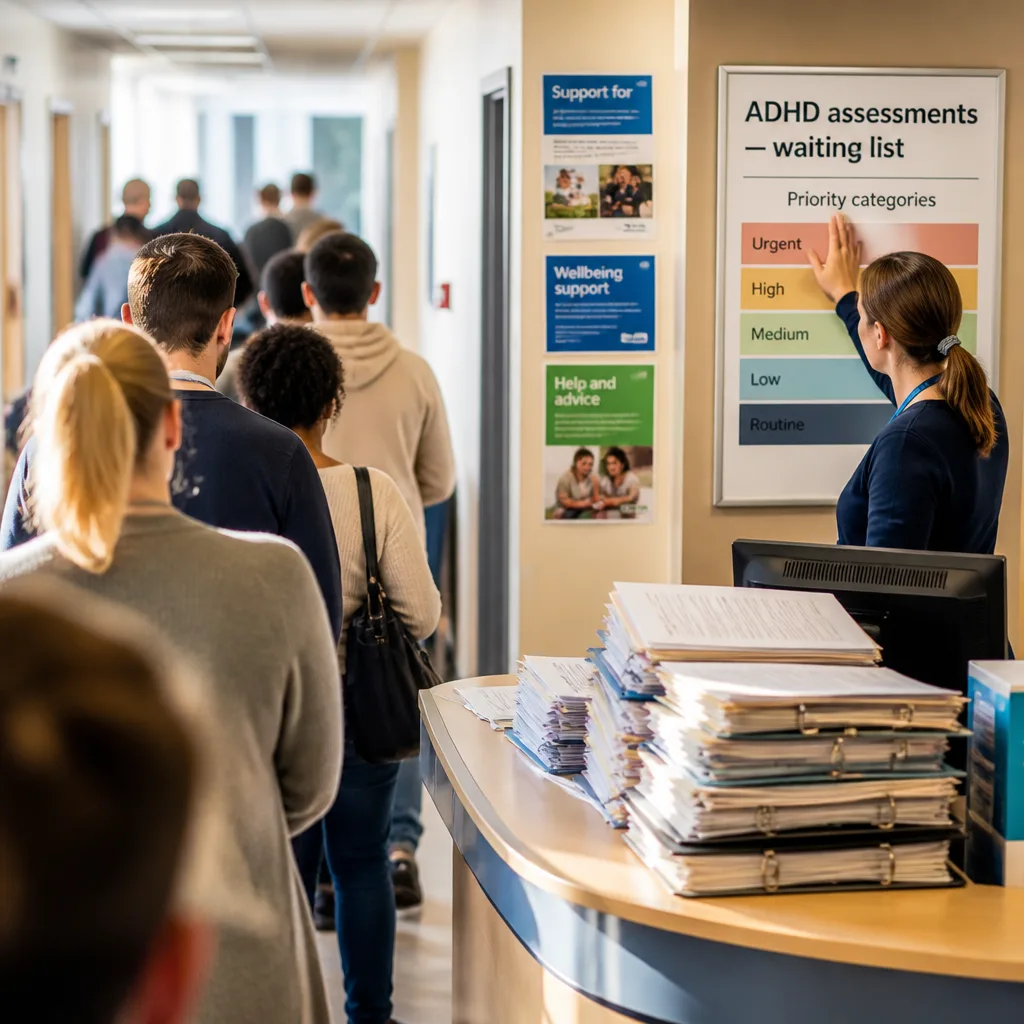
Proposals set to be published in an independent review of autism and attention deficit hyperactivity disorder (ADHD) are expected to advise that not every patient with ADHD symptoms should be given a formal diagnosis. Instead, clinicians would use a needs-based triage to identify those who require a formal diagnostic assessment — for example, to consider medication — while others would be offered support tailored to their difficulties without necessarily being labelled.
Review driven by pressure on services and benefit claims
The interim report, led by Professor Peter Fonagy of University College London and commissioned in December by the then health secretary, responds to mounting strain on NHS mental health and neurodevelopmental services. Official data cited in the review show about 800,000 people are waiting for assessment on NHS lists, complaints about autism and ADHD services in England have more than tripled over five years, and roughly 100,000 adults or young people with ADHD are receiving health-related benefits. The review notes an estimate that the cost of untreated or undiagnosed ADHD is around £17bn.
The suggested change would prioritise those judged at highest risk — such as people who are at immediate risk of self-harm or who are significantly impaired at work or school — for formal referral to ADHD clinics. Others with milder or better-coping symptoms would receive a holistic assessment of needs and be offered targeted support without automatically entering the specialist diagnostic pathway.
"rationing"
Patient groups and campaigners have criticised the move, warning it amounts to the rationing of healthcare and could drive people towards self-diagnosis via social media. Campaigners say the shift risks stigmatizing those who do not meet a threshold for formal assessment while still struggling in daily life.
Practical and ethical concerns
Supporters of a needs-based approach say it could address lengthy waits for specialist assessment and ensure that those with the most acute needs receive timely treatment. Critics point to several potential downsides:
- Risk of under-identifying people who would benefit from medication or specialist input.
- Increased pressure on primary care and non-specialist services to deliver interventions for neurodevelopmental conditions.
- Potential for widening health inequalities if access depends on local service capacity and clinician judgement.
The interim review emphasises that the current system compels many people to obtain a formal diagnosis simply to access support, creating long queues for specialist services. A triage model aims to decouple support from diagnosis so that help can be provided more flexibly according to functional impact and individual needs.
What the evidence and limits say
Assessing such a policy shift requires careful consideration of evidence on outcomes for those who receive support without formal diagnosis compared with those who undergo diagnostic assessment. The review points to system pressures and economic estimates to justify a new approach, but details on how triage would be standardised across services and how non-specialist support would be funded or monitored are yet to be published.
It is also important to distinguish correlation from causation when interpreting figures. For example, higher numbers on benefit rolls and rising complaints about services may reflect increased awareness and help-seeking as well as gaps in service provision. The review’s interim findings describe a system under strain; whether needs-based triage will reduce waits, improve outcomes, or create unintended barriers will depend on implementation, resourcing and robust evaluation.
The final report is due next week. Until then, clinicians, patient groups and commissioners will be scrutinising proposed operational details — such as criteria for triage, training for staff delivering holistic assessments, and the pathways that would connect primary, community and specialist care.
| Measure | Figure |
|---|---|
| People on NHS waiting lists for assessment | 800,000 |
| Adults/young people on health-related benefits linked to ADHD | 100,000 |
| Estimated annual cost of undiagnosed/untreated ADHD | £17bn |
Policymakers will need to balance reducing harmful delays with safeguards that prevent the withdrawal of necessary specialist interventions. The coming week’s publication will be pivotal in determining whether the proposed changes are seen as pragmatic reform or a contraction of access to diagnostic services.














