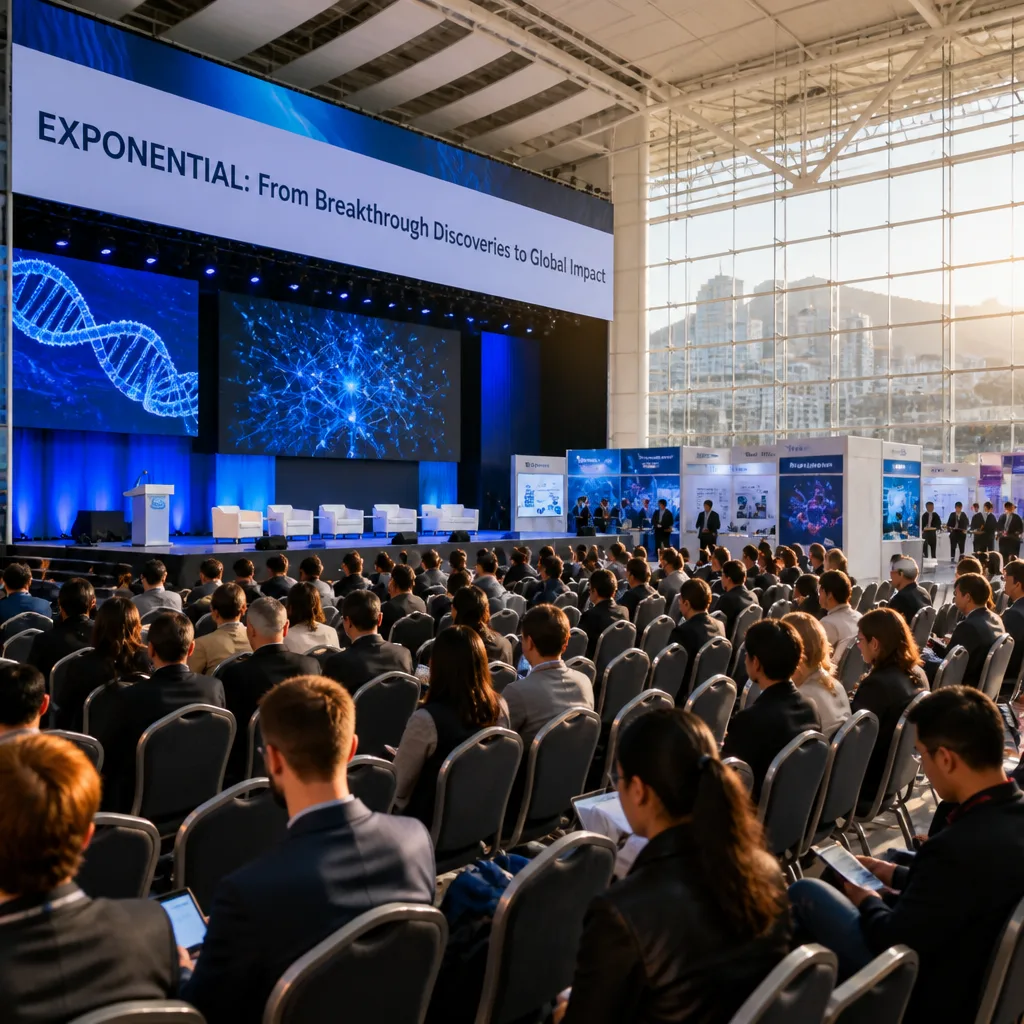
The 2026 Global Health Summit opened at the Hong Kong Convention and Exhibition Centre with a clear focus on accelerating the pathway from scientific discovery to patient care. Over a two-day programme under the banner “EXPONENTIAL: From Breakthrough Discoveries to Global Impact”, organisers say the meeting brought together nearly 200 speakers and more than 3,000 participants to discuss artificial intelligence, frontier research, clinical translation and the financing needed to scale technologies.
Senior figures and scientific leaders attend
Delegates included senior government and regional figures alongside leading academics and clinicians. Among attendees were Mr Leung Chun-ying, Vice Chairman of the National Committee of the Chinese People’s Political Consultative Conference, and Mr Lai Zhihong, a vice-mayor of Guangzhou. Singapore’s Senior Minister of State for Digital Development and Information and Health, Mr Tan Kiat How, was also present.
Academic and clinical voices featured prominently. The summit programme listed contributors such as Prof. Dong Jiahong, a member of the Chinese Academy of Engineering and chair professor at Tsinghua University’s School of Clinical Medicine, Prof. Ji Jiafu of the Peking University Cancer Research Center, and Prof. Wong Tien Yin, Tsinghua’s vice-provost and senior vice-chancellor for medicine.
Focus on investment and translation
The Hong Kong Investment Corporation (HKIC), described by organisers as the HKSAR government’s patient-capital investment flagship, co-hosted the summit and emphasised its strategic role in supporting biotechnology and health-technology firms as they expand internationally. In remarks reported by the summit organisers, HKIC’s chief executive set out the organisation’s priorities.
“Biotechnology and Health Technology have always been among the HKIC's priority sectors. This year's Global Health Summit builds on the ‘Rooted in Hong Kong, Connected with the Greater Bay Area’ strategic partnership launched by the HKIC and New Frontier in 2025,” the chief executive said.
Summit organisers framed the meeting as a bridge between discovery and delivery: drawing together research, clinical expertise, capital and technological enablement to accelerate development and adoption of new treatments and tools.
What the summit means for healthcare delivery
Conferences that assemble policy-makers, funders and scientists can shape research agendas and investment flows. If concrete commitments emerge — such as collaborative clinical trials, regulatory harmonisation or pooled investment vehicles — they may shorten the time it takes for innovations to reach patients. However, declarations at international summits are not substitutes for rigorous clinical evaluation, regulatory review and implementation planning.
Key areas discussed at similar gatherings in recent years include:
- the application of artificial intelligence to diagnostics and care pathways;
- mechanisms to fund later-stage translational research where commercial risk is high;
- international collaboration on clinical trials and data sharing to speed evidence generation.
Each of these areas carries challenges. For AI and digital health tools, independent validation in diverse clinical settings is essential to guard against bias and ensure safety. For biotech and therapeutics, the transition from early-stage promise to effective, affordable treatments for patients depends on large, well-conducted trials and clear regulatory pathways.
Numbers at a glance
| Item | Figure |
|---|---|
| Programme length | Two days |
| Speakers | ~200 |
| Participants | ~3,000 |
While the summit highlighted the role of capital and cross-border partnerships in taking innovations beyond the lab, translating announcements into benefits for patients will require sustained investment in clinical research infrastructure, transparent reporting of results and attention to equitable access. Summits can provide momentum and visibility; the longer-term measure will be whether initiatives announced at the meeting result in peer-reviewed evidence, regulatory approvals and adoption in clinical practice.
For health systems and policy-makers — including those in the UK — the summit is a reminder of the interplay between investment, regulation and evidence generation. Observers should watch for specific collaborations, trial launches or funding commitments that could influence international research capacity or the availability of new treatments in coming years.