
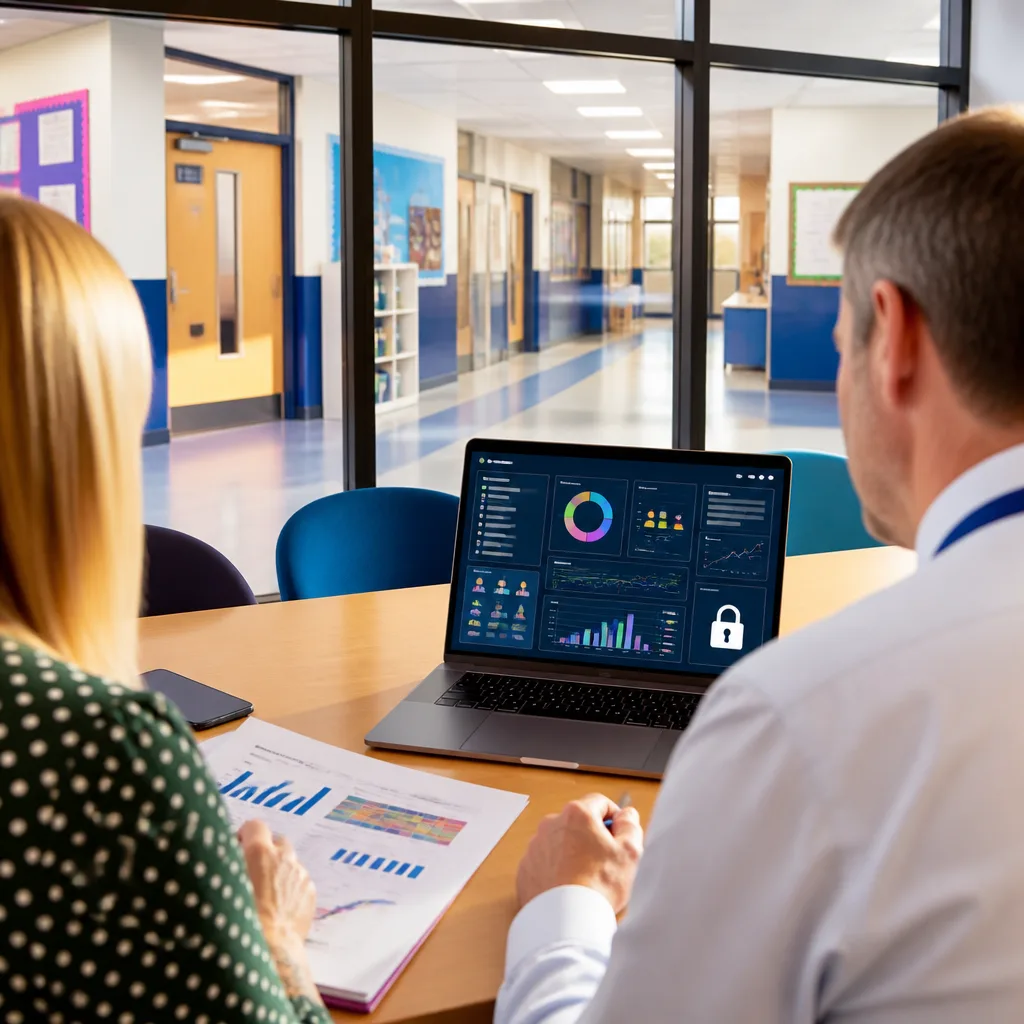
Faria Education Group has acquired Edu Intelligence, an artificial intelligence–native analytics platform designed specifically for schools, in a move that aims to embed prompt-driven, evidence-based insight across Faria’s international product portfolio.
AI analytics aimed at turning scattered data into quick answers
The deal brings together Faria’s established education services with Edu Intelligence’s tooling that allows school leaders to interrogate assessment, attendance, behaviour and wellbeing records in plain English and receive rapid, evidence-based responses. The platform is presented as requiring no dashboard configuration or specialist data skills to operate — a selling point the companies say will broaden access to analytics in schools.
“AI-powered analytics is central to where education technology is heading, and Edu Intelligence gives us both a strong product and a strong team to lead there,” said Oleg Figlin, chief executive of Faria Education Group.
Edu Intelligence’s founder and chief executive also described the acquisition as a way to scale the product more quickly through Faria’s global reach and infrastructure. The acquirer positions the purchase as strengthening its ambition to be an "AI-first" organisation.
Scale and integration — what this could mean for schools
Faria, established in 2006, operates a portfolio of services for international schools, covering learning platforms, admissions and school-home communications. The company says its ecosystem already touches more than 10,000 schools and roughly 4 million students in 155 countries. Edu Intelligence will be integrated into several Faria products, including platforms used for curriculum management, admissions and school operations.
For headteachers and senior leaders, the promise is simpler access to analytics without the need to extract, clean or configure data from multiple systems. That could reduce the administrative barrier to using pupil data for improvement planning, although how the tools perform in varied school contexts will determine their practical value.
- Accessibility: Natural-language querying aims to let non-specialists ask questions of their data.
- Integration: Analytics to be rolled into Faria’s products such as ManageBac+, OpenApply and others.
- Reach: Potentially impacts thousands of international schools already using Faria services.
Technology suppliers argue that removing technical hurdles helps leaders make evidence-led choices. Yet educators and privacy campaigners will expect clarity on data governance: how pupil data are processed, who can access insights, and how algorithms reach conclusions. The source material does not specify changes to data protection arrangements or any additional safeguards to be introduced with the acquisition.
Questions for policy and practice
In the UK context, rapid expansion of AI tools into classrooms and school administration has prompted calls for guidance on procurement, transparency and algorithmic accountability. Schools must balance the potential for faster, more actionable insight with statutory obligations under the Data Protection Act and the UK General Data Protection Regulation.
Practical concerns include interoperability between school MIS (management information systems), the extent to which analytics recommendations are explainable to staff and families, and the resources needed to act on identified issues. The acquisition gives Faria greater control over an analytics layer that could reshape reporting and intervention processes in schools that adopt its products.
For many headteachers, the appeal of AI tools lies in reducing time spent on data wrangling and enabling earlier identification of pupils who need support. Whether the promised benefits materialise will depend on implementation, training and the transparency of the underlying models.
| Detail | Figure |
|---|---|
| Schools in Faria network | 10,000 |
| Students covered | 4 million |
| Countries | 155 |
| Faria founded | 2006 |
The acquisition reflects broader trends: consolidation among education-technology vendors and a push to make AI-powered analytics an embedded element of school systems. For policymakers and school leaders alike, the immediate steps will be to scrutinise data-protection arrangements, seek clarity on algorithmic transparency and decide whether such tools meet local needs in classrooms and school management.











