
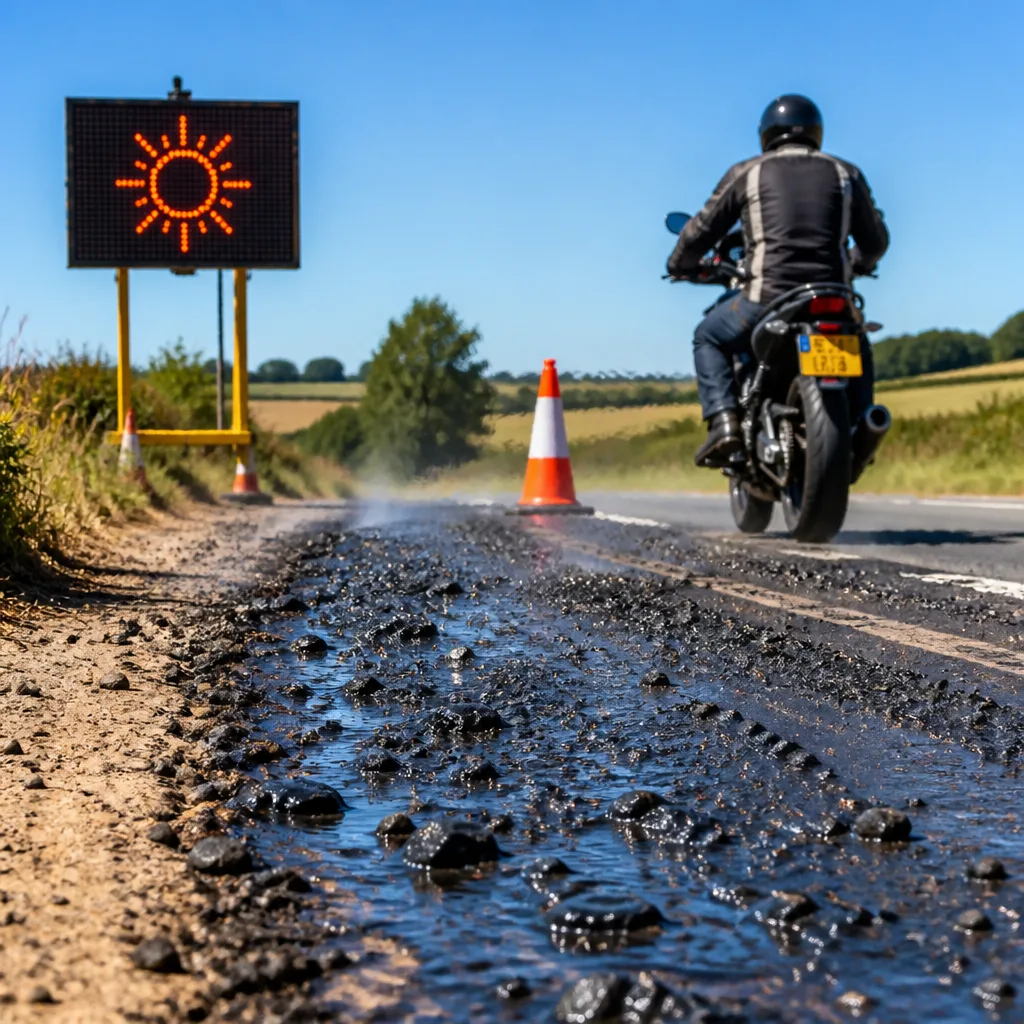
Drivers across much of England have been warned to expect degraded road surfaces as a blistering heatwave — including temperatures forecast to reach about 37C — coincides with an amber Met Office heat warning. The AA says that dark asphalt can heat well above air temperatures, allowing already fragile patches to soften, become sticky and start to rut under heavy traffic, increasing crash risk and damage to vehicles.
Immediate risks and advice for motorists
AA president Edmund King cautioned that the danger is not that roads will suddenly liquefy nationwide but that vulnerable stretches can turn tacky or uneven, throwing up loose material that affects steering, braking and grip. The motoring body urged drivers to slow down on poorer rural and local roads, leave extra space, and scan the road far ahead to reduce the chance of hitting deteriorated surfaces. Motorcyclists and cyclists were singled out as particularly at risk from sudden changes in surface condition.
“In prolonged hot weather, some road surfaces can soften, become sticky and, in places, start to rut under heavy traffic,” Edmund King said, adding that this can affect braking, steering and grip.
- Areas affected: much of England, including parts of the south and east and swathes of the Midlands under an amber heat warning from the Met Office.
- Temperature outlook: highs into the low-to-mid 30Cs translating into even hotter road surface temperatures; a potential peak of around 37C on the hottest day.
- Safety measures: reduce speed, increase following distance, and watch for uneven or sticky patches — especially on rural roads.
Infrastructure strain and economic context
The AA linked the phenomenon to the wider pothole crisis that already costs motorists in the UK. Previous estimates cited by the motoring organisation place the annual cost to vehicle owners at about £3.3bn. The group warned that extremes of weather — both very hot summers and very cold winters — exacerbate deterioration, making repairs more frequent and expensive.
| Item | Detail |
|---|---|
| Met Office alert | Amber extreme heat warning for much of England |
| Forecast air temperature | Low-to-mid 30Cs; potential peak around 37C |
| Estimated annual cost to motorists | Approximately £3.3bn |
Local highways authorities have already been put on alert. The AA said some councils may deploy measures such as gritters — more commonly seen in winter — to stabilise softened asphalt and prevent further rutting while permanent repairs are organised. However, the motoring body warned such interventions cannot fully substitute for sustained road maintenance funding.
As well as direct safety hazards, the association highlighted the compounding effect of weather extremes on existing weaknesses in the road network. Where surfaces are already compromised by previous freeze–thaw cycles, the added strain of sustained high temperatures can accelerate the formation of ruts and potholes, creating both immediate danger and longer-term maintenance backlogs.
Drivers were also reminded that vehicle performance can be affected in very hot conditions. Higher tyre and road-surface temperatures can alter grip levels, and hitting a softened patch at speed may lead to loss of control. The AA specifically advised riders and cyclists to be vigilant for sudden surface changes and to adjust their line and speed accordingly.
With the Met Office’s amber classification signalling a significant heat impact on health, infrastructure and services, motorists are being urged to factor road conditions into travel plans, allow extra time for journeys and report dangerous road defects to local councils so that urgent remedial action can be prioritised.















