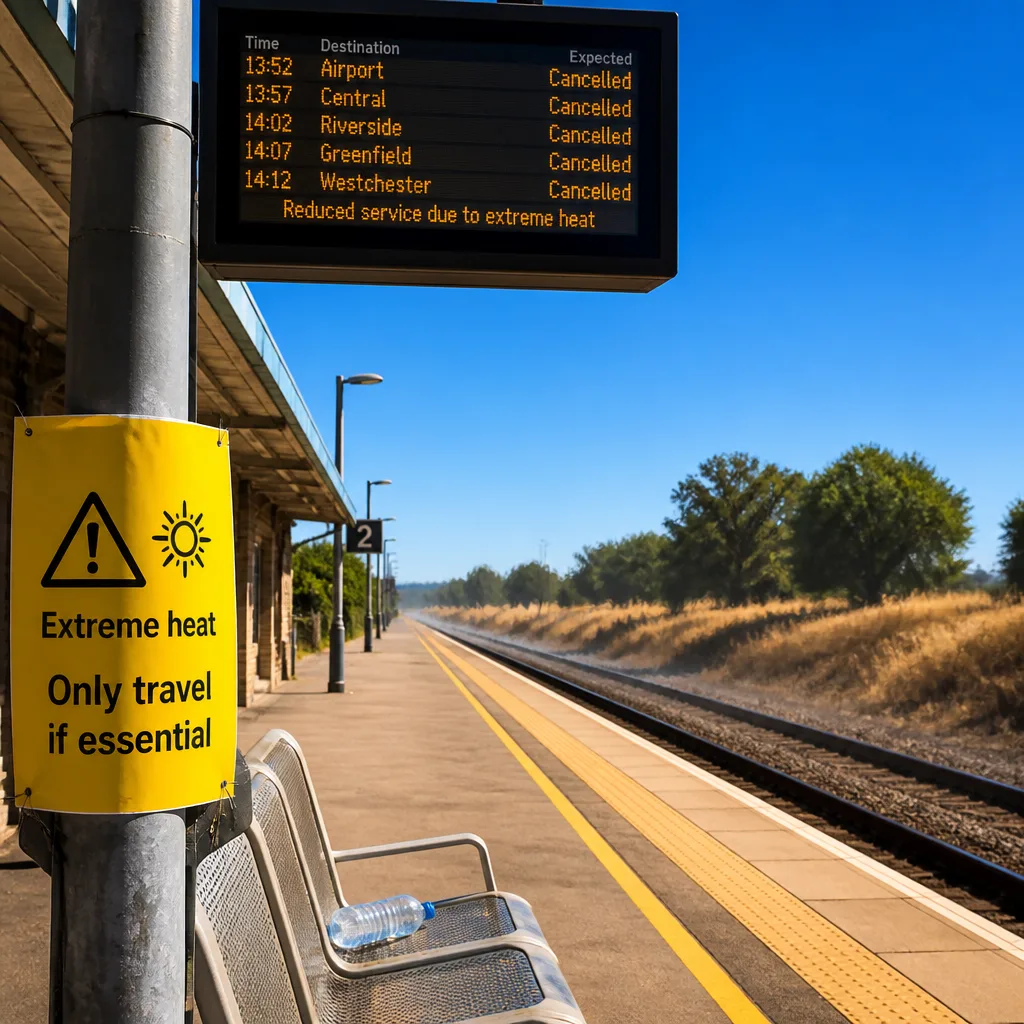
Rail operators in England have imposed timetable reductions and cancelled services as temperatures rise again, with warnings that the heat can cause buckled rails, overhead wire sagging and increased fire risk beside lines. Passengers have been advised to avoid travel unless necessary and to plan for delays.
What operators are saying and why services are cut
Chiltern Railways and East Midlands Railway issued alerts asking customers to travel only if essential, citing the effects of very high temperatures on infrastructure. Track temperatures can be considerably higher than the air temperature, increasing the risk of rail buckling; overhead cables can sag; and lineside vegetation can ignite more readily in hot, dry conditions.
"only travel if essential"
The measures are precautionary steps designed to keep passengers and staff safe while maintaining some level of service. Chiltern Railways is operating a reduced timetable during the hottest part of the day, while other companies have warned of cancellations or amended stopping patterns.
Practical changes passengers should expect
Chiltern Railways has said it will run a trimmed timetable between 11:00 and 20:00, with some services downgraded to hourly rather than half-hourly on key routes and a suspension of certain departures. Several trains between London and Oxford have been cancelled, and some services from Didcot Parkway are running non-stop between London Paddington and Reading, skipping intermediate stations such as Slough, Maidenhead and Twyford.
Specific cancellations reported include morning and midday Paddington departures on affected routes. Passengers are being offered flexibility to use alternative operators without extra cost on specified services.
- Reduced timetable on Chiltern Railways between 11:00–20:00
- Some Chiltern services between London Marylebone and Birmingham Moor Street downgraded to hourly
- No Chiltern services from Birmingham Snow Hill from around 10:15 until the end of the day
- Tickets accepted on alternate operators on affected sections
What passengers should do
Operators are asking travellers to check live travel information before setting out. During hot spells, journeys can take longer and facilities such as air conditioning may be less effective if trains are running slower or on altered timetables. Customers are also urged to stay hydrated and to plan for the possibility of replacement transport.
Practical steps to consider:
- Check your operator’s live updates and national rail information before travelling
- Allow extra time; expect slower services and possible cancellations
- Carry water and avoid waiting on exposed platforms for long periods
- Use accepted alternative tickets where operators provide flexibility
Short-term outlook and confidence
The impact on rail services is a direct response to high temperatures and the known vulnerability of steel rails and overhead equipment to heat. While measures such as speed restrictions and reduced timetables reduce the immediate safety risk, they will continue to cause disruption while hot conditions persist. Operators are acting on sound engineering guidance; however, the exact scale of cancellations or delays can change quickly as conditions evolve.
| Issue | Impact |
|---|---|
| Rail buckling | Speed restrictions, cancellations |
| Sagging overhead wires | Reduced electric traction, altered services |
| Lineside fires | Line closures, emergency response |
For now, the best course for travellers is to treat each journey as potentially disrupted, to check updates immediately before departure and to carry essentials. Operators will continue to issue updates as the situation develops and as engineers assess the network during and after the hottest hours.
Keep an eye on operator alerts and national rail information, plan realistically and only travel if you must during the peak heat period.