
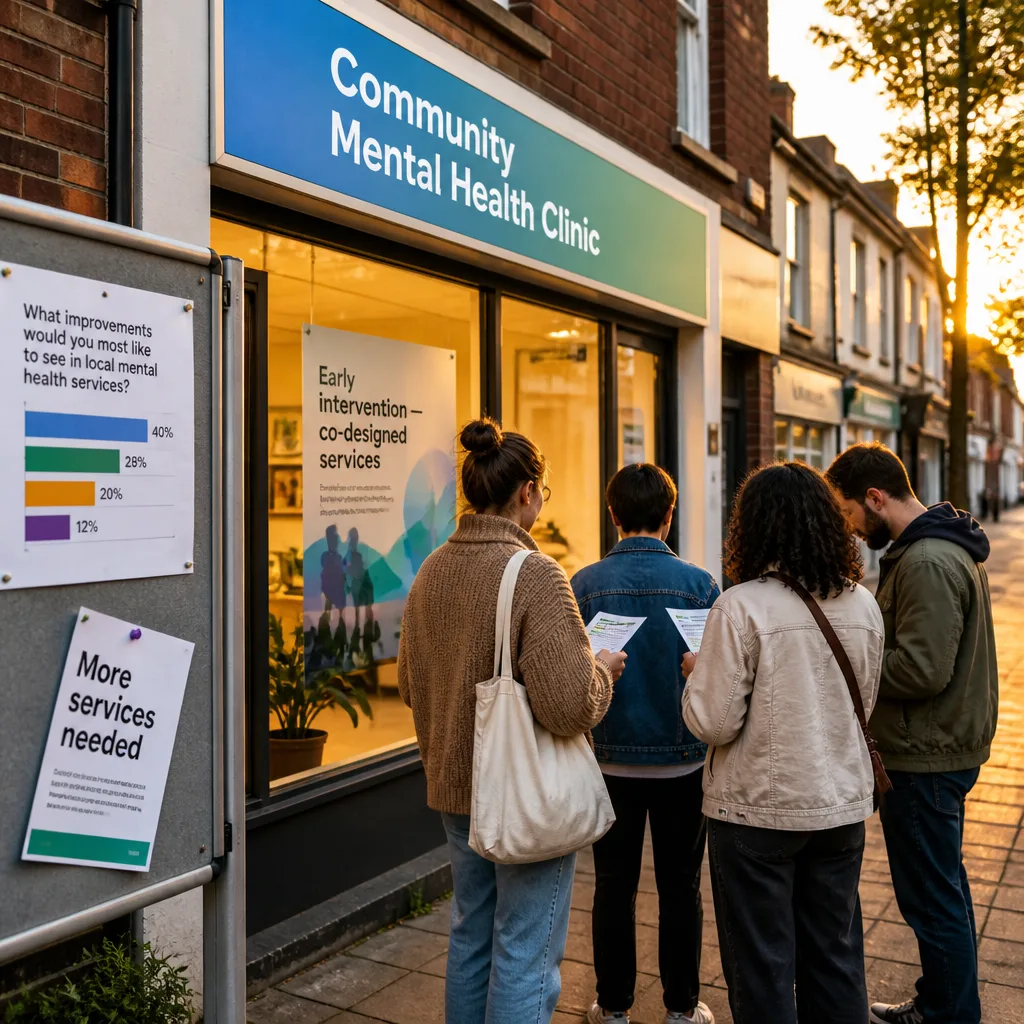
The announcement of a new network of community mental health clinics in England has been broadly welcomed as a step towards earlier access to care, but experts and campaigners warn that the initiative must be accompanied by robust public‑health measures and meaningful involvement of people with lived experience to avoid widening existing gaps in services.
Early intervention welcomed — but limitations stressed
In a letter responding to the government’s move, Dr Kate Martin of the Wellcome Trust described the focus on early intervention as “very encouraging”, arguing clinics that enable people to access treatment sooner could prevent conditions reaching crisis point and “reach people where they are”. Dr Martin urged that the centres be co‑designed and co‑led by people with lived experience to ensure services meet real needs.
“Parity between mental and physical healthcare became a policy goal in 2011. Mental health is an issue that unites us,”
Her letter cites new research commissioned by the Wellcome Trust and conducted by More in Common, reporting that nearly three‑quarters of the public consider mental health as important as physical health and that the same proportion want the government to do more to improve services. The research also found broad public support for early intervention and a general comfort discussing mental health, including across the political spectrum.
Public‑health approach and the risk of uncovering unmet need
Other correspondents caution that increased access through clinics could uncover substantial unmet need unless there is a parallel public‑health strategy. One letter draws an analogy with the historical control of tuberculosis, arguing that clinical interventions alone are insufficient and that attention must be paid to the wider environmental and social determinants that predispose people to poor mental health.
Experts note that while new centres can expand access to treatments that may transform lives, those treatments must be rigorously evaluated, adopted and made available across the NHS. Without that, inequalities in access to evidence‑based care could persist or deepen.
- Co‑design: Campaigners emphasise involving people with lived experience in planning and delivery.
- Evaluation: New interventions should be subject to rigorous assessment before widespread rollout.
- Public health: Calls for a preventive, population‑level approach to reduce underlying risks.
| Public attitude (More in Common survey) | Proportion |
|---|---|
| Believe mental health is as important as physical health | Nearly three‑quarters |
| Say government should do more to improve services | Three‑quarters |
These figures, as cited in the letter, reflect public sentiment but do not substitute for clinical outcome data or independent evaluations of service effectiveness.
Implications for policy and practice
Policymakers face several intersecting challenges. Expanding clinic access addresses supply and entry‑point barriers but does not automatically tackle social determinants such as housing, employment and poverty, which are widely recognised drivers of mental ill‑health. Moreover, scaling up services without ensuring workforce capacity risks overpromising on access and quality.
Health services and government must therefore balance short‑term improvers in access with long‑term investment in prevention, workforce development and evaluation frameworks. The letters argue that the success of the programme will depend on translating public support for early intervention into sustainable, evidence‑based practice that is inclusive of those with lived experience.
Finally, while public surveys indicate a strong appetite for more action on mental health, survey responses measure attitudes rather than the complex realities of service delivery and clinical outcomes. Further independent evaluation will be needed to establish whether the new network reduces crisis presentations, improves recovery rates and narrows inequalities.
Whatever the initial results, the correspondence highlights a common theme: expanding access is necessary but not sufficient. A comprehensive strategy that combines clinical services, public‑health prevention and meaningful co‑production is required to meet the scale of need across England.














