A powerful 7.7 magnitude earthquake that struck the Indonesian island of Flores has threatened the schooling and safety of more than 8,000 children, damaged dozens of education sites and left communities scrambling as relief agencies assess urgent needs.
Scale of damage and disruption
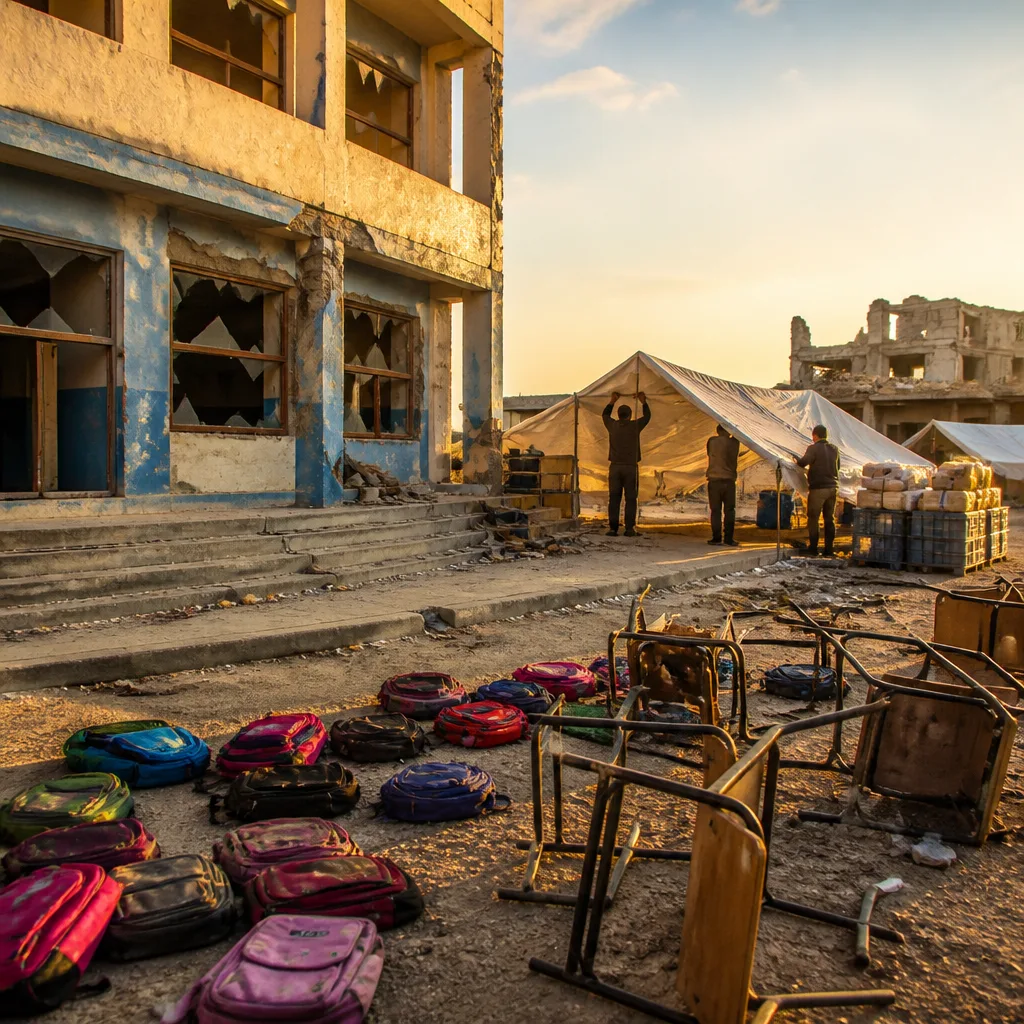
Emergency teams and local partners report that the quake, which hit East Nusa Tenggara province, has already claimed the lives of over 50 people, with casualties expected to rise as search and rescue efforts continue. The tremor and subsequent aftershocks damaged more than 900 homes and affected essential public services, including 87 education facilities and 18 healthcare centres, according to aid agency assessments.
“Once we reached the backyard, the shaking grew much stronger. At its peak, I couldn't even stand up. I held onto my child, my wife, and my mother-in-law.”
The testimony above comes from Agus, a visually impaired father who described racing with his family to safety when buildings collapsed around them in Ruteng, a highland town on Flores where the quake’s impact was severe. His family live at a school for children with special educational needs; his wife works there as a teacher.
Humanitarian response and immediate priorities
Save the Children, working with a local partner, has begun needs assessments in affected communities to plan an emergency response focused on children's protection, health, psychosocial support and education. The earthquake strikes a region already struggling with environmental threats, including an El Niño-driven drought and volcanic hazards linked to Mount Lewotobi, raising concerns about a cumulative effect on children's wellbeing and the capacity of services to cope.
- More than 8,000 children facing disruption to education
- Over 50 fatalities reported so far
- More than 900 homes damaged and hundreds displaced
- 87 education facilities and 18 healthcare centres affected
Humanitarian organisations say rapid assessments are required to identify safe temporary learning spaces, provide school-based psychosocial support and ensure that children’s access to essential services is maintained while longer-term reconstruction planning begins.
What this means for children and schools
The damage to school buildings and the displacement of families interrupt daily routines that are crucial for children’s sense of security. In contexts where educational infrastructure is damaged, pupils can face prolonged absence from formal learning, increased protection risks and reduced access to school-based nutrition and health services.
Local teachers and staff — including those supporting children with additional needs — are likely to require rapid training and supplies to establish safe, temporary learning environments. Agencies will also need to coordinate with local authorities to clear debris, assess structural safety and prioritise repairs to campuses used as shelters.
| Indicator | Reported figure |
|---|---|
| Children affected / education disrupted | 8,000+ |
| Deaths | 50+ |
| Homes damaged | 900+ |
| Education facilities damaged | 87 |
| Healthcare centres affected | 18 |
Complicating the response, a separate 6.9 magnitude earthquake was reported off Sumatra’s western coast within days of the Flores event, highlighting Indonesia’s exposure to seismic activity as a nation situated along the Pacific "Ring of Fire".
Save the Children’s Humanitarian and Resilience Director in Indonesia has warned the quake has "caused a lot of pain and damage" while worsening pre-existing vulnerabilities, and the agency is mobilising assistance to protect children and restore essential services.
For educators, the crisis underscores the need for disaster-resilient school buildings, contingency plans for learning continuity and stronger links between schools and emergency services. In the immediate term, ensuring safe learning spaces, re-establishing routines and providing psychological support will be central to limiting the long-term impact on pupils’ education.
As assessments continue, international and local agencies will be watching how quickly schools can reopen and what support families and teachers receive to rebuild learning environments after this devastating quake.