Novak Djokovic halted his warm‑up for the US Open after a shock defeat at the Cincinnati Open in which the world number one was visibly unwell, vomited during the match and later said a recurring health condition has affected him for "the past couple of years".
Immediate incident and match details
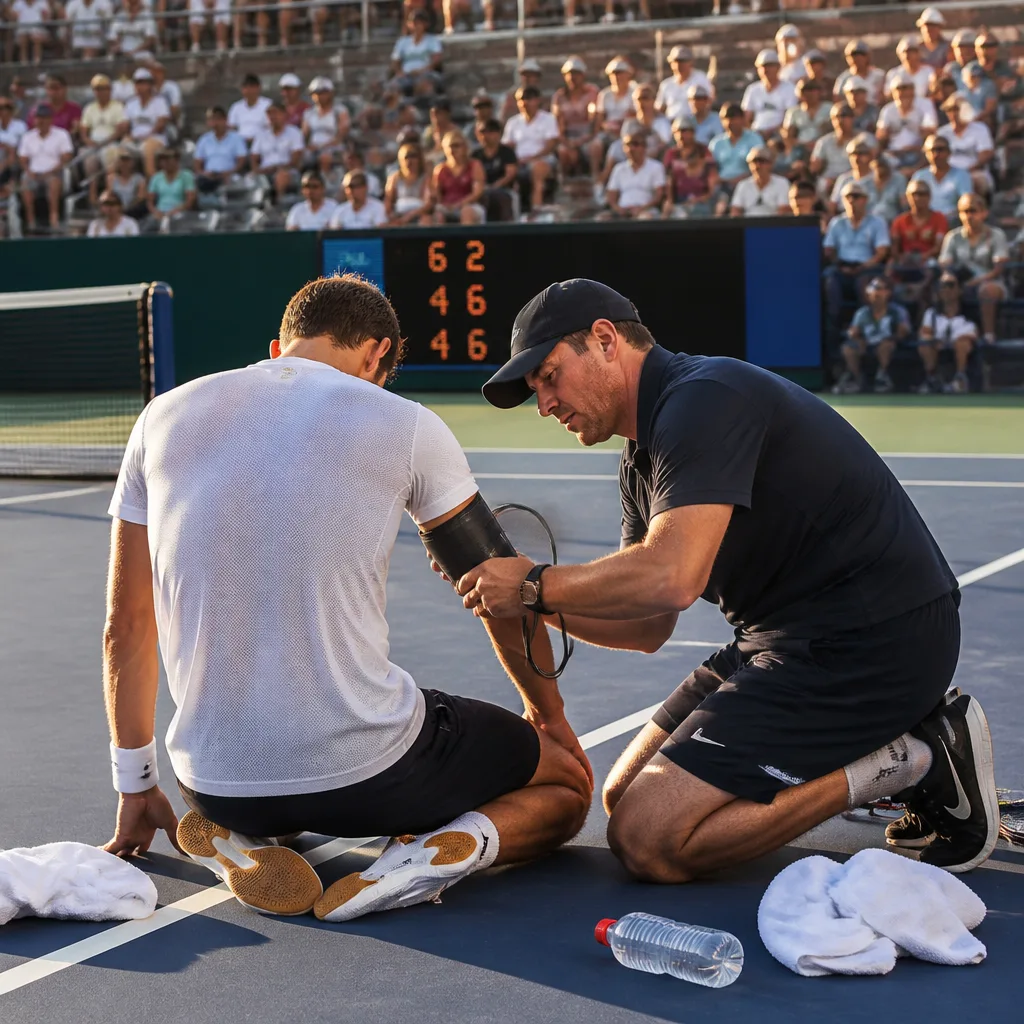
Djokovic, 39, won the first set but lost 2‑6, 6‑4, 6‑4 to world number 50 Thiago Agustin Tirante. Midway through the second set he called for the physio, was seen vomiting into a towel and had his blood pressure taken on court before his level dropped and he eventually fell to his knees.
"It's just a condition that I have, health‑wise, that has been bothering me for the past couple of years," Djokovic said after the match. "A lot of issues, especially when it is humid and it is hot."
He added that nerves and environmental factors appeared to make symptoms worse and that the match had been "not an enjoyable match for me," acknowledging it was not the first time he had experienced such problems.
Context and sporting implications
The Cincinnati Open comes weeks before the US Open, which begins on 30 August, making Djokovic's condition a matter of interest not only to supporters but to medical teams and tournament organisers monitoring athlete safety in hot, humid conditions. Djokovic has previously won the Cincinnati title in 2018, 2020 and 2023, but said it now "looks more likely not" that he will return to Cincinnati in future.
| Year | Result (Cincinnati) |
|---|---|
| 2018 | Champion |
| 2020 | Champion |
| 2023 | Champion |
| 2026 | Eliminated – 2‑6, 6‑4, 6‑4 (vs Tirante) |
He has been in the United States for promotional work, including activity related to an upcoming Amazon Prime documentary. Djokovic had said he intended to play in Cincinnati to sharpen his form ahead of New York.
Health, heat and elite athletes
Reports from the match and Djokovic's own comments point to heat and humidity as triggers for his symptoms. Research in sports medicine consistently shows that hot, humid environments increase the risk of heat‑related illness and can impair physical and cognitive performance. That body of evidence underlines why medical teams at major events monitor core temperature, hydration and cardiovascular markers closely.
Djokovic characterised his problem as a health condition that has recurred for a number of years and said it is aggravated by humid conditions and by nerves. He did not provide a diagnostic label or further clinical detail in his remarks.
Without specific clinical information it is not possible to ascribe his symptoms to a single cause. Vomiting, faintness and elevated blood pressure during exertion can arise from a range of issues including dehydration, heat illness, cardiac or autonomic disturbances, medication effects or other metabolic problems. Distinguishing correlation from causation requires medical assessment and, where appropriate, investigations.
Questions for the coming weeks
- How Djokovic's medical team will manage preparation and monitoring ahead of the US Open.
- Whether tournament organisers and governing bodies will adjust protocols for extreme heat at hard‑court events.
- The extent to which ongoing symptoms may affect his prospects at Flushing Meadows, given he cited humidity as a key trigger.
Djokovic's situation illustrates the intersection of elite sport and medical risk in extreme conditions. It also highlights the limits of public reporting when athletes choose not to disclose full medical details: statements from players signal concern but do not substitute for clinical data. For now, supporters and medical observers will watch closely as he and his team determine the safest path to New York.