
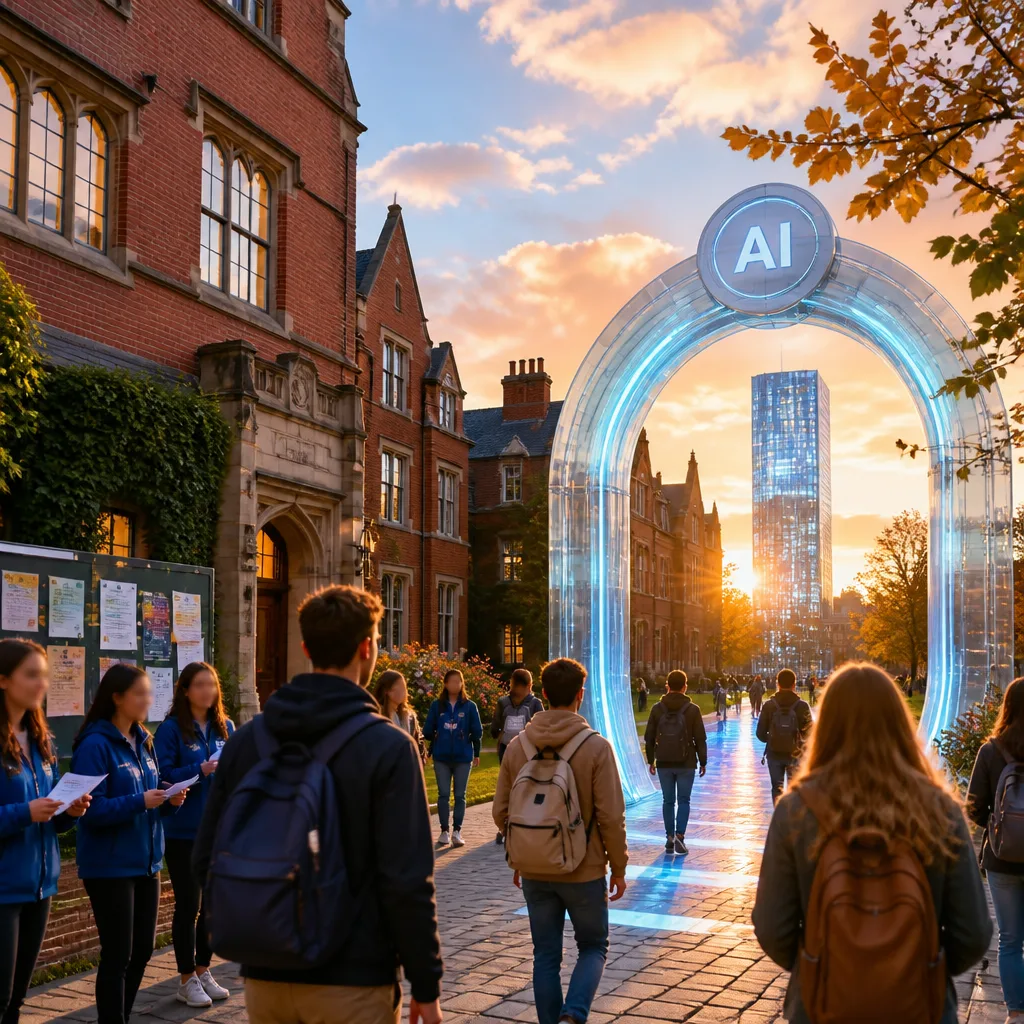
Large AI companies are attempting to stitch together the stages of a student’s progress from learning to employment, creating a single, platform-based route that could sideline traditional universities and careers services. The change is not merely a new product line: it is a redefinition of who mediates education and access to jobs.
From helpful assistant to pipeline controller
Students already turn to AI services for study help and personal guidance, often trusting these tools for repeated explanations or even emotional support. That reliance has created a foothold. Now, some AI firms are laying out plans that go further — combining learning materials, formal credentials and job placement into one offering.
“connect learning, certification and real economic opportunity in one clear journey, laying the foundation for our upcoming OpenAI Jobs Platform”
The quoted language, published on an AI company’s certification pages, signals intent to integrate training, accreditation and employment access under a single commercial roof. If realised, the model would allow a firm to control not only the tools students use but also the credentials they hold and the routes they take into the labour market.
Why universities should be concerned
There are three linked reasons why this matters to higher education institutions and policymakers:
- Market concentration: A firm that provides both learning aids and hiring connections can shape demand for particular credentials and influence which skills are valued by employers.
- Student dependence: Trust in AI tools is growing; some students come to doubt their abilities without them. That behavioural change amplifies any power imbalance between platform and learner.
- Labour-market intermediation: By brokering jobs, an AI company shifts from vendor to gatekeeper, potentially competing directly with university careers services and independent employers.
Those dynamics threaten an independent path from education into work. Universities, which traditionally validate learning and offer impartial careers support, could find their roles weakened if students increasingly rely on a single commercial platform for both study and job access.
Signs it’s already happening
Beyond promotional language, AI firms are taking practical steps to deepen campus ties. Recruitment of students to act as ambassadors, and the roll-out of certification products aimed at credentialing learners, show a strategy of embedding services within the very communities universities serve.
| Stage | Platform role |
|---|---|
| Learning | Provide tutoring, explanations and study aids |
| Certification | Offer credentials that claim to signal skill to employers |
| Employment | Broker job opportunities through platform features |
What universities and policymakers should watch
The expansion of AI firms into certification and recruitment is an issue of public interest that warrants attention from universities, regulators and government. Key areas to monitor include:
- How platform-issued credentials compare to recognised academic qualifications in rigour and transparency.
- Whether access to employment opportunities becomes dependent on participation in a firm’s ecosystem.
- Student welfare and autonomy if academic and career pathways are shaped by commercial incentives.
The risk is not only commercial displacement of universities. There is also a civic dimension: higher education plays a role beyond skills provision, including independent assessment, academic freedom and social advancement. Allowing a small number of commercial platforms to mediate the entire route from learning to employment could narrow choices for students and concentrate influence over what counts as legitimate training.
Universities do not need to resist technology per se. But they should be alert to the possibility that tools designed to help learners can be repurposed into mechanisms that channel students towards a single employer-managed pathway. Protecting diverse, independent routes into work will require clarity about the standards of new credentials, transparency about how job brokering works, and a strategic response from higher education institutions themselves.
If universities fail to act, students could find themselves relying on platforms that mix help with vested commercial interests — and that may reshape the labour market in ways neither students nor society intended.









