
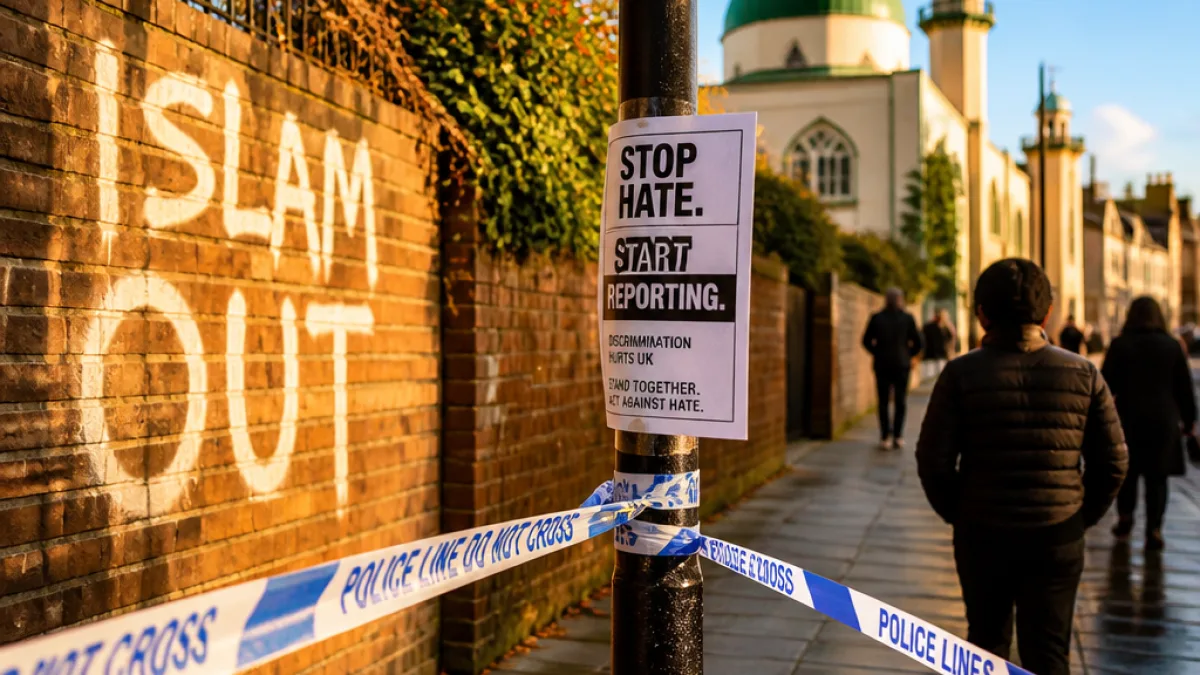
London has seen a marked rise in reported anti-Muslim incidents in recent years, with new figures from monitoring organisation Tell Mama suggesting the city is experiencing a "sustained escalation" of hate and prejudice targeted at Muslim residents.
Numbers point to a worrying trend
Tell Mama’s statistics show a steady climb in reports: there were 313 incidents recorded in 2021, rising to 818 in 2022, and reaching a record 1,909 in 2025. Critically, the organisation recorded 1,031 reports across London between January and the end of June 2026 — a total that, it said, already surpasses the entire 2023 figure of 1,028.
| Year | Recorded reports |
|---|---|
| 2021 | 313 |
| 2022 | 818 |
| 2023 | 1,028 |
| 2025 | 1,909 |
| Jan–Jun 2026 | 1,031 |
Those figures, gathered by Tell Mama, are being described by the charity and community leaders as alarming — not only for the scale, but for the pattern of repeat victimisation and the emotional toll on those targeted.
Voices from the community
Walking through neighbourhoods with large Muslim populations, the sense of unease is tangible. One local shopkeeper told me he now avoids discussing his religion in public and has changed the hours he keeps his halal food stall because of abuse he has faced. Another parent said they are thinking twice about sending their child to mosque activities alone.
"What is most alarming is the trajectory: from just over 300 reports in 2021 to nearly 1,100 in the first half of this year alone. A worrying rise in repeat victimisation and heightened levels of targeted anger are leaving victims with a fractured sense of personal safety," said Iman Atta, director at Tell Mama.
Atta urged a robust, co‑ordinated response from public institutions, warning that piecemeal statements would not address the pattern emerging from the data.
Events and rhetoric under scrutiny
Tell Mama’s analysis also points to links between public events and levels of reported hostility. The organisation noted increased reports following a central London rally organised by activist Tommy Robinson — also known as Stephen Yaxley‑Lennon — which was criticised by a deputy mayor for instances of Islamophobia. At the event, some demonstrators reportedly called for the "removal of Islam", and Robinson posted remarks claiming he would "stop Islam" if he became prime minister.
Campaigners said such public rhetoric can normalise hostility and embolden individuals to target people because of their faith.
Police response and accountability
A Metropolitan Police spokesperson told WE NEWS: "We will not tolerate attacks on the Muslim community. Hate crime in all its forms — including ongoing efforts to tackle racism, anti‑Muslim hate crime, and other forms of hatred in the capital — rem..." The police statement reiterated a commitment to tackle hate crime, but did not set out new measures in response to Tell Mama’s latest figures.
Community groups and councillors are pressing for clearer action plans from the Met and City Hall, including improved reporting routes for victims, targeted patrols in affected areas and stronger public messaging condemning Islamophobia.
- Campaigners want enhanced support for victims, including advocacy and counselling.
- Calls for law enforcement to publish targeted operational plans responding to the rise in incidents.
- Community leaders seek political accountability over inflammatory rhetoric at public demonstrations.
For residents affected by hate crime, Tell Mama provides reporting and support services; the Met Police also encourages victims to report offences so they can be investigated. Local authorities have a role too: several boroughs run community safety teams and cohesion programmes aimed at preventing backlash following high‑profile events.
As the debate over free speech and protest continues, the data from Tell Mama has intensified concern among Londoners about day‑to‑day safety and belonging. The numbers highlight the need for co‑ordinated action across policing, local government and community organisations to prevent further harm and to reassure those feeling increasingly vulnerable because of their faith.
Reporting from the capital, I found an atmosphere in which many Muslim Londoners seek both urgent protective measures and long‑term commitments to tackle prejudice at its roots. Authorities must now show how they will translate statistics into sustained protective action.















