
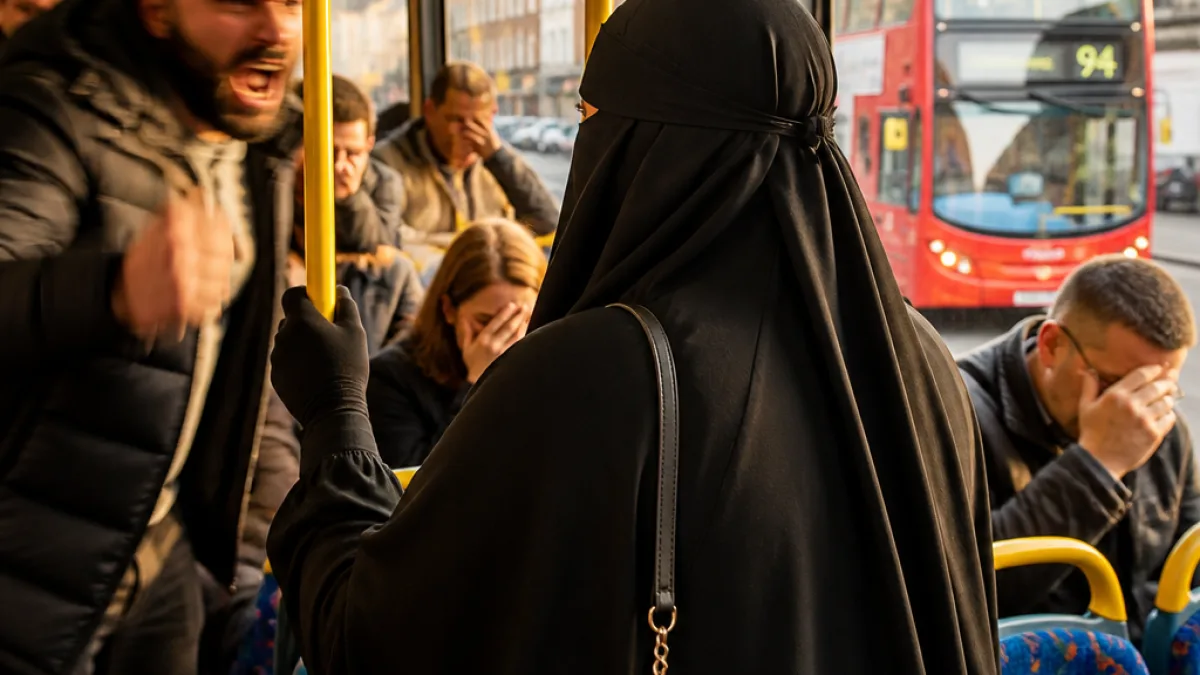
A young Muslim woman who was verbally abused and threatened on a west London bus has told WE NEWS that Islamophobic harassment is an everyday experience for her in the capital, and that past encounters with police left her unwilling to report further incidents.
Passenger threatened over niqab, she says
The 21‑year‑old, who goes by the name Salsabil, said she was travelling home from central London on 31 July when a fellow passenger began shouting at her because she wears a niqab, the face veil worn with a headscarf that leaves the area around the eyes clear. She told WE NEWS the man used abusive language and made threats, including that he would remove her veil by force.
"Spitting, barging, pushing. It happens to me every single day," Salsabil said. "We kind of convince ourselves that this is something we have to tolerate rather than report."
She said the situation escalated, with another passenger intervening and the confrontation turning physical. The bus driver asked the aggressive passenger to get off and Salsabil disembarked at her usual stop in north‑west London. She said she feared for her safety and was grateful the intervening passenger stepped in.
Reluctance to report after previous experience
Salsabil told WE NEWS she chose not to report the July incident to the Metropolitan Police because of a previous experience when she reported an Islamophobic hate crime and felt officers were "quite dismissive". She said that many women experience similar harassment and that the prospect of repeatedly attending police stations is demoralising.
"If I reported every single incident, I think I would probably just live at the police station," she said, describing how frequent abuse has become an expected part of daily life for her.
A Metropolitan Police spokesperson said the force was committed to addressing hate crime and stressed that "no community in London should have to endure intimidation or abuse".
What happened on the bus — the timeline
| Detail | Account |
|---|---|
| Date | 31 July (as reported by the victim) |
| Location | Bus travelling from central London to north‑west London |
| Complaint | Verbal abuse directed at wearer of niqab; alleged death threat and threat to remove veil |
| Intervention | Another passenger intervened; driver asked aggressor to leave |
| Police | Incident was not reported to the Met by the victim |
Broader concerns from the community
The account highlights wider issues around the reporting of hate incidents in the capital. Salsabil described daily occurrences — from being spat at to being pushed — and said such attacks are often tolerated because victims expect little to come from reporting them.
Community members and campaigners have for years raised concerns that certain victims, including Muslim women who wear visible religious dress, feel particularly vulnerable on public transport. While law enforcement agencies have reiterated commitments to investigate hate crimes, victims’ narratives point to gaps between policy and lived experience.
- Daily harassment: Victim reports routine Islamophobic behaviour across the city.
- Fear of reporting: Prior experiences of dismissal discouraged the victim from contacting police over the latest incident.
- Intervention by bystanders: The only passenger to actively defend the victim became involved in a physical altercation with the aggressor.
What this means for transport users and authorities
The incident raises immediate questions for Transport for London and bus operators about safety measures and the role of staff and drivers when harassment occurs. It also underlines the importance of ensuring victims of hate incidents trust reporting routes and receive appropriate support.
For those who witness or experience hate incidents, standard guidance is to prioritise personal safety, seek help from transport staff where available, and consider reporting to police or to the relevant transport operator. The Metropolitan Police has reiterated its commitment to tackling all forms of hate crime; local communities will be watching to see whether victims’ experiences of follow‑up and support improve.
On the streets of west London this week, several residents expressed concern. One commuter said: "You shouldn't have to feel threatened on a bus. If people are scared to call the police, that's a problem for all of us."
This report is based on the account given to WE NEWS by the woman involved and the public statement from the Metropolitan Police. The force has been asked for further detail about any related enquiries and any action taken in response to the incident.















