
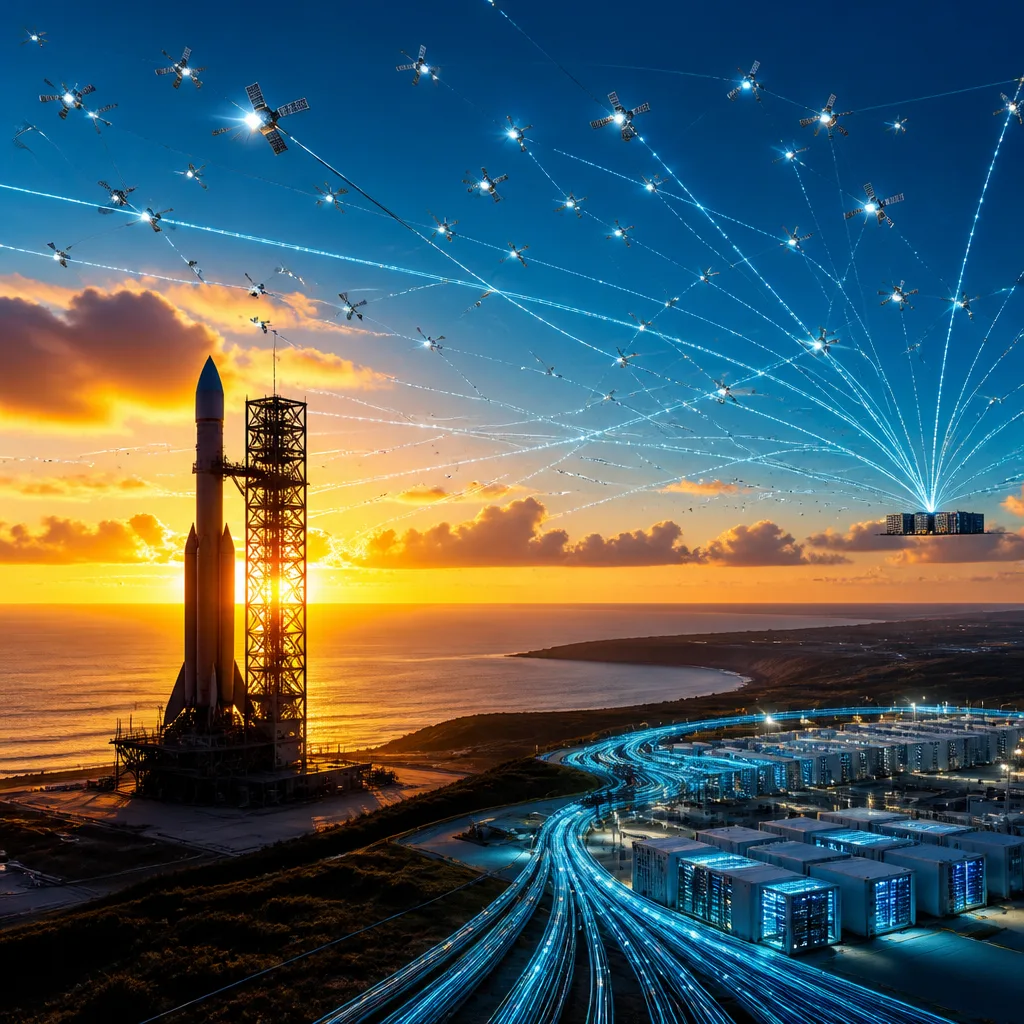
SpaceX’s ambitions in artificial intelligence could change how the company is valued and how markets structure themselves, an analyst told CNBC this month, arguing the outfit should be seen less as a launch and satellite operator and more as an AI platform builder with control over the physical layer on which future models will run.
From rockets and constellations to AI infrastructure
Aaron Burnett, founder and CEO of Mach33 Financial Group, told CNBC on 7 August that SpaceX’s focus on AI could propel its value dramatically over the next decade. He framed the company’s long-term case around what it builds with intelligence, not just its aerospace businesses, suggesting an eventual valuation that would dwarf today’s largest technology firms.
“SpaceX's artificial intelligence ambitions could push the company's value into the tens of trillions of dollars by the 2030s, even if the business hits major delays along the way.”
Burnett also said a merger between SpaceX and Tesla "carries strategic logic," a notion that would be viewed differently by retail investors and by enterprise buyers that supply fleets, infrastructure and logistics networks. For those buyers, a combined entity would materially alter vendor selection and the competitive landscape for space-connected and autonomous services.
Why AI and physical infrastructure matter
The argument rests on a simple, increasingly prominent idea in tech: the real contest for future AI dominance will not only be about model architectures or training datasets, but about the physical systems — compute, networking and global connectivity — that host and deliver those models. Controlling those layers can confer persistent commercial advantages.
- Control of compute and network — owning satellites, launch capacity and ground stations gives an operator leverage over where workloads run and how data flows.
- Platform potential — combining hardware and software stacks can let a company monetise AI as a service embedded in transport, logistics and telecommunications.
- Consolidation effects — suggested tie-ups, such as the proposed SpaceX–Tesla logic, would change supplier dynamics for enterprise customers and fleet operators.
Those points are not unique to SpaceX; other major players are reorganising around speed of delivery and productisation. This week’s changes at Google’s DeepMind lab were offered as evidence of that broader shift.
Signals from other AI labs
The same week Burnett made his comments, DeepMind — long regarded as a research-first AI lab — underwent a leadership reshuffle. Demis Hassabis stepped aside as CEO of Google DeepMind, and Jeff Dean, the lab’s chief scientist, departed to found his own startup. The Financial Times reported the changes consolidate control with Google’s parent in Silicon Valley and represent a move toward faster product delivery rather than pure research.
Those events were presented in the analyst’s framing as confirmation that the competitive frontier in AI is moving from discovery to deployment — and that companies best positioned to control the physical layer for model deployment stand to capture outsized value.
What this means for the market
The thesis challenges conventional sector labels. Viewing SpaceX purely as a launch firm or a satellite operator understates the strategic upside Burnett describes. But it also raises questions for regulators, enterprise customers and investors: how will competition change if space, automotive and AI capabilities converge under a small set of vertically integrated companies? How should supply chains and procurement strategies adapt when the provider of connectivity also supplies the AI stack?
| Topic | Implication |
|---|---|
| Valuation outlook | Potentially exponential if AI platform monetisation succeeds |
| Market structure | Consolidation risk for vendors and customers |
| Regulatory focus | Questions over vertical integration and market power |
The claim of a valuation in the "tens of trillions" is striking given current market capitalisations, and it depends on successful execution across multiple hard problems: industrial-scale AI, reliable long‑range connectivity, and commercialisation in transport and logistics. The analyst’s view provides a provocative lens on why physical infrastructure has become central to debates about AI’s future, but it remains an argument about potential, not a forecast based on disclosed corporate plans or public financials.
For technology buyers and policymakers, the takeaway is practical: decisions made today about procurement, interoperability and competition will shape who controls the layers that matter to AI tomorrow.









