
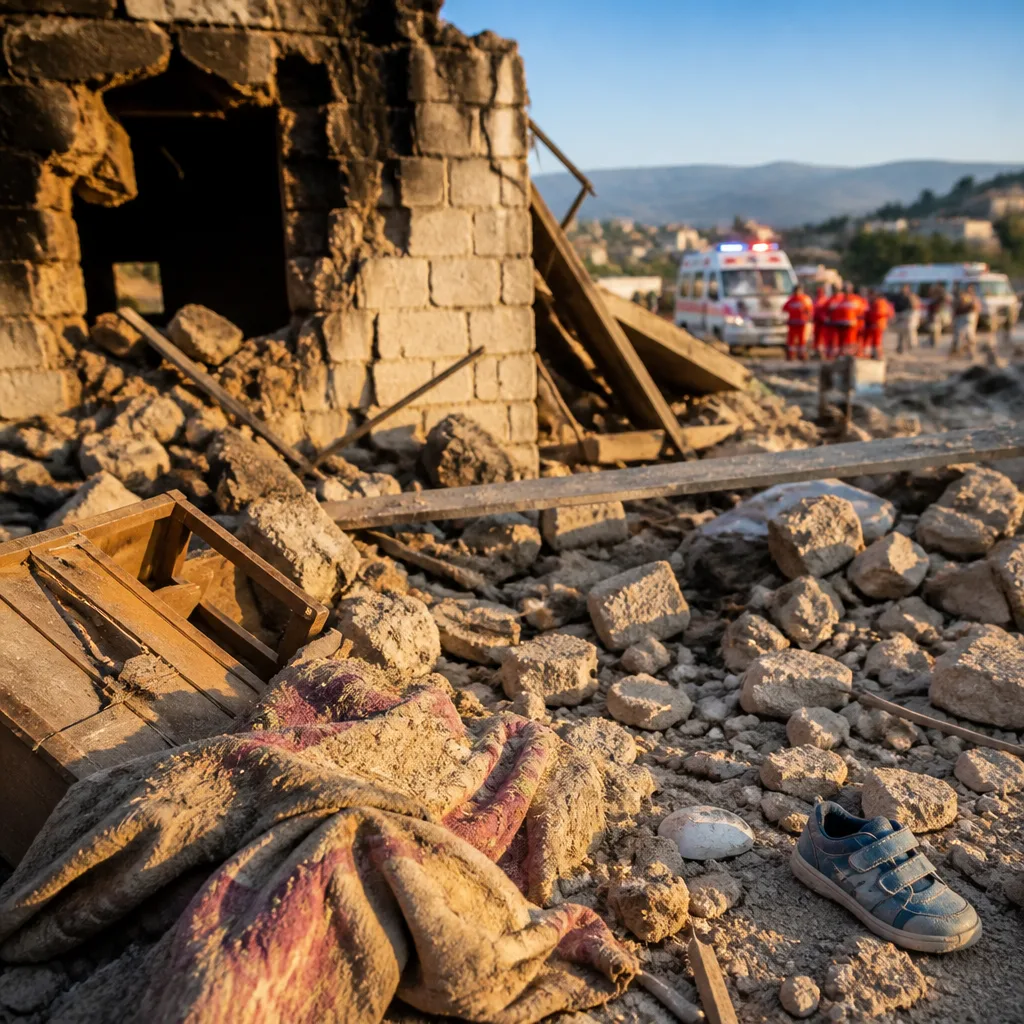
At least 11 people were killed and dozens wounded in Israeli airstrikes on southern Lebanon on Saturday, Lebanon’s Health Ministry and state news agency reported, marking the bloodiest incident since a tentative ceasefire arrangement came into force in June.
Casualties and locations
One strike struck a home on the outskirts of the village of Ansar, killing seven people, among them three children, and injuring two. A separate strike on the village of Deir al-Zahrani killed four people and wounded 17, according to the Health Ministry and state media.
- Ansar: seven killed, two injured (home targeted)
- Deir al-Zahrani: four killed, 17 wounded
The strikes are the deadliest since a provisional truce — part of a broader framework agreed between Israel and the Lebanese government on 26 June — aimed to reduce hostilities in the south.
Context of the truce and previous tolls
The framework announced late last month envisages the withdrawal of Israeli forces from the border area in return for the disarmament of Hezbollah, a group backed by Iran. The arrangement also outlined steps intended to move the two countries towards a longer-term settlement, although Hezbollah itself did not sign up to the deal and has declined direct negotiations.
Health ministry records show previous deadly incidents both before and after the truce took effect. On 19 June, just prior to the ceasefire, strikes on Lebanon resulted in 83 deaths and 141 wounded, the ministry said. On 6 July, four people were killed in strikes on the town of Nabatiyeh Fawqa.
| Date | Deaths | Wounded |
|---|---|---|
| 19 June | 83 | 141 |
| 6 July | 4 | Not specified |
| 15 August (latest) | 11 | 19 (combined) |
Responses from Lebanese leaders
Lebanese Prime Minister Nawaf Salam publicly criticised the strikes, saying they intimidate residents and undermine efforts to stabilise southern Lebanon. He argued that the victims — described by his office as women and children — were not military targets and called on Israel to stop what he characterised as an escalation.
“The seven martyrs of the Israeli airstrike on the town of Ansar are not military infrastructure and the children and women killed were not military targets,” Salam wrote on X, adding that Israel “must halt this escalation.”
President Joseph Aoun also condemned the attacks. In comments issued by his office, he said the strikes were a “clear message” to the negotiation track and to US efforts aimed at implementing the framework agreement.
Implications for civilian protection and the truce
The incidents underscore the fragility of the ceasefire architecture. The framework negotiated by Israel and the Lebanese state depends on de-escalation on the ground even though Hezbollah remains outside the agreement and has refused direct participation. That gap in buy-in from a principal armed actor raises the risk that localised incidents could widen.
From a public health perspective, recurring strikes that hit civilian areas compound the immediate human toll through deaths and injuries, while also disrupting medical services, mobility and the delivery of humanitarian assistance. Health ministries and international agencies frequently warn that such disruptions have longer-term consequences for access to care, mental health and community resilience, particularly in border areas where infrastructure and services are already stretched.
Saturday’s attacks will test whether the parties to the framework can reassert control over escalation and prevent further civilian harm as negotiations and diplomatic efforts continue.














