As Afghanistan marks five years since the Taliban returned to power on 15 August 2021, many residents in Kabul report a sense of improved security after decades of conflict, even as appeals intensify for the authorities to expand access to schools and create work for a jobless youth cohort.
Safety reported, but education cut off for older girls
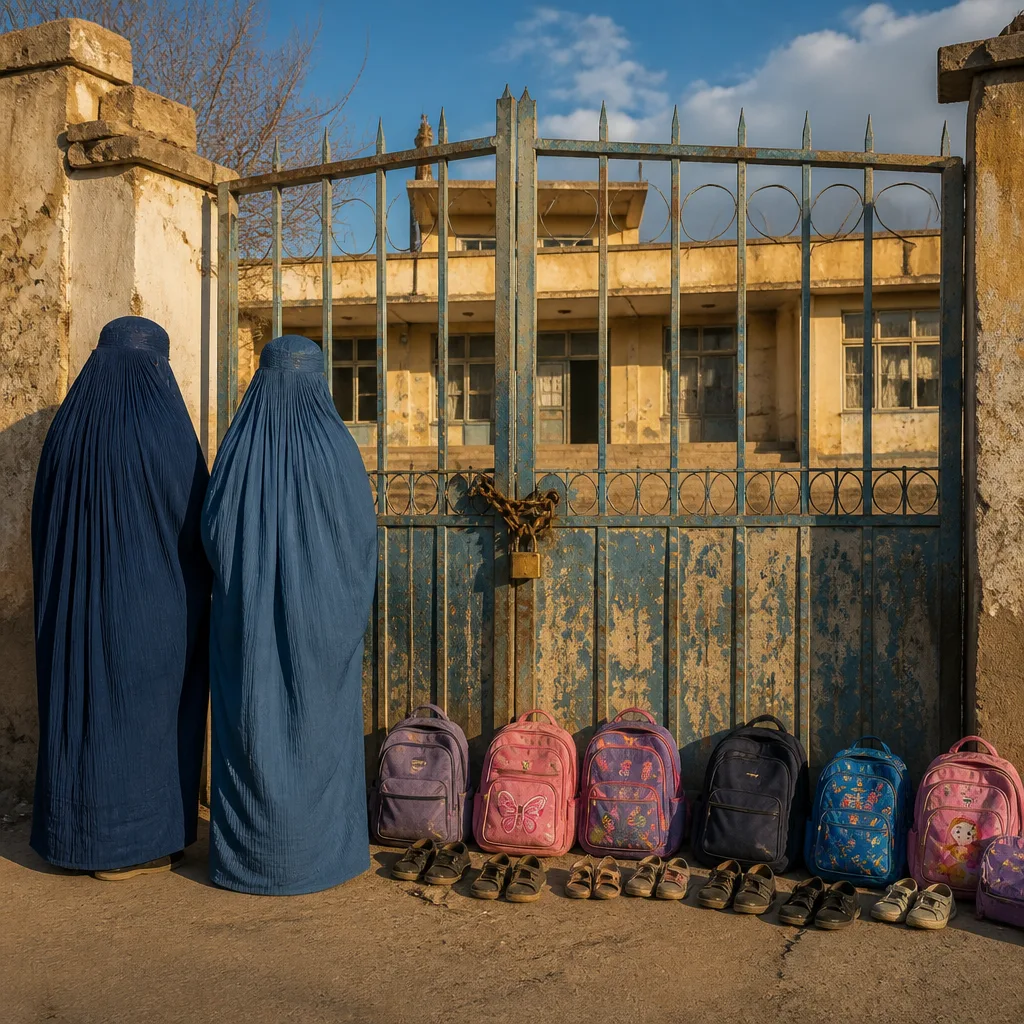
On the anniversary, voices from the capital underline a paradox: reduced conflict has delivered visible calm on the streets for some, yet the Taliban’s ban on education for girls above the age of 12 remains a central grievance for families, teachers and rights advocates.
“Thank God , the past five years have passed in safety,”
Those words came from Mohammad Qasim, 30, reflecting the mood of some Kabul residents. He also urged the government to devise measures to tackle unemployment:
“Our wish and hope from the government is to create job opportunities for the youth.”
Restrictions on women continue to hamper recovery
Alongside the school ban, the authorities have imposed further constraints on women, including limits on employment and requirements that women travel with a male guardian. These measures followed initial Taliban assurances, given after their 2021 takeover, that they would protect women’s rights.
The United Nations has acknowledged a reduction in conflict that has ‘‘brought tangible benefits for many Afghans and created opportunities to focus on recovery, development and regional economic cooperation’’, but it warned these gains cannot be consolidated while restrictions on women and girls remain in place.
UN officials have been explicit that lifting the curbs on women and girls is not only a rights imperative but also central to Afghanistan’s economic recovery and to restoring relations with the international community.
What residents and observers are asking for
- Education: restoration of secondary and higher education for girls beyond the age of 12;
- Employment: creation of job opportunities for young people to address economic hardship;
- Women’s freedoms: reversal of restrictions on female employment and movement to enable broader participation in public life;
- International engagement: steps to alleviate isolation by meeting human rights and counter-terrorism concerns.
Residents and the UN link these demands: while security gains open space for recovery, long-term stability is unlikely without restoring equal access to education and work for women.
Snapshot: policy changes since 2021
| Area | Policy since 2021 |
|---|---|
| Girls’ education | Secondary and higher education banned for girls above 12 |
| Women’s employment | Restrictions imposed on many roles |
| Travel | Women restricted from travelling without a male guardian |
| Security | UN notes a reduction in conflict, with attendant recovery opportunities |
Those facts underscore why education campaigners and UN officials repeatedly call for the reversal of measures that bar girls from school and curtail women’s participation in the workforce. International isolation, they argue, is tied to progress on these issues.
For educators, pupils and parents in Afghanistan the anniversary is thus a complex moment: a recognition of relative peace juxtaposed with frustration and fear about lost learning and livelihoods. The next steps by the authorities — whether to loosen restrictions or to entrench them further — will determine not only the prospects for hundreds of thousands of girls and women but also how quickly the country can reconnect with outside donors and institutions essential for long-term recovery.