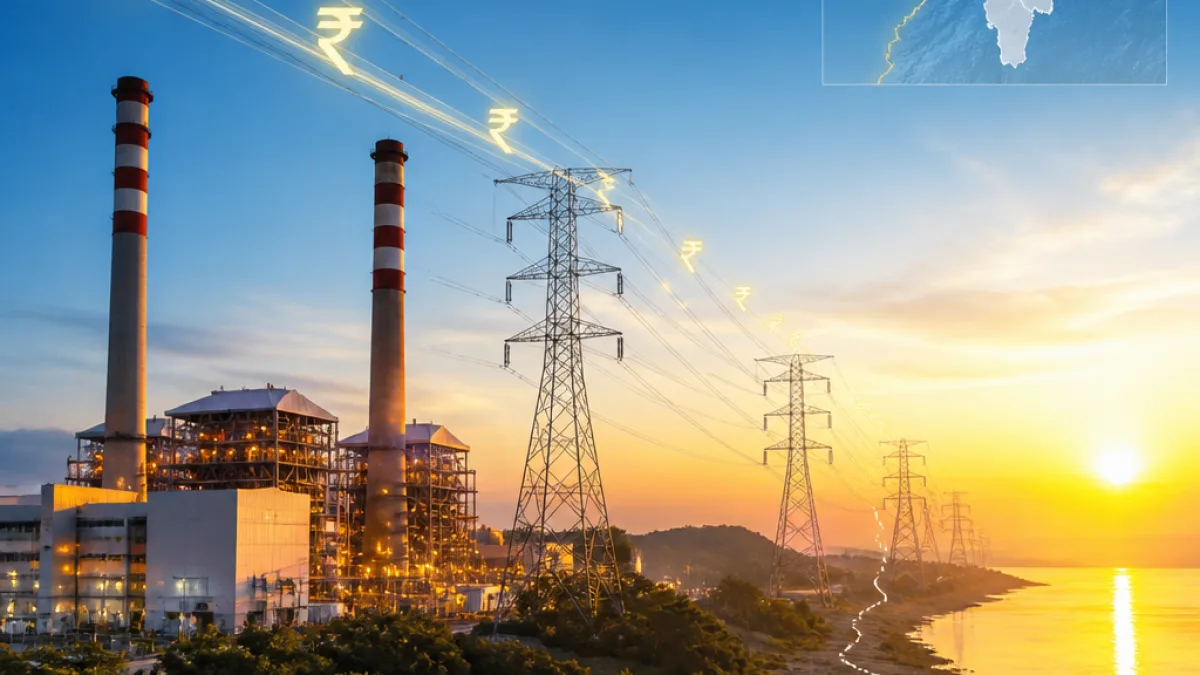
Tripura State Electricity Corporation Limited (TSECL) has realised receipts totalling ₹1,165.37 crore from electricity sales to Bangladesh over the past ten years, the state’s Power Minister said, highlighting the growing role of cross‑border energy commerce for the northeastern state.
Decade of exports and evolving supply levels
According to the ministerial statement, Tripura began exporting power to Bangladesh in March 2016 from the ONGC Tripura Power Company (OTPC) plant in southern Tripura. Initial shipments were for 100 megawatts (MW). Over time, deliveries were varied and have at points reached 192 MW. On 9 August this year, TSECL supplied 200 MW to the neighbouring country.
“Tripura started supplying 100 MW of power to Bangladesh from ONGC Tripura Power Company (OTPC) power plant in southern Tripura in March 2016. The power supply was subsequently increased at times to 192 MW,” the Power Minister said.
Current tariff and request to boost exports
TSECL is currently selling power to Bangladesh at ₹6.76 per unit, upgraded from the initial tariff of ₹5.50 per unit when cross‑border supply commenced. The state government has sought permission to increase the quantum of supply, requesting that exports be raised to at least 250 MW in view of what it described as a significant shortfall in Bangladesh’s domestic capacity to meet growing consumer demand.
Partners and infrastructure
The OTPC plant that feeds these exports is a joint venture involving Oil and Natural Gas Corporation (ONGC), Infrastructure Leasing & Financial Services Ltd (IL&FS), IDFC Bank and the Tripura government. The ministerial note did not provide details of the contractual arrangements or the duration of the power supply agreements with Bangladesh.
- Total earnings (10 years): ₹1,165.37 crore
- Current unit price: ₹6.76 per unit
- Initial unit price (2016): ₹5.50 per unit
- Recent supply level (9 August): 200 MW
- Requested target: at least 250 MW
What this means for Tripura and the region
The revenue stream from exports represents a source of non‑tax income for Tripura’s power sector and demonstrates the state’s capacity to act as an energy supplier to its neighbour. At the stated tariff, cross‑border sales also serve as an outlet for surplus generation, support utilisation of existing thermal capacity and can contribute to operational stability for the supplying plants.
For Bangladesh, higher imports from Tripura can help bridge short‑term deficits while the country expands generation capacity. The minister’s note cited an increase in consumer demand across the border as the reason for the request to raise supply.
| Metric | Figure |
|---|---|
| Revenue from exports (2016–2026) | ₹1,165.37 crore |
| Unit price (current) | ₹6.76 |
| Unit price (initial, 2016) | ₹5.50 |
| Recent supply | 200 MW (9 August) |
| Requested supply target | 250 MW (minimum requested) |
Practical considerations and next steps
Raising exports to 250 MW would require coordination across multiple levels: formal approval of supply increases, grid stability assessments, scheduling between generating stations and transmission utilities, and confirmation of payment and settlement terms. The public statement did not detail timelines for implementation or mention whether Bangladesh had formally accepted the request.
Any permanent increase in exports will also hinge on Tripura’s domestic demand outlook. Authorities typically balance external sales against projected in‑state consumption and system reliability needs.
State officials have highlighted the OTPC facility as the principal source for these exports; the JV partners named include ONGC, IL&FS, IDFC Bank and Tripura government stakes. The ministerial communication did not disclose the precise contractual mechanism under which incremental power would be supplied or whether any new investments are planned to raise export capacity.
Tripura’s experience underlines the growing importance of regional electricity trade in South Asia, where geographically proximate markets can be linked to address seasonal and structural shortfalls in supply. For Tripura, the revenues and strategic ties resulting from such trade add a new dimension to the state’s power sector planning.