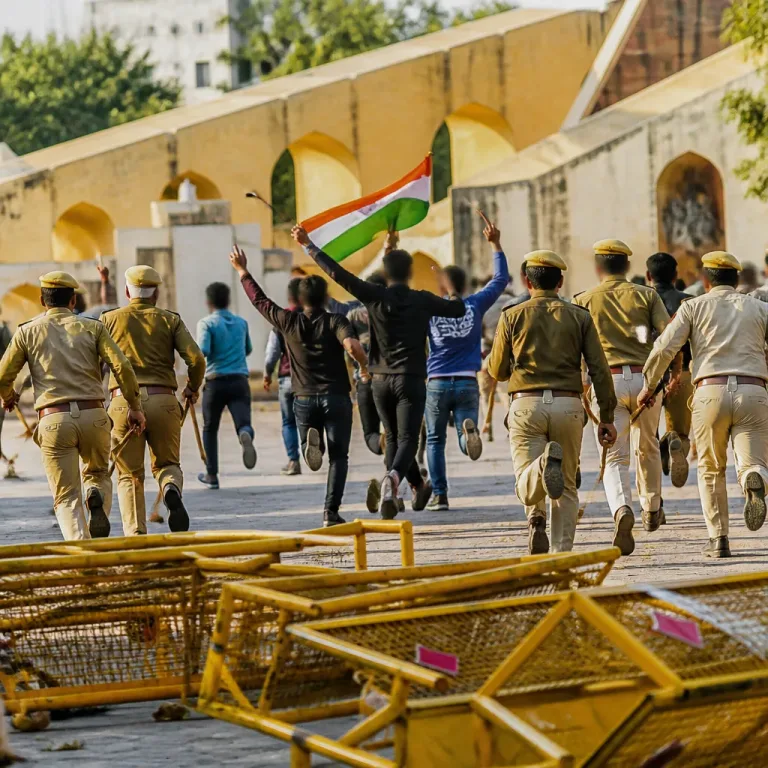
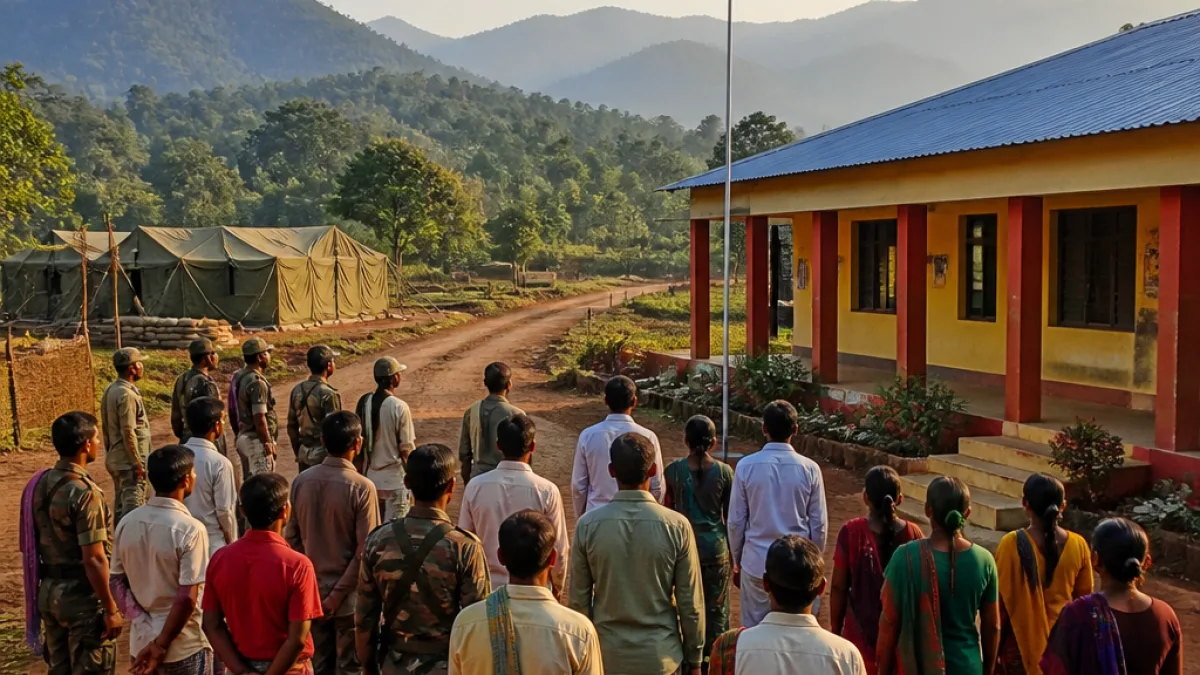
Boter village, deep inside the Abujhmad region of Chhattisgarh's Narayanpur district, witnessed the hoisting of the national flag on Independence Day for the first time, local officials said on Saturday. The event, held at the government primary school, was attended by villagers and security personnel from the 29th Battalion of the Indo-Tibetan Border Police (ITBP).
Symbolic return of civic life
Residents said national festivals were previously not celebrated openly in the hamlet because of restrictions and fear under Naxal influence. The flag was also raised at the adjacent ITBP camp, marking a visible shift in day-to-day life as security presence expanded into the area.
Rajesh Kumar Pandey, Station House Officer of Orchha, said the Independence Day programme in Boter was organised for the first time and villagers were offered snacks as part of the celebrations. He described villagers as "excited" and said the opening of a police camp had contributed to a sense of safety.
"For the first time, flag hoisting has been done here. Villagers were also offered snacks. With the Police camp opening here, villagers are excited and met us warmly. Once the area became Naxal-free, it has been developing rapidly. We are proud to be here to witness the flag hoisting for the first time," said SHO Rajesh Kumar Pandey.
Local accounts: from fear to celebration
An assistant teacher at the government primary school in Boter, identified as Ravikant, said the Tricolour was hoisted at the school for the first time and that children and residents were happy. "Never before was the Tricolour hoisted here. This is the first time that we have hoisted the national flag here. The entire village is enthused," he said, according to local reports.
Villagers told reporters that after the police camp was set up, road construction and other development activities began in the vicinity. The reports said similar flag-hoisting ceremonies were held in nearby habitations including Rekhapal, Diwalur and Kumnar.
Kauru Ram Mandavi, a resident, recounted that Naxal cadres had previously prohibited villagers from hoisting the Tricolour and would punish those who defied the ban. He said villagers were also required to seek permission before going to markets or visiting other villages. The new celebrations, he added, reflected a sense of liberation.
Security footprint and development
The presence of the ITBP's 29th Battalion and a police camp are central to the narrative of restored order in this part of Abujhmad. Officials and villagers attributed the arrival of security forces to an improvement in access and infrastructure, citing road construction as a tangible outcome following the reduction in militant activity.
| Location | Event |
|---|---|
| Boter (Abujhmad, Narayanpur) | First-ever Tricolour hoisting at government primary school; flag also unfurled at ITBP camp |
| Rekhapal, Diwalur, Kumnar | Tricolour hoisting reported |
What villagers say changed
- Earlier restrictions: Residents said Naxalites forbade celebration of national festivals and imposed movement controls.
- Security arrival: Police camp and ITBP presence gave villagers confidence to celebrate and moved towards normal civic life.
- Development follow-up: Road construction and increased access were reported after the security forces established a presence.
The Independence Day ceremony in Boter is part of broader efforts by security forces and administration to re-establish state presence in previously inaccessible pockets of Chhattisgarh. Local accounts emphasise the ceremony's symbolic weight: the flag-hoisting marked not only a national observance but also a step towards reclaiming normal civic routines curtailed by years of insurgent intimidation.
Officials said similar events in other villages were intended to signal that state institutions — from law enforcement to schools — were working to restore services and public life. The reports identify Boter as an example of how security operations, when coupled with administrative outreach, can open opportunities for public celebrations and the resumption of development work.
No independent confirmation of the long-term security situation in Abujhmad was available in the reports, and officials continue to monitor the region as they expand outreach and infrastructure projects.