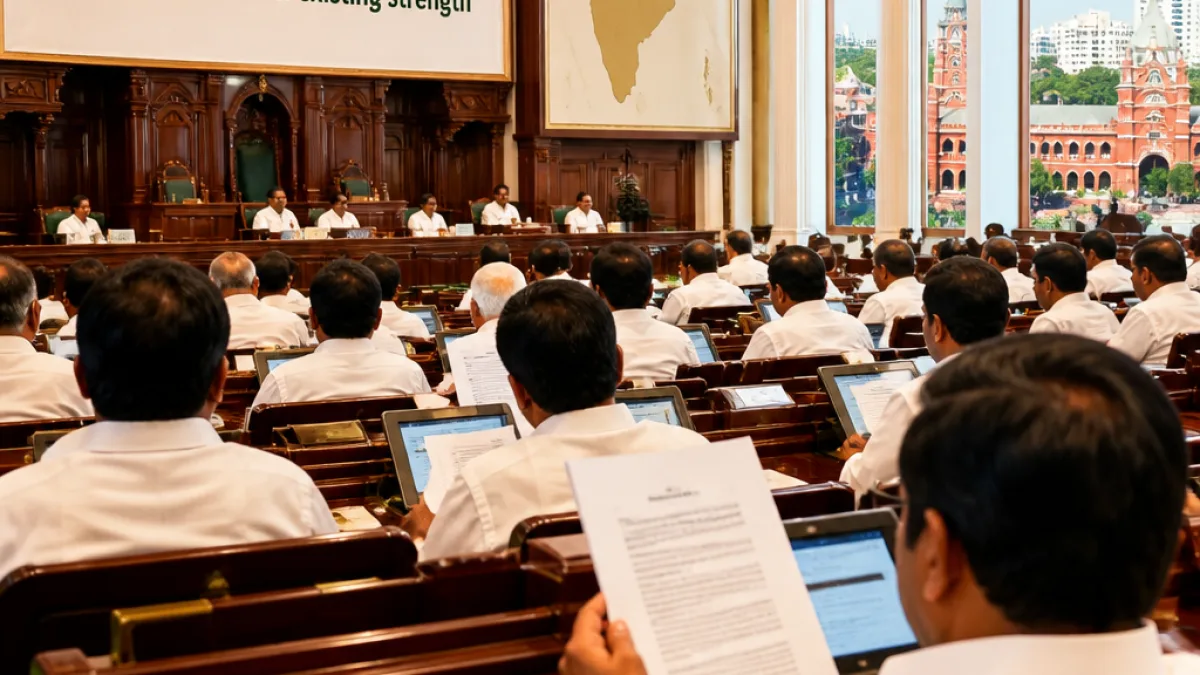
CHENNAI: The Tamil Nadu Legislative Assembly on Thursday passed a resolution urging the Union government to permanently retain the existing strength of the Lok Sabha at 543 members and to oppose any delimitation exercise based on census data after 1971.
Assembly stance and party positions
The motion, moved by Chief Minister C Joseph Vijay, said a fresh delimitation using the 2011 census or later population figures would reduce representation for states such as Tamil Nadu that implemented population control measures. The resolution called for the current inter‑state distribution of Lok Sabha seats and the present Lok Sabha‑Rajya Sabha ratio of 2.2:1 to be maintained.
“This is not a political party’s resolution. It is a resolution to safeguard Tamil Nadu’s rights permanently. I appeal to all members, cutting across political lines and differences, to support it,”
The resolution was supported by a broad grouping of parties including the DMK, Congress, CPI, CPM, IUML and Viduthalai Chiruthaigal Katchi (VCK). The AIADMK, PMK and BJP opposed the motion. Manithaneya Makkal Katchi MLA M H Jawahirullah, who contested on the DMK symbol, also backed the resolution.
Why Tamil Nadu fears delimitation
The Assembly recalled the failure of a Constitution Amendment Bill in April 2026 that sought to lift the five‑decade freeze on delimitation, undertake fresh delimitation tied to the 2011 Census and expand the Lok Sabha from 550 to 850 members. With the possibility of a similar Bill being reintroduced in Parliament, Tamil Nadu legislators argued that conducting delimitation on post‑1971 population data would disadvantage states that controlled their population growth.
Presenting the resolution, the Chief Minister urged the Centre to immediately implement 33% reservation for women in the Lok Sabha elections — but within the existing strength of 543 seats — and requested that the women’s quota be applied from the next general election.
Voting and attendance
The resolution was adopted by voice vote in the Assembly. Reports said several leaders of the AIADMK opposed the motion; three notable AIADMK dissidents — S P Velumani, Natham R Viswanathan and C Ve Shanmugam — were not present when the resolution was taken up.
| Position | Parties |
|---|---|
| Supported | DMK, Congress, CPI, CPM, IUML, VCK, M H Jawahirullah (MMK contesting on DMK symbol) |
| Opposed | AIADMK, PMK, BJP, DMDK (as reported) |
Regional and political implications
Backers argued the resolution is a protective measure for Tamil Nadu’s parliamentary representation and sought permanence in the present allocation of seats. Opposition parties countered on political and procedural grounds, questioning the timing and motive of state legislative interventions into a national exercise.
Leaders from the DMK emphasised their earlier opposition to delimitation tied to post‑1971 censuses, noting that the party had previously convened all‑party meetings and formed joint action committees seeking to protect the state’s share of seats. The DMK’s opposition in Parliament had contributed to the defeat of the earlier Constitution Amendment Bill, party members recalled.
What the resolution seeks from the Centre
- Permanently maintain Lok Sabha strength at 543 seats.
- Retain the current inter‑state distribution of seats as at present.
- Preserve the Lok Sabha‑Rajya Sabha ratio at 2.2:1.
- Implement 33% reservation for women within the existing Lok Sabha strength from the next general election.
While a state Assembly resolution does not bind Parliament or the Centre, it is a formal expression of the Tamil Nadu legislature’s position and may be used by state leaders in lobbying efforts in New Delhi. The resolution arrives amid ongoing national debate over representation, population controls and the method and timing of any delimitation exercise.
Chief Minister Vijay framed the motion as a protective measure for southern states that reduced population growth, urging unanimity across party lines. The Assembly’s adoption formalises Tamil Nadu’s demand that any changes to parliamentary strength or seat distribution should not penalise states for successful population stabilisation.
Further action will depend on the Union government’s response and the prospects of similar legislation being reintroduced in Parliament.
Selvan Murugesan reports from Chennai.