
HYDERABAD: The indefinite strike by auto-rickshaw unions in Telangana was called off on Sunday after the state government agreed to several demands including setting up a welfare board for auto workers, revising fares and supporting electrification of vehicles, officials said.
Key concessions, implementation timeline
The government invited union leaders to withdraw the strike after promising to take concrete steps on multiple fronts. A high-level meeting involving representatives of the Labour and Transport departments and unions has been scheduled for 1 September to finalise procedures for the proposed measures, authorities said.
Transport Department officials clarified that the Telangana State Road Transport Corporation has no plan to buy electric autos, calling earlier reports to the contrary misinformation. At the same time, the government committed to support a transition by backing retrofitting and purchases.
- Welfare board: The state agreed to establish a welfare board specifically for auto workers; details and membership rules will be worked out at the September meeting.
- Fare revision: Officials will prepare a report proposing revised auto fares, which have been unchanged since 2012, before issuing the government order.
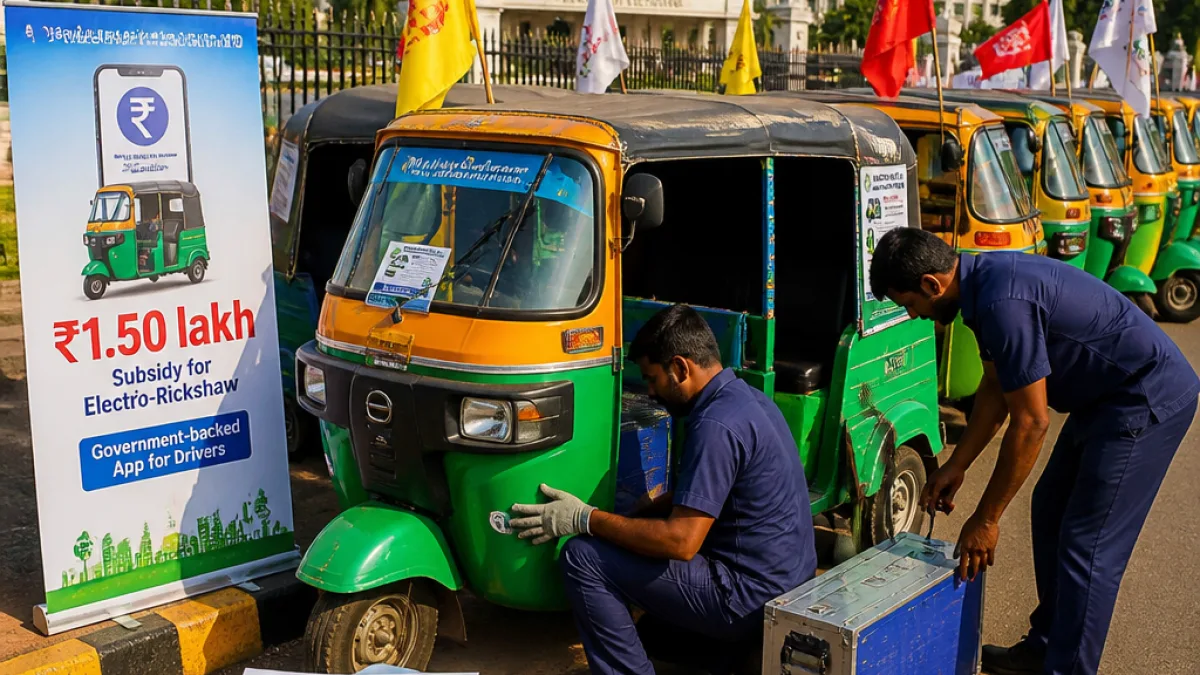
- Electrification aid: For Hyderabad’s core area, the state proposed a grant of ₹1.50 lakh to assist owners in retrofitting petrol/diesel autos to electric vehicles; assistance will also be available as a subsidy for new electric autos.
- App-based service: The Information Technology Department will begin developing a government-backed app-based auto-hailing platform similar to commercial services.
- Two-wheeler passenger services: The government will examine allowing passenger transport via two-wheelers operated by aggregators such as Rapido, Ola and Uber, but only for vehicles with yellow number plates.
- Election pledge review: The demand for a guaranteed monthly payment of ₹12,000 to auto workers — a promise from the last poll campaign — will be considered by the Chief Minister, Deputy Chief Minister and other ministers after assessing the state’s fiscal position.
Political and civic implications
The settlement removes immediate disruption to commuters and the city’s transport network, while setting the state on a path to regulate and modernise the auto sector. A government-led app could alter the market dynamics for existing private aggregators and has potential implications for pricing, driver earnings and service coverage across Greater Hyderabad.
Transport Commissioner K Ilambarthi and senior transport officials will be involved in the follow-up, according to the government statement. Joint Transport Commissioners and Labour Department representatives will join union delegates at the September meeting to firm up operational details.
Practical impact for auto owners and passengers
The announced financial assistance for electrification is aimed at reducing pollution in Hyderabad’s core areas and encouraging cleaner mobility. Owners contemplating conversion or replacement will await the formal scheme guidelines and application process, to be notified after the report on fares and subsidy norms is finalised.
| Issue | Government response |
|---|---|
| Welfare provision | Set up a dedicated welfare board for auto workers |
| Fare levels | Officials to prepare a report proposing revision (rates unchanged since 2012) |
| Electrification aid | Up to ₹1.50 lakh subsidy for retrofits in Hyderabad; subsidy for new EV autos |
| Digital platform | State to develop an app-based auto service via IT Department |
The government also said it would continue to consider worker demands in a positive spirit and thanked unions for withdrawing the strike. Union leaders confirmed the call-off following the assurances and the scheduled tripartite talks.
What to expect next
Stakeholders will now look to the September meeting for clear timelines, eligibility criteria for the retrofit subsidy and the methodology for fare revision. Commuters can expect normalisation of services, while drivers will seek swift notification of the welfare board structure and any financial support for EV adoption.
State authorities indicated that detailed orders and schemes will be published after internal reviews and the transport department’s report, which will determine the rate changes and subsidy disbursement mechanism.
Given Hyderabad’s continued push for cleaner transport amid rapid urbanisation, the government’s combined approach — regulatory, financial and digital — will be watched closely by operators, commuters and environmental stakeholders.