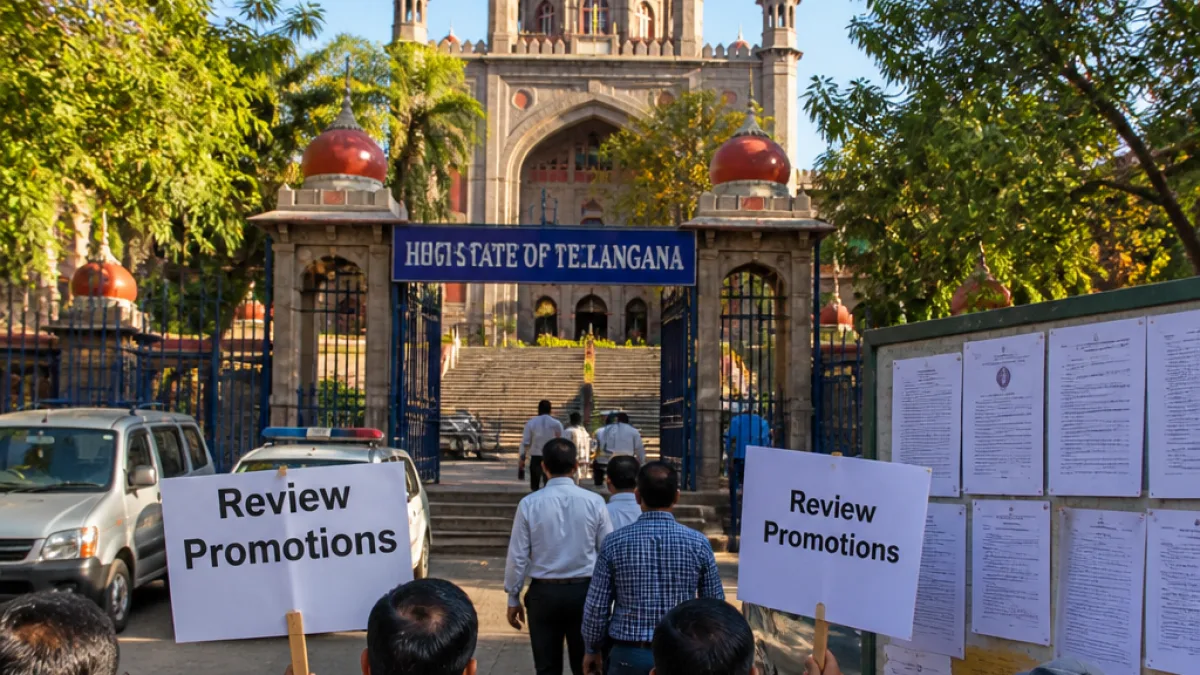
The Telangana High Court has asked the authorities of the state's power utilities to undertake a fresh review of promotions granted since 2 June 2014 and to conclude the process within a period of six months. The direction was issued by Justice Nagesh Bheemapaka while hearing petitions challenging promotion orders across the electricity establishment.
Orders cover four major power bodies
The court's direction applies to the following organisations: Telangana Transco, TGENCO, TSSPDCL and TSNPDCL. The petitions were filed by Kodepaka Kumaraswamy, who is identified as state president of the Telangana Electricity BC Employees Welfare Association, along with others, seeking reassessment of promotions granted since the state's formation.
The bench made it clear that employees who may be affected by the review must be given an opportunity to present their case during the exercise. In addition, the court directed TGENCO to consult the state government and set a clear timeline for completing the review within the ordered six-month window.
Legal principles to guide fresh promotions
The High Court emphasised that while considering promotions to higher cadres, authorities should govern their decisions by the legal principles articulated by the Supreme Court in various rulings. The bench noted that, if required, the utilities could frame an appropriate policy incorporating those Supreme Court principles before granting any future promotions.
- Who must review: Telangana Transco, TGENCO, TSSPDCL, TSNPDCL
- Period under review: Promotions granted from 2 June 2014 (date of Telangana's formation)
- Timeframe: Entire exercise to be completed within six months
- Employee rights: Affected staff to be given opportunity to present their case
- TGENCO duty: Consult state government and prescribe timeline for the process
Context and practical implications
The court's order seeks to address allegations raised through petitions by employee representatives who questioned the correctness of promotion lists issued after the bifurcation and formation of the State of Telangana on 2 June 2014. The direction mandates a re-examination rather than an immediate cancellation of promotions, signalling a process-oriented approach that balances administrative review with employees' right to be heard.
For staff in the impacted utilities, the judgment implies that promotion records and selection procedures from the specified date will be re-evaluated. While the court did not stay existing orders in this direction, the review could potentially lead to revision of promotion lists or to policy changes guiding future promotions if the utilities adopt fresh policies aligned with Supreme Court precedents.
| Entity | Role in order |
|---|---|
| Telangana Transco | Review promotions granted since 2 June 2014 |
| TGENCO | Review; consult state government and set timeline |
| TSSPDCL | Review promotions |
| TSNPDCL | Review promotions |
What employees should expect
The court's insistence on hearing affected employees implies that the utilities will need to establish mechanisms to notify staff whose promotions fall within the review scope and provide opportunities for representation. Personnel may be asked to submit records, representations or clarifications during the process. The order also suggests that any fresh policy recommended by the utilities should be consistent with the Supreme Court's legal framework governing promotions and appointments.
Legal observers say such judicially directed administrative reviews typically involve scrutiny of eligibility criteria, seniority lists, fitness records and compliance with reservation and service rules. While the High Court has not prescribed specific criteria beyond adherence to Supreme Court principles, utilities will likely examine earlier promotion orders for procedural lapses, clarity on eligibility, and conformity with statutory rules.
The case underlines continuing tensions in public-sector human resources that followed reorganisation and state formation. By directing consultation with the state government and emphasising adherence to apex court jurisprudence, the High Court has signalled that any corrective action must be founded on settled legal principles rather than ad hoc administrative steps.
The bench's order sets a strict timeline; utilities will now have to operationalise the review while balancing administrative continuity and employee rights. How the review unfolds will be watched closely by staff associations and administrative watchers in Hyderabad and across Telangana's power sector.