Hyderabad: Telangana Chief Electoral Officer C Sudarshan Reddy on Friday warned voters about a wave of fraudulent messages circulating in the state that impersonate the Election Commission of India (ECI) and seek sensitive banking information.
Nature of the scam
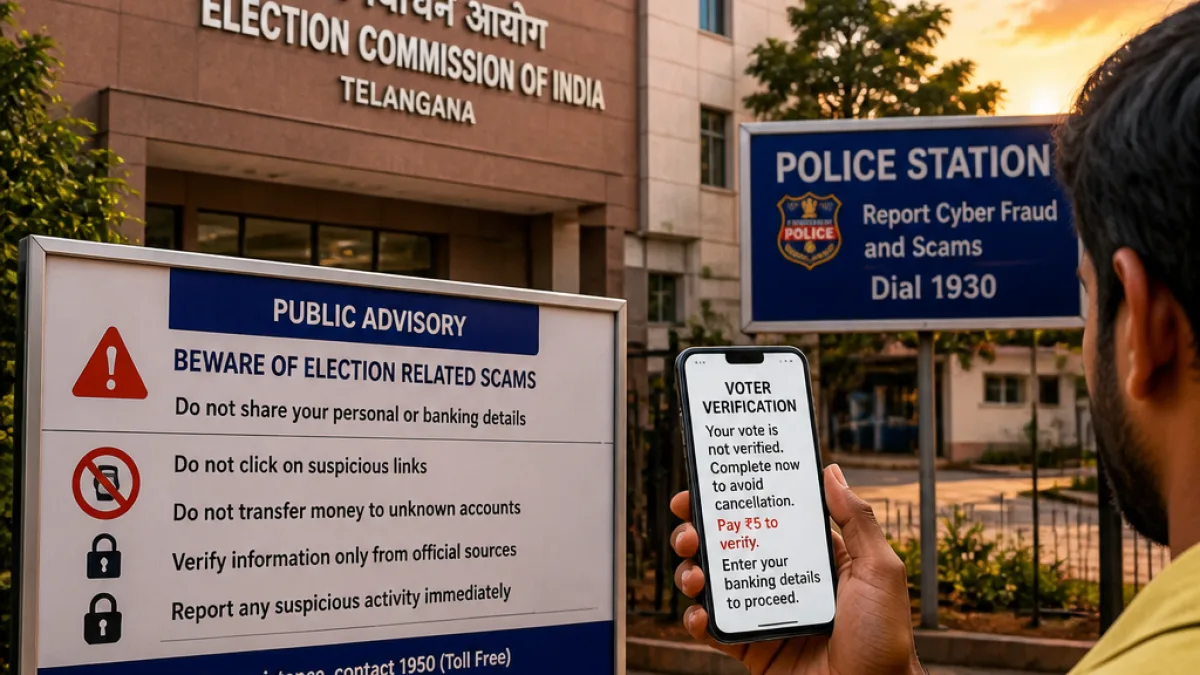
The messages, reportedly addressed to electors across Telangana, claim that an individual’s election card details do not match the enumeration form and that the form has been rejected. Recipients are urged to call a phone number or click a WhatsApp link to fill out another form and pay a fee of ₹5 through net banking or by card.
According to the CEO’s office, fraudsters behind these messages then request critical financial credentials — including internet banking login details, passwords, CVV numbers and ATM PINs — with the apparent aim of siphoning funds or committing identity-based fraud.
Official clarification and voter advisory
The CEO’s office clarified that neither the ECI nor the Telangana CEO sends such messages asking for payments or banking information. Electors have been explicitly advised not to respond to these messages, not to click unknown links and not to share any personal or banking details under any circumstances.
Those who receive suspicious communications or get calls seeking money or account information were instructed to immediately report the incident to the nearest police station. The office urged citizens to verify any election-related communication through official ECI channels before taking action.
- Do not click links in unsolicited SMS or WhatsApp messages claiming to be from the ECI.
- Do not share OTPs, CVV, PIN or banking passwords with anyone.
- Report suspicious calls or messages to the nearest police station without delay.
Why voters are targeted
Election-related communications are effective vectors for fraud because voters often expect official messages near voters’ list updates, enumeration drives or polling periods. Scammers exploit this context — combining urgency with a request for a small payment such as ₹5 — to lower recipients’ guard and prompt immediate action.
Local authorities say fraudsters also use WhatsApp links and phone numbers that may appear legitimate at first glance. Clicking such links can lead to phishing pages designed to capture login credentials or to pages that request card details for purported payments.
Practical steps for electors
Voters seeking to verify any purported ECI communication can consult the following official avenues:
| Verification channel | Use |
|---|---|
| Official ECI website | Confirm announcements, forms and official notices |
| Telangana CEO office website | State-specific voter list updates and contact details |
| Nearest police station | Register complaints about fraud messages or calls |
Electors are advised to use official websites and helplines rather than relying on links or numbers received in unsolicited messages.
Broader context and enforcement
Impersonation of government agencies over phone and messaging platforms has been a recurrent problem nationally. The CEO’s advisory in Telangana echoes similar warnings issued previously by the ECI and state authorities in other jurisdictions, which have urged citizens to exercise caution and report offences so law enforcement can take prompt action.
Reporting such incidents promptly helps police trace the origin of messages and mount investigations, including blocking fraudulent numbers or URLs and pursuing those responsible under relevant cybercrime and fraud statutes.
Telangana electors with concerns about their voter registration status or enumeration forms should approach designated electoral registration officers or visit authorised web portals rather than responding to unsolicited calls or WhatsApp messages.
This advisory comes at a time when voter awareness of electoral procedures is critical to ensuring participation and protecting citizens from financial and identity-based crime.