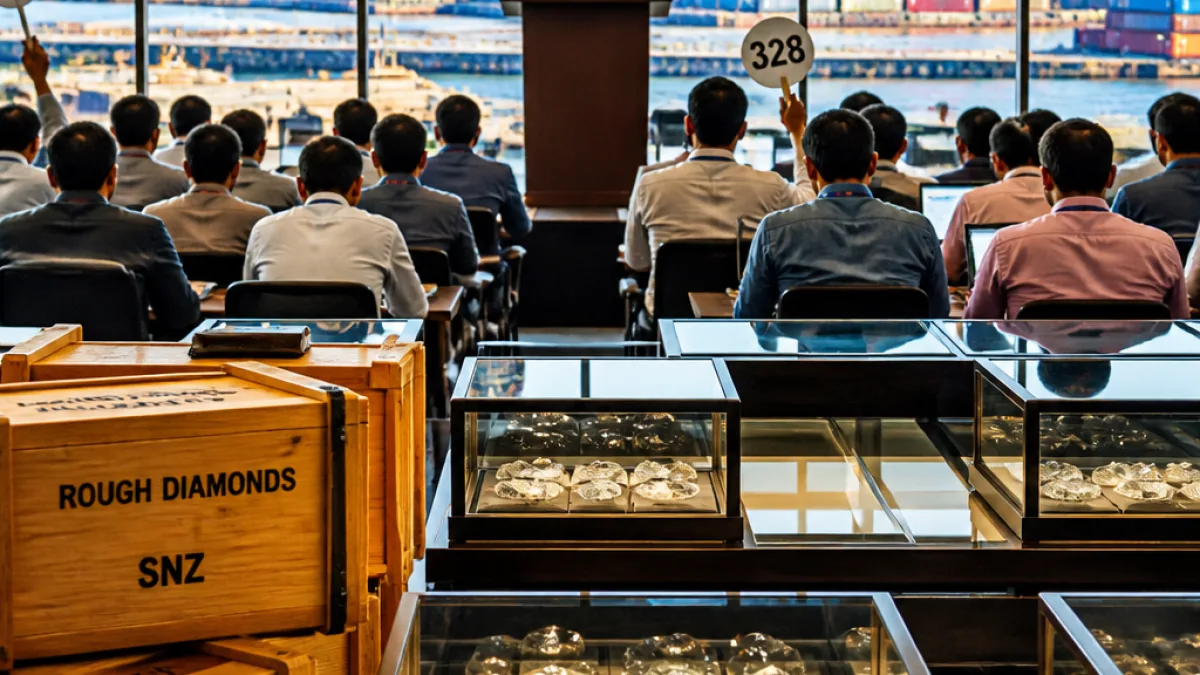
Tax relief seen as catalyst for shifting rough-diamond trade to Surat
The Union government's recent approval of a bill granting income tax exemption for 15 years on income from the sale of rough diamonds through notified Special Notified Zones (SNZs) has sharpened attention on Surat's role in the global diamond value chain. Business leaders and market participants have described the measure as a significant reform that could encourage auction houses and mining companies to sell rough stones directly in the city rather than routing supplies via traditional overseas hubs.
Surat already polishes about nine out of every 10 diamonds processed globally. Industry captains say the new tax dispensation addresses a key structural disincentive that previously made domestic purchases uncompetitive: income tax on auction and mining-company sales that effectively favoured sales through Dubai, Antwerp and other international centres.
- Tax exemption duration: 15 years for income from rough sales through SNZs.
- Surat's share in polishing: over 90% of global processing, according to industry figures in the original reporting.
- Shift in import geography: Surat accounts for more than 80% of India's direct rough imports in recent years.
"Tax exemption is an important step towards resolving long-pending procedural challenges related to export-import operation in diamond and other key industries," said Govind Dholakia, diamantaire and BJP Rajya Sabha MP.
Market sources and industry representatives expect the change to make Special Notified Zones more attractive venues for auctions by international houses and for direct off-take by miners. Historically, many medium-sized Indian manufacturers bought rough material at auctions in Dubai and Antwerp or relied on foreign intermediaries even when auction houses displayed goods during occasional India visits. The tax on sales within India reduced competitiveness for domestic buyers and incentivised offshore routing of stock.
Data underlines changing import geography
Available import figures cited in the reporting underscore how the trade's geography has shifted over the last decade. Surat's share of direct rough imports has risen markedly as taxation and procedural issues pushed volumes away from Mumbai and into the south Gujarat hub.
| Year | Mumbai (US$ million) | Surat (US$ million) |
|---|---|---|
| 2015-16 | 5,211 | 8,629 |
| 2017-18 | 12,890 | 5,608 |
| 2022-23 | 3,078 | 13,038 |
| 2025-26 | 1,960 | 8,429 |
The figures show a reversal of patterns seen earlier in the decade: while Mumbai's imports rose sharply around 2017-18, Surat regained and expanded its lead by the early 2020s. By 2022-23, Surat's direct rough imports stood at US$13,038 million against Mumbai's US$3,078 million, and in 2025-26 Surat recorded US$8,429 million versus Mumbai's US$1,960 million.
Industry participants say the tax exemption could accelerate two linked developments: more frequent and larger auctions being conducted in or through Surat's SNZs, and a smoother procurement process for domestic manufacturers who traditionally faced competitive disadvantages when buying through overseas channels.
Broader implications for the city include potential gains in local trade services, logistics and financial intermediation, as auction activity attracts global buyers and service providers. For Surat's vast ecosystem of cutters, polishers and traders, closer access to rough supplies can reduce working capital pressures and supply-chain frictions.
However, market observers note that the tax change is one element of a more complex ecosystem. Logistics, customs procedures, auction house preferences and the global sourcing strategies of mining companies will also determine how quickly and extensively auctions relocate or expand in Surat. The appeal of longstanding trade hubs such as Dubai—beyond taxation—lies in their established auction infrastructure, supportive professional services and ready pools of international buyers.
For now, the announcement has been welcomed by local diamantaires and trade groups as an encouraging policy shift that aligns taxation with Surat's dominant role in diamond processing. Whether auction houses and miners translate encouragement into routine sales in SNZs will be watched closely by manufacturers across south Gujarat.