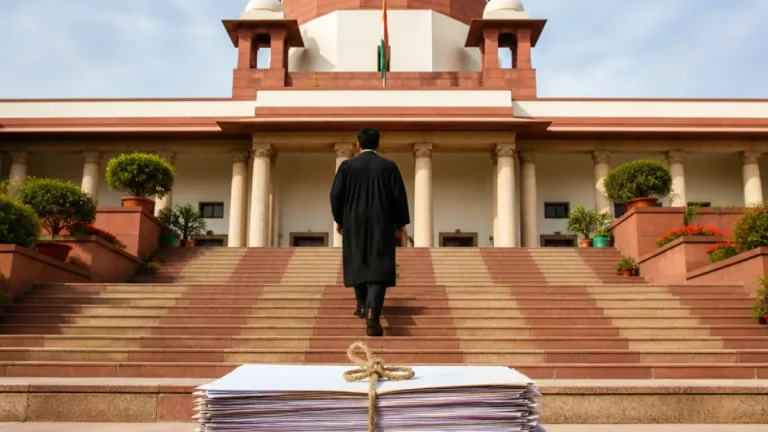

NEW DELHI: The Supreme Court is set to hear on Monday Tamil Nadu’s plea seeking urgent directions to Karnataka to release its share of Cauvery water, according to the cause list published for August 17. A bench comprising Justices Vikram Nath and Sandeep Mehta will hear the matter, which centres on allegations that Karnataka has not released the water ordered by regulatory authorities despite rising inflows into its reservoirs.
Background and legal chronology
Tamil Nadu filed the petition on August 3 seeking immediate release of water from Karnataka, saying crops in the Cauvery delta depend on timely supplies. The plea follows directions issued by the Cauvery Water Regulation Committee (CWRC) and endorsement by the Cauvery Water Management Authority (CWMA).
At its 139th meeting on July 28, the CWRC directed Karnataka to release 3,500 cusecs from the Krishnaraja Sagar (KRS) and Kabini reservoirs from July 29 for a period of 15 days, ending August 12. The CWMA, at its 54th emergency meeting on July 30, reviewed hydrological conditions in the basin and endorsed the committee’s decision.
Allegations on actual flows
Tamil Nadu’s petition says that despite the directions, Karnataka failed to supply the prescribed quantity. In a state government release cited in the petition, the actual flow recorded at Biligundlu on the Karnataka–Tamil Nadu border between July 29 and August 2 was reported to range between 158 and 550 cusecs, substantially lower than the amount directed by the authorities.
“However, between July 29 and August 2, the actual flow received at Biligundlu on the TN-Karnataka border ranged only between 158 and 550 cusecs, much below the quantity directed by the authorities,” the release said.
What Tamil Nadu is seeking
The petition requests the apex court to issue urgent directions to Karnataka for immediate release of its proportional share of water, stressing that there is "no practical hurdle" preventing release. Tamil Nadu has argued that delays and shortfall in supply are causing distress to farmers in the delta belt who depend on scheduled releases for paddy cultivation and other crops.
Implications for Karnataka and downstream users
The dispute revives long-standing tensions over water sharing between the two southern states, which have repeatedly approached the Supreme Court over the decades. For Karnataka, reservoir management must balance drinking water, irrigation and hydropower needs while responding to regulatory orders and inflow conditions. For farmers in the Cauvery delta of Tamil Nadu, timely flows are critical for the planting schedule and crop survival.
- Regulatory direction: CWRC directed release of 3,500 cusecs from KRS and Kabini from July 29 for 15 days.
- Endorsement: CWMA reviewed and endorsed the CWRC decision at its emergency meeting on July 30.
- Reported shortfall: Flows at Biligundlu between July 29 and August 2 were recorded at 158–550 cusecs, according to Tamil Nadu’s release.
Previous litigation and the road ahead
The Cauvery water-sharing dispute has been the subject of tribunal awards, multiple Supreme Court decisions and periodic intervention by inter-state bodies. Tamil Nadu’s fresh plea asks the court to enforce compliance with the committee and authority directions, and the hearing on August 17 will determine whether the bench issues interim directions to ensure immediate release of water.
Officials from both states have repeatedly said they will comply with court orders; however, competing needs during monsoon and reservoir operation constraints often complicate implementation. The apex court’s view in the forthcoming hearing will be closely watched by farmers, administrators and policymakers in both Karnataka and Tamil Nadu.
| Date/Meeting | Action/Direction |
|---|---|
| July 28 — CWRC 139th meeting | Directed release of 3,500 cusecs from KRS and Kabini from July 29 for 15 days |
| July 30 — CWMA 54th meeting | Reviewed hydrological conditions and endorsed CWRC decision |
| July 29–Aug 2 | Flow at Biligundlu reported at 158–550 cusecs (Tamil Nadu release) |
The Supreme Court hearing will take place in New Delhi on August 17 before Justices Vikram Nath and Sandeep Mehta. Observers say the bench’s interim orders, if any, could affect reservoir releases and administrative action in the coming days, particularly in the crucial transplanting and irrigation window for delta farmers.
(Reporting from New Delhi; official releases and the Supreme Court cause list were referenced.)